CAS 221227-05-0
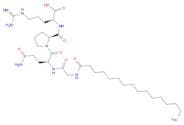
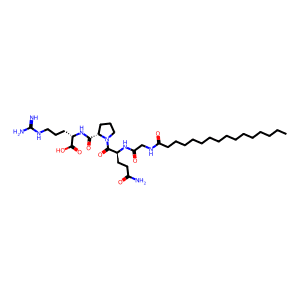
:L-Arginin, N-(1-oxohexadecyl)glycyl-L-glutaminyl-L-prolyl-
Beschreibung:
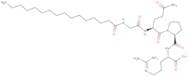
L-Arginin, N-(1-oxohexadecyl)glycyl-L-glutaminyl-L-prolyl- ist ein synthetisches Peptid, das mehrere Aminosäuren enthält, darunter L-Arginin, Glycin, L-Glutamin und L-Prolin, die durch Peptidbindungen verbunden sind. Diese Verbindung zeichnet sich durch ihre einzigartige Struktur aus, die eine hexadecylkette umfasst, die zu ihren hydrophoben Eigenschaften beiträgt. Das Vorhandensein von L-Arginin, einer Aminosäure, die für ihre Rolle bei der Proteinsynthese und als Vorläufer von Stickstoffmonoxid bekannt ist, deutet auf eine potenzielle biologische Aktivität hin, insbesondere in Bezug auf die Herz-Kreislauf-Gesundheit und die Immunfunktion. Die Einbeziehung anderer Aminosäuren kann ihre Stabilität und Bioaktivität erhöhen. Als Peptid kann es spezifische Löslichkeitseigenschaften aufweisen, typischerweise in polaren Lösungsmitteln löslich. Seine CAS-Nummer, 221227-05-0, ermöglicht eine präzise Identifizierung in chemischen Datenbanken. Während spezifische Anwendungen variieren können, werden Verbindungen wie diese häufig in der pharmazeutischen und biotechnologischen Forschung auf ihre potenziellen therapeutischen Vorteile untersucht. Detaillierte Studien zu seiner Pharmakokinetik, Toxizität und Wirksamkeit wären jedoch notwendig, um seine Eigenschaften und Anwendungen vollständig zu verstehen.
Formel:C34H62N8O7
Synonyme:- 10: PN:WO2007093839 SEQID: 16 claimed protein
- 3: PN: US20040132667 SEQID: 3 claimedprotein
- N-Palmitoylrigin
- Palmitoyl Tetrapeptide-3
Sortieren nach
Reinheit (%)
0
100
|
0
|
50
|
90
|
95
|
100
8 Produkte.
Palmitoyl-Gly-Gln-Pro-Arg-OH
CAS:Pal-GQPR or Palmitoyl Tetrapeptide-7/3 is a synthetic peptide that is used in cosmetics to suppress the production of excess interleukins, the chemical messengers which trigger the body’s acute inflammatory response. Therefore Pal-GQPR can inhibit unnecessary inappropriate inflammatory responses and glycation damage.Formel:C34H62N8O7Molekulargewicht:694.91PALMITOYL TETRAPEPTIDE 3
CAS:Formel:C34H62N8O7Reinheit:97%Farbe und Form:SolidMolekulargewicht:694.9055Palmitoyl Tetrapeptide-7
CAS:Formel:C34H62N8O7Reinheit:≥ 98.0%Farbe und Form:White to off-white powderMolekulargewicht:694.90Palmitoyl Tetrapeptide 7
CAS:Formel:C34H62N8O7Reinheit:>95.0%(HPLC)(qNMR)Farbe und Form:White to Light yellow powder to crystalMolekulargewicht:694.92Palmitoyl Tetrapeptide-3
CAS:Palmitoyl Tetrapeptide-3, a synthetic peptide, boosts GCP-2 to recruit cells for repair and cleanup.Formel:C34H62N8O7Reinheit:>99.99%Farbe und Form:SolidMolekulargewicht:694.91Palmitoyl tetrapeptide 7 trifluoroacetate
CAS:Palmitoyl tetrapeptide 7 trifluoroacetate is an anticancer agent that acts as a protein kinase inhibitor. It has been shown to inhibit the growth of cancer cells and induce apoptosis in human tumors. This peptide analog has been studied extensively for its potential use in cancer therapy due to its ability to suppress the activity of kinases, which are enzymes involved in cell signaling pathways that regulate cell growth and division. Palmitoyl tetrapeptide 7 trifluoroacetate has also been found to be effective against certain strains of influenza virus, such as H1N1, by inhibiting neuraminidase activity. This compound has been isolated from Chinese urine samples and is structurally similar to oseltamivir, a drug used to treat influenza infections.Formel:C34H62N8O7•C2HF3O2Reinheit:Min. 95%Molekulargewicht:808.93 g/molPalmitoyl tetrapeptide 7
CAS:Palmitoyl tetrapeptide 7 is a bacterial strain that has been shown to inhibit the proliferation of bacteria cells in vitro. It also inhibits the production of inflammatory cytokines and reactive oxygen species (ROS) by human skin cells. This product has been shown to be synergistic with other ingredients such as butanediol, glycerin, hydrogenated lecithin, and fatty acids.
Formel:C34H62N8O7Reinheit:(¹H-Nmr) Min. 95 Area-%Farbe und Form:White Off-White PowderMolekulargewicht:694.91 g/mol