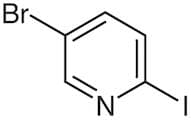
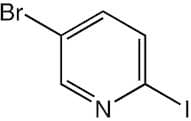
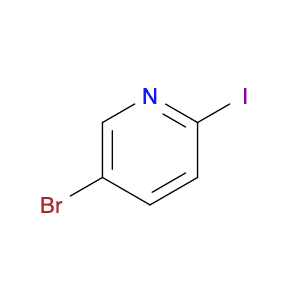
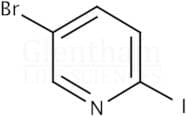
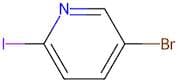
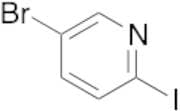
CAS 223463-13-6
:5-Brom-2-iodpyridin
- 2-Iodo-5-Bromopyridine
- 5-Bromo-2-iodo-pyridine
- Pyridine, 5-bromo-2-iodo-
- 5-Bromo-2-iodopyridine
- 5-bromo-2-iodopyridine 97% 5g
- 5-Bromo-2-Iodopyridine99%
- 5-BROMO-2-IDIOPYRIDINE
- 5-bromo-2-lodopyridine
- 5-Bromo-2-iodopyridine, 98+%
- 5-BROMO-2-IODOPYRIDINE 97%
5-Bromo-2-iodopyridine
CAS:Formel:C5H3BrINReinheit:>97.0%(GC)Farbe und Form:White to Orange to Green powder to crystalMolekulargewicht:283.895-Bromo-2-iodopyridine, 98%
CAS:This Thermo Scientific Chemicals brand product was originally part of the Alfa Aesar product portfolio. Some documentation and label information may refer to the legacy brand. The original Alfa Aesar product / item code or SKU reference has not changed as a part of the brand transition to Thermo Sci
Formel:C5H3BrINReinheit:98%Farbe und Form:White to pale cream, Crystals or powder or crystalline powder or flakesMolekulargewicht:283.895-Bromo-2-iodopyridine
CAS:5-Bromo-2-iodopyridineFormel:C5H3BrINReinheit:98%Farbe und Form: white solidMolekulargewicht:283.89g/mol5-Bromo-2-iodopyridine
CAS:Kontrolliertes ProduktStability Light Sensitive
Applications 5-Bromo-2-iodopyridine is used to prepare substituted (pyridin-3-yl)phenyloxazolidinones as antibacterial agents. It is also used to synthesize indole-based bisamidine antibiotics.
References Reck, F., et al.: J. Med. Chem., 50, 4868 (2007); Williams, J., et al.: Bioorg. Med. Chem., 21, 7790 (2013)Formel:C5H3BrINFarbe und Form:NeatMolekulargewicht:283.895-Bromo-2-iodopyridine
CAS:5-Bromo-2-iodopyridine is an antibiotic that is used to treat bacterial infections. It has been shown to inhibit the growth of bacteria by binding to the 50S ribosomal subunit. This drug also has a toxic effect on respiratory system cells, which may be due to its ability to induce apoptosis. 5-Bromo-2-iodopyridine interacts with DNA in a triazine ring and inhibits bacterial growth by inhibiting protein synthesis. The drug binds to the 50S ribosomal subunit at a site that is different from that of rifampin and other antibiotics. The reaction is catalyzed by palladium at high temperatures and takes place in organic solvents such as chloroform or benzene. This synthetic process can be made more efficient by using inexpensive starting materials, such as bromine, iodine, and acetone, rather than expensive starting materials like platinum or gold salts.
Formel:C5H3BrINReinheit:Min. 95%Farbe und Form:Slightly Yellow PowderMolekulargewicht:283.89 g/mol