CAS 2237-30-1
:3-Aminobenzonitril
- 3-Aminobenzonitril
- 3-Aminobenzonitrile, (3-Cyanoaniline)
- 3-Cyanoaniline
- 3-Cyanobenzonitrile
- 3-Cyanophenylamine
- Benzonitrile, 3-amino-
- Benzonitrile, m-amino-
- M-Aminobenzonitrile
- NSC 7626
- m-Anthranilonitrile
- m-Cyanoaniline
- 3-Aminobenzonitrile
- m-amino-benzonitril
- 3-Aminobenzonitrile ,99%
- Weitere Synonyme anzeigen
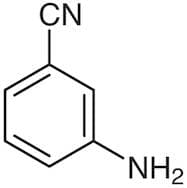
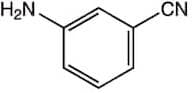
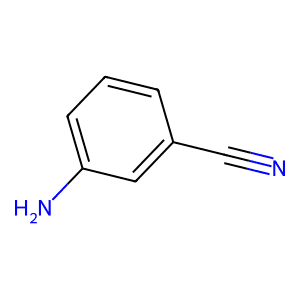
3-Aminobenzonitrile
CAS:Formel:C7H6N2Reinheit:>98.0%(GC)(T)Farbe und Form:White to Yellow to Orange powder to crystalMolekulargewicht:118.143-Aminobenzonitrile, 99%
CAS:This Thermo Scientific Chemicals brand product was originally part of the Alfa Aesar product portfolio. Some documentation and label information may refer to the legacy brand. The original Alfa Aesar product / item code or SKU reference has not changed as a part of the brand transition to Thermo SciFormel:C7H6N2Reinheit:99%Farbe und Form:Pale brown to brown, Crystals or powder or crystalline powder or needlesMolekulargewicht:118.143-Aminobenzonitrile
CAS:Formel:C7H6N2Reinheit:≥ 98.0%Farbe und Form:White to yellow, orange or brown powder or crystalsMolekulargewicht:118.143-Aminobenzonitrile
CAS:3-AminobenzonitrileFormel:C7H6N2Reinheit:≥95%Farbe und Form: faint brown crystalline solidMolekulargewicht:118.14g/mol3-Aminobenzonitrile
CAS:Formel:C7H6N2Reinheit:>98.0%(GC)(T)Farbe und Form:White to Light gray to Light yellow powder to crystalMolekulargewicht:118.143-Aminobenzonitrile
CAS:Formel:C7H6N2Reinheit:98.0%Farbe und Form:Solid, Crystalline Powder or Needles or PowderMolekulargewicht:118.1393-Aminobenzonitrile
CAS:3-Aminobenzonitrile is an amine that has been shown to inhibit the growth of bacteria. It was synthesized by the reaction of nitrobenzene with benzamide in the presence of acetic acid. The chemical structure of 3-aminobenzonitrile is similar to that of a group of natural amino acids, including cysteine and tryptophan, which are known inhibitors of bacterial growth. This compound is soluble in organic solvents and can be used as an injection solution. 3-Aminobenzonitrile has been evaluated by kinetic studies and found to have a high affinity for bacterial cells, with an inhibition constant (Ki) value of 0.37 mM. It is also active against other microorganisms such as yeast or mold fungi, but not against plant or animal cells. 3-Aminobenzonitrile inhibits the synthesis of proteins by binding to a number of different sites on the ribosomes where
Reinheit:Min. 95%Farbe und Form:Yellow PowderMolekulargewicht:118.14 g/mol