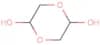
CAS 23147-58-2
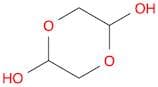
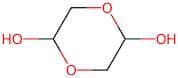
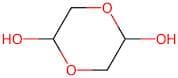
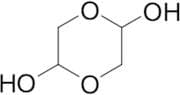
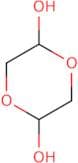
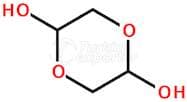
:1,4-Dioxan-2,5-diol
Beschreibung:
1,4-Dioxan-2,5-diol, mit der CAS-Nummer 23147-58-2, ist eine zyklische organische Verbindung, die durch ihre Dioxanringstruktur gekennzeichnet ist, die zwei Sauerstoffatome und vier Kohlenstoffatome enthält. Diese Verbindung weist Hydroxylgruppen (-OH) an den Positionen 2 und 5 des Dioxanrings auf, was zu ihren Eigenschaften als Diol beiträgt. Sie ist typischerweise eine farblose, viskose Flüssigkeit, die in Wasser und verschiedenen organischen Lösungsmitteln löslich ist, was sie nützlich für die chemische Synthese und als Lösungsmittel macht. Das Vorhandensein von Hydroxylgruppen erhöht ihre Reaktivität, sodass sie an verschiedenen chemischen Reaktionen teilnehmen kann, wie z.B. Esterifizierung und Etherifizierung. Darüber hinaus kann 1,4-Dioxan-2,5-diol eine leichte Toxizität aufweisen, und es sollten Sicherheitsvorkehrungen getroffen werden, wenn man damit umgeht. Ihre Anwendungen finden sich in der Pharmazie, in Kosmetika und als Zwischenprodukt in der organischen Synthese. Insgesamt macht die einzigartige Struktur und die funktionellen Gruppen dieser Verbindung sie zu einer vielseitigen Substanz sowohl in industriellen als auch in Laborumgebungen.
Formel:C4H8O4
InChl:InChI=1S/C4H8O4/c5-3-1-7-4(6)2-8-3/h3-6H,1-2H2
InChI Key:InChIKey=ATFVTAOSZBVGHC-UHFFFAOYSA-N
SMILES:OC1COC(O)CO1
Synonyme:- 1,4-Dioxane-2,5-Diol
- 2,5-Dihydroxy-1,4-dioxane
- 2,5-Dihydroxy-p-dioxane
- Glycerol aldehyde dimer
- Glycoaldehyde dimer
- Glycolaldehyde dimer
- Hydroxy Acetaldehyde
- p-Dioxane-2,5-diol
Sortieren nach
Reinheit (%)
0
100
|
0
|
50
|
90
|
95
|
100
13 Produkte.
1,4-Dioxane-2,5-diol
CAS:Formel:C4H8O4Reinheit:95%Farbe und Form:Crystalline PowderMolekulargewicht:120.1041,4-Dioxane-2,5-diol
CAS:1,4-Dioxane-2,5-diol (Glycolaldehyde dimer) is derivative of glycolaldehyde, which is the precursor molecule of various significant compounds.Formel:C4H8O4Reinheit:98%Farbe und Form:Colorless Solid MassMolekulargewicht:120.1Glycolaldehyde dimer
CAS:Glycolaldehyde dimer is a molecule that is the product of an intramolecular hydrogenation reaction. It has been shown to have estrogen receptor modulator activity, which may be due to its ability to bind to estrogen receptors and inhibit the production of inflammatory cytokines. Glycolaldehyde dimer also has the potential to be used as a therapeutic agent for inflammatory bowel disease. Glycolaldehyde dimer binds to crystalline cellulose and undergoes a series of chemical reactions, including hydrolysis by hydroxyl group, hydrochloric acid, and hydrogen bond. The logistic regression analysis shows that the molecule is more potent in rats with bowel disease than those without.Formel:C4H8O4Reinheit:Min. 95%Farbe und Form:White PowderMolekulargewicht:120.1 g/molGlycolaldehyde Dimer extrapure,95%
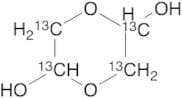
CAS:Formel:C4H8O4Reinheit:min. 95%Farbe und Form:White, PowderMolekulargewicht:120.10Glycoaldehyde Dimer-13C4
CAS:Kontrolliertes ProduktApplications Glycoaldehyde Dimer-13C4, is a labeled analogue of Glycoaldehyde Dimer (G641150), a derivative of glcoaldehyde, which is the precursor molecule of various significant compounds including amino acid glycine and in the formose reaction.
References Wong, C.H., et al.: J. Org. Chem., 48, 3199 (1983); Serianni, A.S., et al.: Carbo. Res., 72, 79 (1979);Formel:C4H8O4Farbe und Form:NeatMolekulargewicht:124.075