CAS 23283-97-8
:(+)-Isomenthol
Beschreibung:
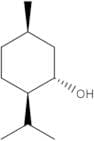
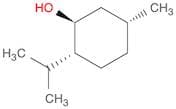
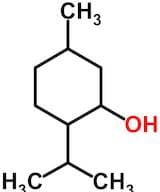
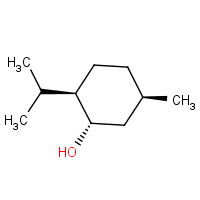
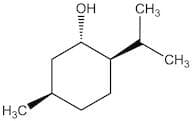
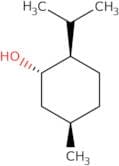
(+)-Isomenthol, mit der CAS-Nummer 23283-97-8, ist ein zyklischer Monoterpenalkohol, der aus Menthol gewonnen wird. Er zeichnet sich durch seine chirale Natur aus und existiert als eines der Enantiomere von Isomenthol, speziell in der (+) Form, die ein minziges Aroma aufweist. Diese Verbindung ist typischerweise eine farblose bis blassgelbe Flüssigkeit bei Raumtemperatur und ist in Alkohol und Ether löslich, aber weniger in Wasser aufgrund ihrer hydrophoben Eigenschaften. Ihre molekulare Struktur weist einen Cyclohexanring mit einer Hydroxylgruppe auf, was zu ihren funktionalen Eigenschaften beiträgt. (+)-Isomenthol wird häufig in der Duft- und Aromabranche sowie in der Formulierung von Körperpflegeprodukten aufgrund ihres angenehmen Dufts und kühlenden Gefühls verwendet. Darüber hinaus hat sie potenzielle Anwendungen in der Pharmazie und als chiraler Baustein in der organischen Synthese. Ihr Sicherheitsprofil zeigt eine geringe Toxizität, was sie für verschiedene Verbraucherprodukte geeignet macht. Insgesamt wird (+)-Isomenthol für seine sensorischen Eigenschaften und Vielseitigkeit in mehreren Anwendungen geschätzt.
Formel:C10H20O
InChl:InChI=1S/C10H20O/c1-7(2)9-5-4-8(3)6-10(9)11/h7-11H,4-6H2,1-3H3/t8-,9-,10+/m1/s1
InChI Key:InChIKey=NOOLISFMXDJSKH-BBBLOLIVSA-N
SMILES:C(C)(C)[C@@H]1[C@@H](O)C[C@H](C)CC1
Synonyme:- (+)-Isomenthol
- (1S,2R,5R)-(+)-Isomenthol
- (1S,2R,5R)-5-Methyl-2-(1-methylethyl)cyclohexanol
- (1S,2R,5R)-5-methyl-2-(propan-2-yl)cyclohexanol
- (1S-(1alpha,2beta,5beta))-5-Methyl-(1-isopropyl)cyclohexan-2-ol
- Cyclohexanol, 5-methyl-2-(1-methylethyl)-, (1S,2R,5R)-
- Cyclohexanol, 5-methyl-2-(1-methylethyl)-, (1S-(1alpha,2beta,5beta))-
- Cyclohexanol, 5-methyl-2-(1-methylethyl)-, [1S-(1α,2β,5β)]-
- Menthol, (1R,3S,4R)-(+)-
- d-Isomenthol
Sortieren nach
Reinheit (%)
0
100
|
0
|
50
|
90
|
95
|
100
12 Produkte.
(+)-Isomenthol
CAS:(+)-Isomenthol analytical standard provided with w/w absolute assay, to be used for quantitative titration.Formel:C10H20OReinheit:(GC) ≥90% (sum of enantiomers)Farbe und Form:SolidMolekulargewicht:156.27(+)-Isomenthol
CAS:Formel:C10H20OReinheit:≥ 97.0%Farbe und Form:White to off-white crystalline powder or colourless crystalsMolekulargewicht:156.27(+)-Isomenthol
CAS:Formel:C10H20OFarbe und Form:Colourless to beige powder or solidMolekulargewicht:156.2652(+)-Isomenthol
CAS:(+)-IsomentholFormel:C10H20OReinheit:95%Farbe und Form: colourless to beige solidMolekulargewicht:156.27g/mol(+)-isomenthol
CAS:Cyclic alcoholFormel:C10H20OReinheit:≥ 95.0 % (GC)Farbe und Form:CrystalsMolekulargewicht:156.27(+)-Isomenthol
CAS:Applications (+)-Isomenthol is a reagent that has been used in the preparation of a phosphine activator.
References Rajendran., K.V., et. al.: Tetrahedron Lett., 54, 7009 (2013)Formel:C10H20OFarbe und Form:White To Off-WhiteMolekulargewicht:156.27(+)-Isomenthol
CAS:(+)-Isomenthol is a tertiary alcohol that is used as an antibacterial agent. It can be synthesized from the reaction of benzyl chloride and sodium hydroxide in an organic solvent. (+)-Isomenthol has been shown to have strong inhibitory effects against enzymes, including dehydrogenase and phosphatases. The optimum pH for this compound is 7.5, with a maximum activity at pH 10-11. (+)-Isomenthol also has two stereoisomers: (1R,2S) and (1S,2R). The former is more active than the latter in the inhibition of bacterial growth. It also has halogen substitutions that may react with the enzyme's thiol groups, leading to inactivation of the enzyme. This compound is not very soluble in water but can be dissolved by adding a hydroxyl group or by reacting with a solid catalyst such as iron oxide or alumina. Isomerization reactions are possible withFormel:C10H20OReinheit:Min. 98 Area-%Farbe und Form:PowderMolekulargewicht:156.26 g/mol