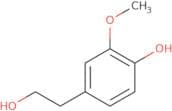
CAS 2380-78-1
:Homovanillylalkohol
Beschreibung:
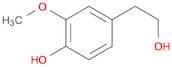
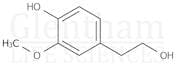
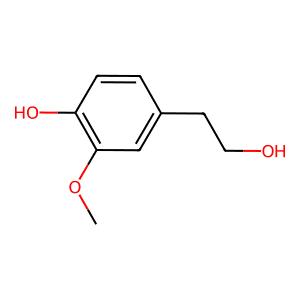
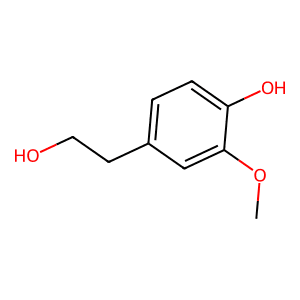
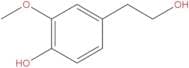
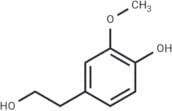
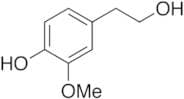
Homovanillylalkohol, mit der CAS-Nummer 2380-78-1, ist eine organische Verbindung, die durch ihre phenolische Struktur gekennzeichnet ist. Es ist ein Derivat von Vanillin und weist eine Hydroxylgruppe (-OH) und eine Methoxygruppe (-OCH3) im aromatischen Ring auf. Diese Verbindung liegt typischerweise als weißes bis off-white kristallines Feststoff vor und ist in Wasser, Alkohol und anderen organischen Lösungsmitteln löslich. Homovanillylalkohol ist bekannt für sein süßes, vanilleähnliches Aroma, was es in der Geschmacks- und Duftindustrie von Interesse macht. Darüber hinaus wurde es auf seine potenziellen antioxidativen Eigenschaften und neuroprotektiven Effekte untersucht, die Auswirkungen auf verschiedene gesundheitsbezogene Anwendungen haben könnten. Die Verbindung wird auch in der biochemischen Forschung verwendet, insbesondere in Studien zu Neurotransmittersystemen, da sie den Dopaminstoffwechsel beeinflussen kann. Insgesamt ist Homovanillylalkohol eine vielseitige Verbindung mit praktischen Anwendungen und erheblichem biologischen Interesse.
Formel:C9H12O3
InChl:InChI=1S/C9H12O3/c1-12-9-6-7(4-5-10)2-3-8(9)11/h2-3,6,10-11H,4-5H2,1H3
InChI Key:InChIKey=XHUBSJRBOQIZNI-UHFFFAOYSA-N
SMILES:O(C)C1=CC(CCO)=CC=C1O
Synonyme:- 2-(3-Methoxy-4-hydroxyphenyl)ethanol
- 2-(4-Hydroxy-3-Methoxyphenyl)Ethanol
- 3-Methoxy-4-hydroxyphenethanol
- 3-Methoxy-4-hydroxyphenethyl alcohol
- 4-(2-Hydroxyethyl)-2-Methoxyphenol
- 4-(2-Hydroxyethyl)Guaiacol
- 4-Hydroxy-3-methoxybenzeneethanol
- 4-Hydroxy-3-methoxyphenethyl alcohol
- 4-Hydroxy-3-methoxyphenylethanol
- Ba 2772
- Benzeneethanol, 4-hydroxy-3-methoxy-
- Homovanillic alcohol
- Phenethyl alcohol, 4-hydroxy-3-methoxy-
- Weitere Synonyme anzeigen
Sortieren nach
Reinheit (%)
0
100
|
0
|
50
|
90
|
95
|
100
11 Produkte.
Benzeneethanol, 4-hydroxy-3-methoxy-
CAS:Formel:C9H12O3Reinheit:95%Farbe und Form:SolidMolekulargewicht:168.18984-(2-Hydroxyethyl)-2-methoxyphenol
CAS:4-(2-Hydroxyethyl)-2-methoxyphenolFormel:C9H12O3Reinheit:99%Farbe und Form: white powderMolekulargewicht:168.19g/molHomovanillyl alcohol
CAS:Homovanillyl alcohol is a biological metabolite of Hydroxytyrosol.Formel:C9H12O3Reinheit:99.62%Farbe und Form:Cream To Light Brown ChunksMolekulargewicht:168.19Vanillylmethanol
CAS:Kontrolliertes ProduktApplications An odorant found in strawberries, grapes and olive oil. Vanillylmethanol has high scavenging activities and inhibits homocysteine-induced endothelial cell adhesion.
References Ubeda, C. et al.: J. Agr. Food. Chem., 60, 6095 (2012); Barata, A. et al.: J. Agr. Food Chem., 59, 2543 (2011); Manna, C. et al.: J. Agr. Food Chem., 57, 3478 (2009)Formel:C9H12O3Farbe und Form:NeatMolekulargewicht:168.19Homovanillyl alcohol
CAS:Homovanillyl alcohol is a reactive, oxidative byproduct of dopamine that is involved in carcinogenic pathways. It has been shown to be a potential therapeutic target for prostate cancer cells. Homovanillyl alcohol induces oxidative injury by forming reactive oxygen species that damage DNA and cell membranes. Studies have found that homovanillyl alcohol can be used as a model system to study the pathogenic mechanism of Parkinson's disease and other metabolic disorders, such as diabetes mellitus type 2. The toxicological studies have demonstrated that homovanillyl alcohol is not carcinogenic to humans and does not cause skin cancer in mice. However, it has been shown to cause skin cancer in humans when applied directly to the skin. Natural compounds such as hydroxytyrosol and catechins are also capable of preventing the formation of homovanillyl alcohol from dopamine through their anti-oxidant effects.Formel:C9H12O3Reinheit:Min. 95%Farbe und Form:PowderMolekulargewicht:168.19 g/mol