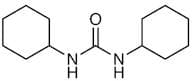
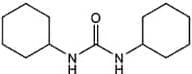
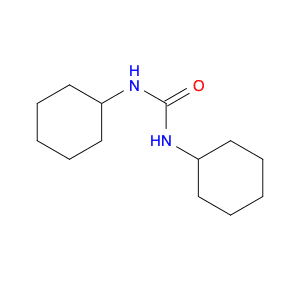
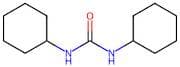
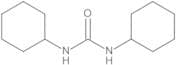
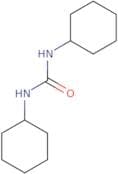
CAS 2387-23-7
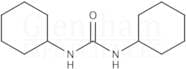
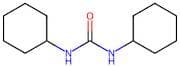
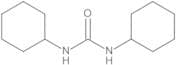
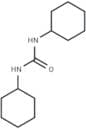
:N,N'-DICYCLOHEXYLHARNSTOFF
- 1,3-Dicyclohexylurea
- Dicyclohexylcarbodiamide
- NSC 17013
- NSC 30023
- Urea, 1,3-dicyclohexyl-
- Urea, N,N′-dicyclohexyl-
- N,N-Dicyclohexylurea
- N,N′-Dicyclohexylurea
- AURORA KA-3582
- DCU
- N,N'-Carbonylbis(cyclohexanamine)
- CYCLOHEXYLUREA
- n,n’-dicyclohexyl-ure
- Weitere Synonyme anzeigen
1,3-Dicyclohexylurea
CAS:Formel:C13H24N2OReinheit:>98.0%(GC)(T)Farbe und Form:White to Light yellow powder to crystalMolekulargewicht:224.35N,N'-Dicyclohexylurea, 98%
CAS:This Thermo Scientific Chemicals brand product was originally part of the Alfa Aesar product portfolio. Some documentation and label information may refer to the legacy brand. The original Alfa Aesar product / item code or SKU reference has not changed as a part of the brand transition to Thermo SciFormel:C13H24N2OReinheit:98%Farbe und Form:Crystals or powder or crystalline powder, White to pale cream to pale brownMolekulargewicht:224.35Lomustine Related Compound C (1,3-Dicyclohexylurea)
CAS:Ureines and their derivatives; salts thereofFormel:C13H24N2OFarbe und Form:White PowderMolekulargewicht:224.18886N,N′-Dicyclohexylurea
CAS:Formel:C13H24N2OReinheit:≥ 98.0%Farbe und Form:White crystalline powderMolekulargewicht:224.35Lomustine EP Impurity C (Lomustine USP Related Compound C)
CAS:Formel:C13H24N2OMolekulargewicht:224.351,3-Dicyclohexylurea
CAS:Kontrolliertes ProduktFormel:C13H24N2OFarbe und Form:NeatMolekulargewicht:224.34N,N'-Dicyclohexylurea
CAS:N,N'-Dicyclohexylurea (AURORA KA-3582) is a soluble epoxide hydrolase (sEH) inhibitor.Formel:C13H24N2OReinheit:≥98%Farbe und Form:White Crystalline PowderMolekulargewicht:224.34N,N'-Dicyclohexylurea
CAS:Kontrolliertes ProduktImpurity Lomustine USP Related Compound C
Applications N,N'-Dicyclohexylurea,is a substituted Urea (U822500) compound, which has shown to be a potent inhibitor of juvenile hormone epoxide hydrolase (JHEH) of the tobacco hornworm M. sexta. Lomustine USP Related Compound C.
References Garriga, M., et al.: Chemosphere, 82, 1604 (2011)Formel:C13H24N2OFarbe und Form:Light YellowMolekulargewicht:224.34N,N,-Dicyclohexylurea
CAS:N,N,-Dicyclohexylurea is a group P2 ester with the chemical formula CH3CONHCH2COOC6H5. It is soluble in water and has a cyclic amide structure. N,N,-Dicyclohexylurea is used as an antibacterial agent in wastewater treatment and has been shown to be effective against gram-positive bacteria such as Staphylococcus aureus and Streptococcus pneumoniae. The mechanism of its antibacterial activity is not well understood, but it may be due to its ability to form intramolecular hydrogen bonds that disrupts the bacterial cell wall. This compound also reacts with the amino groups of proteins on the bacterial membrane, which leads to protein denaturation.
Formel:C13H24N2OReinheit:Min. 95%Molekulargewicht:224.34 g/mol