


CAS 25316-40-9
:Doxorubicin-Hydrochlorid
Beschreibung:
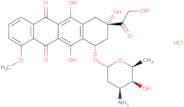
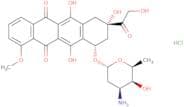
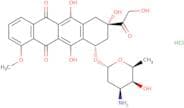
Doxorubicin-Hydrochlorid ist ein anthracyclisches Antibiotikum, das häufig in der Chemotherapie von Krebs eingesetzt wird. Es zeichnet sich durch seine leuchtend rote Farbe aus und ist bekannt für seine starke antitumorale Wirkung. Die Verbindung wirkt, indem sie sich in die DNA einlagert, wodurch die Synthese von Nukleinsäuren gehemmt und die Replikation von Krebszellen gestört wird. Doxorubicin ist in Wasser löslich und weist ein pH-abhängiges Löslichkeitsprofil auf, das für seine Formulierung und Verabreichung wichtig ist. Sein Wirkmechanismus umfasst auch die Bildung von freien Radikalen, die zu seinen zytotoxischen Effekten beitragen. Der Einsatz von Doxorubicin ist jedoch mit mehreren Nebenwirkungen verbunden, einschließlich Kardiotoxizität, die die kumulative Dosis begrenzt. Es wird typischerweise intravenös verabreicht und wird oft in Kombination mit anderen chemotherapeutischen Mitteln eingesetzt, um die Wirksamkeit gegen verschiedene Malignome, einschließlich Brustkrebs, Leukämie und Lymphome, zu erhöhen. Aufgrund seiner erheblichen therapeutischen Vorteile und potenziellen Risiken sind eine sorgfältige Überwachung und ein Management während der Behandlung unerlässlich.
Formel:C27H29NO11·ClH
InChl:InChI=1S/C27H29NO11.ClH/c1-10-22(31)13(28)6-17(38-10)39-15-8-27(36,16(30)9-29)7-12-19(15)26(35)21-20(24(12)33)23(32)11-4-3-5-14(37-2)18(11)25(21)34;/h3-5,10,13,15,17,22,29,31,33,35-36H,6-9,28H2,1-2H3;1H/t10-,13-,15-,17-,22+,27-;/m0./s1
InChI Key:InChIKey=MWWSFMDVAYGXBV-RUELKSSGSA-N
SMILES:OC=1C2=C([C@@H](O[C@H]3C[C@H](N)[C@H](O)[C@H](C)O3)C[C@@](C(CO)=O)(O)C2)C(O)=C4C1C(=O)C=5C(C4=O)=C(OC)C=CC5.Cl
Synonyme:- (1S,3S)-3,5,12-trihydroxy-3-(hydroxyacetyl)-10-methoxy-6,11-dioxo-1,2,3,4,6,11-hexahydrotetracen-1-yl 3-amino-2,3,6-trideoxy-alpha-L-lyxo-hexopyranoside hydrochloride (1:1)
- (1S,3S)-3,5,12-trihydroxy-3-(hydroxyacetyl)-10-methoxy-6,11-dioxo-1,2,3,4,6,11-hexahydrotetracen-1-yl 3-amino-2,3,6-trideoxyhexopyranoside hydrochloride (1:1)
- (8S-Cis)-10-((3-Amino-2,3,6-Trideoxy-Alpha-L-Lyxo-Hexopyranosyl)Oxy)-7,8,9,10-Tetrahydro-6,8,11-Trihydroxy-8-(Hydroxyacetyl)-1-Methoxynaphthacene-5,12-Dione Hydrochloride
- (8S-cis)-10-[(3-Amino-2,3,6-tridesoxy-α-L-lyxo-hexopyranosyl)oxy]-7,8,9,10-tetrahydro-6,8,11-trihydroxy-8-(hydroxyacetyl)-1-methoxynaphthacen-5,12-dionhydrochlorid
- (8S-cis)-10-[(3-amino-2,3,6-trideoxy-α-L-lyxo-hexopyranosyl)oxy]-7,8,9,10-tetrahydro-6,8,11-trihydroxy-8-(hydroxyacetyl)-1-methoxynaphthacene-5,12-dione hydrochloride
- (8S-cis)-10-[(3-amino-2,3,6-tridesoxi-α-L-lyxo-hexopiranosil)oxi]-7,8,9,10-tetrahidro-6,8,11-trihidroxi-8-(hidroxiacetil)-1-metoxinaftaceno-5,12-diona, clorhidrato
- (8S-cis)-10-[(3-amino-2,3,6-tridesoxy-α-L-lyxo-hexopyrannosyl)oxy]-7,8,9,10-tetrahydro-6,8,11-trihydroxy-8-(hydroxyacetyl)-1-methoxynaphtacene-5,12-dione, chlorhydrate
- 5,12-Naphthacenedione, 10-[(3-amino-2,3,6-trideoxy-α-<span class="text-smallcaps">L</span>-lyxo-hexopyranosyl)oxy]-7,8,9,10-tetrahydro-6,8,11-trihydroxy-8-(2-hydroxyacetyl)-1-methoxy-, hydrochloride (1:1), (8S,10S)-
- 5,12-Naphthacenedione, 10-[(3-amino-2,3,6-trideoxy-α-<span class="text-smallcaps">L</span>-lyxo-hexopyranosyl)oxy]-7,8,9,10-tetrahydro-6,8,11-trihydroxy-8-(hydroxyacetyl)-1-methoxy-, hydrochloride, (8S,10S)-
- 5,12-Naphthacenedione, 10-[(3-amino-2,3,6-trideoxy-α-<span class="text-smallcaps">L</span>-lyxo-hexopyranosyl)oxy]-7,8,9,10-tetrahydro-6,8,11-trihydroxy-8-(hydroxyacetyl)-1-methoxy-, hydrochloride, (8S-cis)-
- 5,12-Naphthacenedione, 10-[(3-amino-2,3,6-trideoxy-α-L-lyxo-hexopyranosyl)oxy]-7,8,9,10-tetrahydro-6,8,11-trihydroxy-8-(2-hydroxyacetyl)-1-methoxy-, hydrochloride (1:1), (8S,10S)-
- 5,12-Naphthacenedione, 10-[(3-amino-2,3,6-trideoxy-α-L-lyxo-hexopyranosyl)oxy]-7,8,9,10-tetrahydro-6,8,11-trihydroxy-8-(hydroxyacetyl)-1-methoxy-, hydrochloride, (8S,10S)-
- 5,12-Naphthacenedione, 10-[(3-amino-2,3,6-trideoxy-α-L-lyxo-hexopyranosyl)oxy]-7,8,9,10-tetrahydro-6,8,11-trihydroxy-8-(hydroxyacetyl)-1-methoxy-, hydrochloride, (8S-cis)-
- ADM hydrochloride
- ADR
- Adriablastina CS
- Adriacin
- Adriamycin
- Adriamycin, hydrochloride
- Adriblastin
- Adriblastina
- Adriblastina RD
- Adrosal
- Ameisu hydrochloride
- Caelyx pegylated liposomal
- DOX HCl
- Doxolipad
- Doxorubicin, HCl
- Doxorubicin-LANS
- Doxorubicin-TEVA
- Doxourbicin HCl
- Fi 106
- Fi 6804
- Hydroxydaunorubicin hydrochloride
- Lipo-Dox
- Lipodox
- Myocet liposomal
- Weitere Synonyme anzeigen
Sortieren nach
Reinheit (%)
0
100
|
0
|
50
|
90
|
95
|
100
Doxorubicin hydrochloride - Bio-X ™
CAS:Doxorubicin hydrochloride is an inhibitor of topoisomerase II with anti-neoplastic activity and belongs to the class of anthracyclines. It is cytotoxic, and interferes with the topoisomerase II-mediated repair of DNA causing accumulation of mutations. Doxorubicin also leads to the generation of reactive oxygen species (ROS), which further damages DNA as well as proteins and membranes. Doxorubicin is used as a chemotherapy treatment for various types of cancer, including breast cancer, lung cancer, ovarian cancer, and leukaemia. However, the compound presents with a risk of developing cardiomyopathy as well as drug resistance.Formel:C27H29NO11•HClReinheit:Min. 95%Farbe und Form:PowderMolekulargewicht:579.98 g/molDoxorubicin HCl
CAS:<p>Doxorubicin (DOX) is an antineoplastic chemotherapy drug used to treat breast, ovarian and pancreatic cancers. It is an antitumor antibiotic that inhibits DNA topoisomerase II. DOX interferes with the topoisomerase II-mediated repair of DNA causing accumulation of mutations. It also leads to the generation of reactive oxygen species (ROS), which further damage DNA as well as proteins and membranes. However, the compound presents with a risk of developing cardiomyopathy as well as drug resistance. Pegylated liposomal doxorubicin has also been developed to treat breast and ovarian cancers, myeloma, and HIV-related Kaposi’s sarcoma.</p>Formel:C27H29NO11·HClReinheit:Min. 98 Area-%Farbe und Form:Red PowderMolekulargewicht:579.98 g/molDoxorubicin hydrochloride
CAS:Formel:C27H30ClNO11Reinheit:95.0%Farbe und Form:Solid, Crystalline Powder or Granules or PowderMolekulargewicht:579.98Doxorubicin hydrochloride, 10 mg/ml aqueous solution
CAS:<p>Doxorubicin hydrochloride, 10 mg/ml aqueous solution, is a chemotherapeutic agent, which is an anthracycline antibiotic derived from the bacterium *Streptomyces peucetius var. caesius*. Its mode of action involves the intercalation into DNA, disrupting the replication and transcription processes crucial for cancer cell proliferation. Additionally, it generates free radicals that cause further damage to cellular structures and inhibit topoisomerase II, thereby preventing the unwinding of DNA necessary for replication.</p>Formel:C27H29NO11•HClReinheit:Min. 95%Farbe und Form:PowderMolekulargewicht:579.98 g/molDes-[(4-Amino-2,3,6-trideoxy-hexapyranosyl)oxy)-1-methyl] 2-Carboxylate Doxorubicin
CAS:Kontrolliertes ProduktFormel:C20H12O7Farbe und Form:NeatMolekulargewicht:364.305



![Des-[(4-Amino-2,3,6-trideoxy-hexapyranosyl)oxy)-1-methyl] 2-Carboxylate Doxorubicin](/_next/image/?url=https%3A%2Fstatic.cymitquimica.com%2Fproducts%2FTR%2Fthumb%2FD558001.jpg&w=3840&q=75)


