CAS 25322-68-3
:Polyethylenglykol
Beschreibung:
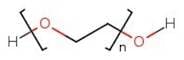
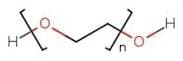
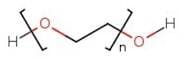
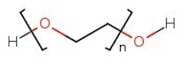
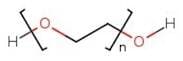
Polyethylenglykol (PEG), mit der CAS-Nummer 25322-68-3, ist ein vielseitiges Polymer, das für seine hydrophilen Eigenschaften und Biokompatibilität bekannt ist. Es besteht aus sich wiederholenden Einheiten von Ethylenoxid, was zu einer Struktur führt, die im Molekulargewicht variieren kann, was seine physikalischen und chemischen Eigenschaften beeinflusst. PEG ist typischerweise eine farblose, geruchlose und viskose Flüssigkeit oder ein wachsartiger Feststoff, abhängig von seinem Molekulargewicht. Es ist in Wasser und vielen organischen Lösungsmitteln löslich, was es in einer Vielzahl von Anwendungen nützlich macht, einschließlich Pharmazie, Kosmetik und Lebensmittelprodukten. PEG dient als Schmiermittel, Feuchthaltemittel und Emulgator und wird häufig in Arzneimittelformulierungen verwendet, um die Löslichkeit und Bioverfügbarkeit zu verbessern. Darüber hinaus macht seine ungiftige Natur und die Fähigkeit, Hydrogels zu bilden, es wertvoll in biomedizinischen Anwendungen, wie z.B. Arzneimittelabgabesystemen und Gewebeengineering. Die spezifischen Eigenschaften von PEG können jedoch erheblich variieren, abhängig von seinem Molekulargewicht und seiner Formulierung, was bei der Auswahl für bestimmte Anwendungen berücksichtigt werden muss.
Formel:(C2H4O)nH2O
InChl:InChI=1S/C2H6O2/c3-1-2-4/h3-4H,1-2H2
InChI Key:InChIKey=LYCAIKOWRPUZTN-UHFFFAOYSA-N
SMILES:C(CO[H])O
Synonyme:- 1660O
- 1660S
- 3,6,9,12,15,18,21,24,27,30,33,36,39-Tridecaoxahentetracontane-1,41-diol
- 400Dab8
- Alkox
- Aquaffin
- Badimol
- Carbowachs
- Carbowax
- Colonsoft
- Db-Wax
- Duraseal
- FPR
- Forlax
- GlycoLax
- IW
- Isocolan
- KleanPrep
- Macrogol
- MiraLax
- Modopeg
- Muvinlax
- Nosilen
- Nycoline
- OEG
- PEB
- PEG
- PEG-(OH)<sub>2</sub>
- PEG-diol
- PEO
- PER
- Pegorion
- Peo-Pf
- Peo-Pfz
- Peo-Pfzr
- Peopo-A
- Polikol
- Poly(Oxy-1,2-Ethanediyl),A-Hydro-W-Hydroxy
- Poly(oxy-1,2-ethanediyl)
- Polyaethylenglykol
- Polyethox
- Polyethyleneglycol
- Polyetox
- Polygol
- Polyhydroxyethylene
- Polyosm
- Polyox
- Polyoxydin
- Polyoxyethylenediol
- Postonal
- Sed-Fix
- Slovapeg
- Solbase
- SpaceOAR
- Superox
- Ucarfloc
- α-Hydro-ω-hydroxypoly(oxy-1,2-ethanediyl)
- α-Hydro-ω-hydroxypoly(oxyethylene)
- PEG 6000
- Polyethylene glycol
- Polyethylene Glycol
- PEG 6000, MB Grade (1.12033)
- Poly(oxy-1,2-ethanediyl), α-hydro-ω-hydroxy-
- PEG 200
- Poly(ethylene oxide)
- Poly(ethylene glycol)
- Polyethyleneoxidemonomethacryloxymonotrimethylsiloxyterminated
- Poly ethylene glycol
- O-Methacryloxy(polyethyleneoxy)trimethylsilane
- poly(oxyethylene)
- Polyethylene glygcol
- PEG 200-8000
- Polyethylene glycol
- Ethylene oxide, homopolymer
- Polyethylene Glycol 5000000
- PolyethyleneoxideMW
- Aquacide III
- Polyethylene glycol series
- Tri-(2,3-Dibromopropyl) Phosphate
- Glycols, polyethylene
- Polyethylene glycol PEG
- Polyethylene glycol - 6000 grade
- Carmowax
- PEG 8000
- PEG 1000
- Ethylene glycol 8000 polymer
- PEG-400
- polyethylene oxide standard 511000
- Oxide Wax AN
- PEG 400
- Polyethylene Oxide
- PEG 600
- Weitere Synonyme anzeigen
Sortieren nach
Reinheit (%)
0
100
|
0
|
50
|
90
|
95
|
100
Polyethylene glycol 1,500
CAS:Cell fusion induced by polyethylene glycol(PEG) has become a standard method in somatic cell genetics. PEG promoted cell fusion is involved in the production of hybridoma cells. This Thermo Scientific Chemicals brand product was originally part of the Alfa Aesar product portfolio. Some documentationFormel:(C2H4O)nFarbe und Form:White, Waxy flakesPolyethylene glycol 1,000
CAS:Polyethylene glycol is used as an excipent in pharmaceutical products. It is used in the precipitation of proteins as well as in the separation and purification of biomolecules and in the induction of cell hybridization. It acts as a fusing agent to enhance the effect of macrophages on hybridoma; asFormel:(C2H4O)nFarbe und Form:Waxy solid, WhitePolyethylene Glycol 6000, Flakes, Ultrapure
CAS:Thermo Scientific Polyethylene Glycol 6000 Flakes UltrapureFormel:(C2H4O)nFarbe und Form:White or slightly yellowish, FlakesMolekulargewicht:5400-6600Polyethylene oxide, M.W. >5,000,000
CAS:It is used as a thickening agent and gel binder in the pharmaceutical industry. It is used as a analytical reagents, substrates, flocculants, dispersants, lubricants, emulsifiers, moisturizers, food additives. This Thermo Scientific Chemicals brand product was originally part of the Alfa Aesar produFormel:(C2H4O)nFarbe und Form:White, Powder/flakePolyethylene glycol 600
CAS:Polyethylene glycol is used as a humectant in inks and adhesives. It acts as a solvent in soldering flux and as a dye carrier in inks. It is also useful as a modifier and binder in latex paint. It is used as an additive in synthetic lubricants, cutting oil and hydraulic fluids. It plays an importantFormel:(C2H4O)nFarbe und Form:Liquid as melt or white low-melting solid, ColorlessPolyethylene oxide, M.W. 1,000,000
CAS:Polyethylene oxide is used as lubricants for rubber molds, textiles, metalworking and ceramics production. Further, it is used in food packaging, water-based paints, polishes, paper coatings, dispersing agents and chemical intermediates. In addition, it is used to impart viscosity to and modify theFormel:(C2H4O)nFarbe und Form:White to off-white, Powder or crystals or crystalline powderPolyethylene glycol 4,000
CAS:Polyethylene glycol is used in gene delivery of protoplast transfection and incubation. It is used in the preparation of extraction for measuring cytosolic phosphoenolpyruvate carboxykinase (PEPCK) from plant tissues. It is useful to mediate DNA transformation into protoplasts derived from rice leafFormel:(C2H4O)nFarbe und Form:Powder or flakes or granular, WhitePolyethylene glycol 6,000
CAS:Polyethylene glycol is used in the modification of therapeutic proteins and peptides to enhance its solubility. It is also used in the fabrication of bioactive and immuno isolating barriers for encapsulation of cells. In Gas chromatorgraphy, it is used as a polar stationary phase. It is used as moldFormel:(C2H4O)nFarbe und Form:White to cream, Powder or flakesHIGH-MOLECULAR-MASS MACROGOL CRS
CAS:HIGH-MOLECULAR-MASS MACROGOL CRSFormel:C9H17NO3Molekulargewicht:187.2362Polyethylene Glycol 3000
CAS:Polyethers, nesoiFormel:HOCH2CH2nOHFarbe und Form:Colorless FlakesMolekulargewicht:187.2362Polyethylene Glycol 8000
CAS:Polyethers, nesoiFormel:HOCH2CH2nOHFarbe und Form:White GranularMolekulargewicht:7000 - 9000Polyethylene Glycol 600
CAS:Polyethers, nesoiFormel:HOCH2CH2nOHFarbe und Form:LiquidMolekulargewicht:570 - 630Polyethylene Glycol 400
CAS:Polyethers, nesoiFormel:HOCH2CH2nOHFarbe und Form:Colorless Clear LiquidMolekulargewicht:380 - 420Polyethylene Glycol 300
CAS:Polyethers, nesoiFormel:HOCH2CH2nOHFarbe und Form:LiquidMolekulargewicht:285 - 315Polyethylene Glycol 200
CAS:Polyethers, nesoiFormel:HOCH2CH2OnHFarbe und Form:Colorless Clear LiquidMolekulargewicht:About 200 (44.05 monomer)Polyethylene Glycol 3350
CAS:Polyethers, nesoiFormel:HOCH2CH2nOHFarbe und Form:White SolidMolekulargewicht:3015 - 3685Polyethylene Glycol 6000
CAS:Polyethers, nesoiFormel:HOC2H4nOHFarbe und Form:Colorless FlakesMolekulargewicht:5400 - 6600Polyethylene Oxide
CAS:Polyethers, nesoiFormel:(CH2CH2O)nFarbe und Form:White Off-White PowderMolekulargewicht:5000000Polyethylene Glycol 4000
CAS:Polyethers, nesoiFormel:HOCH2CH2nOHFarbe und Form:White Off-White Waxy Solid FlakesMolekulargewicht:3600 - 4400