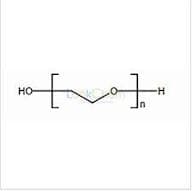
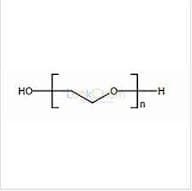
CAS 25322-68-3
:Polyethylenglykol
- 1660O
- 1660S
- 3,6,9,12,15,18,21,24,27,30,33,36,39-Tridecaoxahentetracontane-1,41-diol
- 400Dab8
- Alkox
- Aquaffin
- Badimol
- Carbowachs
- Carbowax
- Colonsoft
- Db-Wax
- Duraseal
- FPR
- Forlax
- GlycoLax
- IW
- Isocolan
- KleanPrep
- Macrogol
- MiraLax
- Modopeg
- Muvinlax
- Nosilen
- Nycoline
- OEG
- PEB
- PEG
- PEG-(OH)<sub>2</sub>
- PEG-diol
- PEO
- PER
- Pegorion
- Peo-Pf
- Peo-Pfz
- Peo-Pfzr
- Peopo-A
- Polikol
- Poly(Oxy-1,2-Ethanediyl),A-Hydro-W-Hydroxy
- Poly(oxy-1,2-ethanediyl)
- Polyaethylenglykol
- Polyethox
- Polyethyleneglycol
- Polyetox
- Polygol
- Polyhydroxyethylene
- Polyosm
- Polyox
- Polyoxydin
- Polyoxyethylenediol
- Postonal
- Sed-Fix
- Slovapeg
- Solbase
- SpaceOAR
- Superox
- Ucarfloc
- α-Hydro-ω-hydroxypoly(oxy-1,2-ethanediyl)
- α-Hydro-ω-hydroxypoly(oxyethylene)
- PEG 6000
- Polyethylene glycol
- Polyethylene Glycol
- PEG 6000, MB Grade (1.12033)
- Poly(oxy-1,2-ethanediyl), α-hydro-ω-hydroxy-
- PEG 200
- Poly(ethylene oxide)
- Poly(ethylene glycol)
- Polyethyleneoxidemonomethacryloxymonotrimethylsiloxyterminated
- Poly ethylene glycol
- O-Methacryloxy(polyethyleneoxy)trimethylsilane
- poly(oxyethylene)
- Polyethylene glygcol
- PEG 200-8000
- Polyethylene glycol
- Ethylene oxide, homopolymer
- Polyethylene Glycol 5000000
- PolyethyleneoxideMW
- Aquacide III
- Polyethylene glycol series
- Tri-(2,3-Dibromopropyl) Phosphate
- Glycols, polyethylene
- Polyethylene glycol PEG
- Polyethylene glycol - 6000 grade
- Carmowax
- PEG 8000
- PEG 1000
- Ethylene glycol 8000 polymer
- PEG-400
- polyethylene oxide standard 511000
- Oxide Wax AN
- PEG 400
- Polyethylene Oxide
- PEG 600
- Weitere Synonyme anzeigen
Polyethylene glycol 4000, BP, Ph. Eur., USP/NF grade
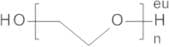
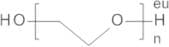
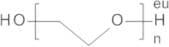
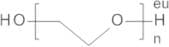
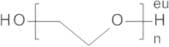
CAS:Formel:CH2CH2OnFarbe und Form:White or almost white solid with a waxy appearanceMolekulargewicht:3,600 - 4,400Polyethylene glycol 400
CAS:Formel:CH2CH2OnFarbe und Form:Clear, colourless liquidMolekulargewicht:~400Polyethylene glycol 6000
CAS:Formel:CH2CH2OnFarbe und Form:White powder, crystals or flakesMolekulargewicht:~6,000Polyethylene glycol 400, BP, Ph. Eur., USP/NF grade
CAS:Formel:CH2CH2OnFarbe und Form:Clear, viscous, colourless or almost colourless hygroscopic liquidMolekulargewicht:~400Polyethylene glycol 1500
CAS:Formel:CH2CH2OnFarbe und Form:White powder, crystals or flakesMolekulargewicht:1,400 - 1,600Polyethylene glycol 8000
CAS:Formel:CH2CH2OnFarbe und Form:White powder, crystals or flakesMolekulargewicht:~8,000Polyethylene Glycol 400 (USP-NF, BP, Ph. Eur.) pure
CAS:Polyethylene Glycol 400 (USP-NF, BP, Ph. Eur.) pureReinheit:Pharma GradeFarbe und Form:Viscous LiquidPolyethylene glycol 6000, BP, Ph. Eur., USP/NF grade
CAS:Formel:CH2CH2OnFarbe und Form:White or almost white solid with a waxy appearancePolyethylene glycol 300
CAS:Formel:CH2CH2OnFarbe und Form:Clear, colourless liquidMolekulargewicht:~300Polyethylene glycol 4000
CAS:Formel:CH2CH2OnFarbe und Form:White powder, crystals or flakesMolekulargewicht:3,600 - 4,400Polyethylene glycol 1000
CAS:Formel:CH2CH2OnFarbe und Form:White fused or waxy solidMolekulargewicht:~1,000Polyethylene glycol 300, BP, Ph. Eur., USP/NF grade
CAS:Formel:CH2CH2OnFarbe und Form:Clear, viscous, colourless or almost colourless hygroscopic liquidMolekulargewicht:~300Polyethylene Glycol 6000, Flakes, Ultrapure
CAS:Polyethylene Glycol 6000, Flakes, UltrapureReinheit:≥95%Polyethylene glycol 8000, BP, Ph. Eur., USP/NF grade
CAS:Formel:CH2CH2OnFarbe und Form:White or almost white solid with a waxy appearanceMolekulargewicht:~8,000Polyethylene Glycol 8000 BioChemica
CAS:Polyethylene Glycol 8000 BioChemicaFarbe und Form:White SolidPoly(ethylene Glycol) ~2000
CAS:Applications Poly(ethylene Glycol) molecules of an average molecular mass of 2000. Poly(ethylene Glycol) is used in various applications from industrial chemistry to biological chemistry. Recent research has shown PEG maintains the ability to aid the spinal cord injury recovery process, helping the nerve impulse conduction process in animals. In rats, it has been shown to aid in the repair of severed sciatic axons, helping with nerve damage recovery. It is industrially produced as a lubricating substance for various surfaces to reduce friction. PEG is also used in the preparation of vesicle transport systems in with application towards diagnostic procedures or drug delivery methods.
References Borgens, R. et al.: J. Neurosci. Res., 66, 1179 (2001); Stavisky, R. et al.: Neurosci. Lett., 376, 98 (2005); Nalam, P. et al.: Tribiol. Lett., 37, 541 (2010); Steinmetz, N. et al.: J. Am. Chem. Soc., 131, 17093 (2009); Li, X. et al.: J. Am. Chem. Soc., 133, 11147 (2011); Li, L. et al.: Int. J. Pharm., 447, 192 (2013);Formel:H2O(C2H4O)nFarbe und Form:White To Off-WhiteMolekulargewicht:62.07Poly(ethylene Glycol) ~1000
CAS:Kontrolliertes ProduktApplications Poly(ethylene Glycol) molecules of an average molecular mass of 1000. Poly(ethylene Glycol) is used in various applications from industrial chemistry to biological chemistry. Recent research has shown PEG maintains the ability to aid the spinal cord injury recovery process, helping the nerve impulse conduction process in animals. In rats, it has been shown to aid in the repair of severed sciatic axons, helping with nerve damage recovery. It is industrially produced as a lubricating substance for various surfaces to reduce friction. PEG is also used in the preparation of vesicle transport systems in with application towards diagnostic procedures or drug delivery methods.
References Borgens, R. et al.: J. Neurosci. Res., 66, 1179 (2001); Stavisky, R. et al.: Neurosci. Lett., 376, 98 (2005); Nalam, P. et al.: Tribiol. Lett., 37, 541 (2010); Steinmetz, N. et al.: J. Am. Chem. Soc., 131, 17093 (2009); Li, X. et al.: J. Am. Chem. Soc., 133, 11147 (2011); Li, L. et al.: Int. J. Pharm., 447, 192 (2013);Formel:H2O(C2H4O)nFarbe und Form:White To Off-WhiteMolekulargewicht:62.07Poly(ethylene Glycol) ~4000
CAS:Kontrolliertes ProduktFormel:H2O(C2H4O)nFarbe und Form:White To Off-WhiteMolekulargewicht:62.07Kollisolv PEG 300
CAS:Kontrolliertes ProduktApplications Kollisolv PEG 300 is used as a thickening agent and gel binder in the pharmaceutical industry.
Formel:H2O(C2H4O)nFarbe und Form:ColourlessMolekulargewicht:62.07Poly(ethylene Glycol) ~600
CAS:Kontrolliertes ProduktApplications Poly(ethylene Glycol) molecules of an average molecular mass of 600. Poly(ethylene Glycol) is used in various applications from industrial chemistry to biological chemistry. Recent research has shown PEG maintains the ability to aid the spinal cord injury recovery process, helping the nerve impulse conduction process in animals. In rats, it has been shown to aid in the repair of severed sciatic axons, helping with nerve damage recovery. It is industrially produced as a lubricating substance for various surfaces to reduce friction. PEG is also used in the preparation of vesicle transport systems in with application towards diagnostic procedures or drug delivery methods.
References Borgens, R. et al.: J. Neurosci. Res., 66, 1179 (2001); Stavisky, R. et al.: Neurosci. Lett., 376, 98 (2005); Nalam, P. et al.: Tribiol. Lett., 37, 541 (2010); Steinmetz, N. et al.: J. Am. Chem. Soc., 131, 17093 (2009); Li, X. et al.: J. Am. Chem. Soc., 133, 11147 (2011); Li, L. et al.: Int. J. Pharm., 447, 192 (2013);Formel:H2O(C2H4O)nFarbe und Form:Colourless To Off-WhiteMolekulargewicht:62.07Poly(ethylene Glycol) ~6000
CAS:Kontrolliertes ProduktApplications Poly(ethylene Glycol) molecules of an average molecular mass of 6000. Poly(ethylene Glycol) is used in various applications from industrial chemistry to biological chemistry. Recent research has shown PEG maintains the ability to aid the spinal cord injury recovery process, helping the nerve impulse conduction process in animals. In rats, it has been shown to aid in the repair of severed sciatic axons, helping with nerve damage recovery. It is industrially produced as a lubricating substance for various surfaces to reduce friction. PEG is also used in the preparation of vesicle transport systems in with application towards diagnostic procedures or drug delivery methods.
References Borgens, R. et al.: J. Neurosci. Res., 66, 1179 (2001); Stavisky, R. et al.: Neurosci. Lett., 376, 98 (2005); Nalam, P. et al.: Tribiol. Lett., 37, 541 (2010); Steinmetz, N. et al.: J. Am. Chem. Soc., 131, 17093 (2009); Li, X. et al.: J. Am. Chem. Soc., 133, 11147 (2011); Li, L. et al.: Int. J. Pharm., 447, 192 (2013)Formel:H2O(C2H4O)nFarbe und Form:White To Off-WhiteMolekulargewicht:62.07Poly(ethylene Glycol) ~400
CAS:Applications Poly(ethylene Glycol) ~400 is a polymer of ethylene oxide with a molecular weight of ~400 Daltons. Poly(ethylene Glycol) ~400 is considered a low molecular weight polyethylene glycol, and is used as a hydrophilic molecular probe for measuring intestinal permeability. Poly(ethylene Glycol) ~400 is also used as a hydrophilic plasticizer.
References Lu, E., et al.: J. Control. Release, 92, 375 (2003); Ma, T., et al.: Gastroenterology, 98, 39 (1990)Formel:H2O(C2H4O)nFarbe und Form:ColourlessMolekulargewicht:62.07PEG 600
CAS:Kontrolliertes ProduktPEG 600 is a polyethylene glycol polymer used as a linker. It is used to attached PEG to proteins, peptides, oligonucleotides, nanoparticles and small molecules via pegylation, a bioconjugation technique
Formel:(C2H4O)n•H2OFarbe und Form:Clear Colourless LiquidPEG 1500
CAS:Kontrolliertes ProduktPEG 1500 is a polyethylene glycol polymer used as a linker. It is used to attached PEG to proteins, peptides, oligonucleotides, nanoparticles and small molecules via pegylation, a bioconjugation technique
Farbe und Form:PowderPolyethylene glycol
CAS:Kontrolliertes ProduktPolyethylene glycol (PEG) is a synthetic, water-soluble polymer composed of repeating ethylene glycol units. Chemically, it is a polyether. PEG is widely used in many applications, including pharmaceuticals, cosmetics, and industrial processes. In the production of pharmaceuticals, PEG is used primarily as an excipient or inactive ingredient in various medications and drug delivery systems, as well as a linker or spacer for bioconjugates.Formel:(C2H4O)n•H2OReinheit:Min. 95%Farbe und Form:Colorless Clear LiquidPEG 4000
CAS:Kontrolliertes ProduktPEG 4000 is a polyethylene glycol polymer used as a linker. It is used to attached PEG to proteins, peptides, oligonucleotides, nanoparticles and small molecules via pegylation, a bioconjugation technique
Formel:(C2H4O)n•H2OReinheit:Min. 95%Farbe und Form:White PowderPEG 6000
CAS:Kontrolliertes ProduktPEG 6000 is a polyethylene glycol polymer used as a linker. It is used to attached PEG to proteins, peptides, oligonucleotides, nanoparticles and small molecules via pegylation, a bioconjugation technique
Formel:(C2H4O)n•H2OFarbe und Form:PowderPEG 200
CAS:Kontrolliertes ProduktPEG 200 is a polyethylene glycol polymer used as a linker. It is used to attached PEG to proteins, peptides, oligonucleotides, nanoparticles and small molecules via pegylation, a bioconjugation techniqueFormel:(C2H4O)nH2OReinheit:Min. 95%Farbe und Form:Clear LiquidPEG 400
CAS:Kontrolliertes ProduktPEG 400 is a polyethylene glycol polymer used as a linker. It is used to attached PEG to proteins, peptides, oligonucleotides, nanoparticles and small molecules via pegylation, a bioconjugation technique
Formel:(C2H4O)n•H2OFarbe und Form:Clear LiquidPoly(ethylene oxide) - average Mv 400,000 (contains 200 - 500 ppm BHT)
CAS:Kontrolliertes ProduktAverage Mv 400,000 (contains 200 - 500 ppm BHT)
Formel:(C2H4O)n•H2OReinheit:Min. 95%Farbe und Form:White To Off-White SolidPolyethylene Glycol 9000 Flakes (PEG 9000)
CAS:Farbe und Form:White, Crystalline powder/flakes, Clear, ColourlessPolyethylene Glycol 3350 Flakes (PEG 3350) ExiPlus, Multi-Compendial
CAS:Farbe und Form:White, Crystalline flake, Clear, ColourlessMolekulargewicht:3000-3500