CAS 25322-68-3
:Polyethylenglykol
Beschreibung:
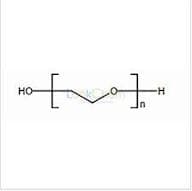
Polyethylenglykol (PEG), mit der CAS-Nummer 25322-68-3, ist ein vielseitiges Polymer, das für seine hydrophilen Eigenschaften und Biokompatibilität bekannt ist. Es besteht aus sich wiederholenden Einheiten von Ethylenoxid, was zu einer Struktur führt, die im Molekulargewicht variieren kann, was seine physikalischen und chemischen Eigenschaften beeinflusst. PEG ist typischerweise eine farblose, geruchlose und viskose Flüssigkeit oder ein wachsartiger Feststoff, abhängig von seinem Molekulargewicht. Es ist in Wasser und vielen organischen Lösungsmitteln löslich, was es in einer Vielzahl von Anwendungen nützlich macht, einschließlich Pharmazie, Kosmetik und Lebensmittelprodukten. PEG dient als Schmiermittel, Feuchthaltemittel und Emulgator und wird häufig in Arzneimittelformulierungen verwendet, um die Löslichkeit und Bioverfügbarkeit zu verbessern. Darüber hinaus macht seine ungiftige Natur und die Fähigkeit, Hydrogels zu bilden, es wertvoll in biomedizinischen Anwendungen, wie z.B. Arzneimittelabgabesystemen und Gewebeengineering. Die spezifischen Eigenschaften von PEG können jedoch erheblich variieren, abhängig von seinem Molekulargewicht und seiner Formulierung, was bei der Auswahl für bestimmte Anwendungen berücksichtigt werden muss.
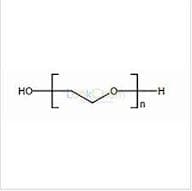
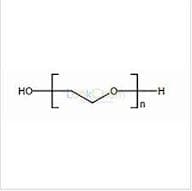
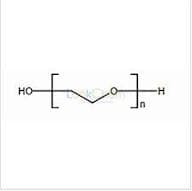
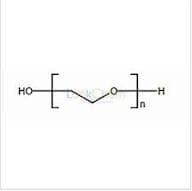
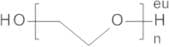
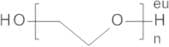
Formel:(C2H4O)nH2O
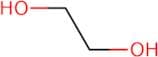
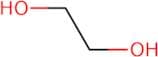
InChl:InChI=1S/C2H6O2/c3-1-2-4/h3-4H,1-2H2
InChI Key:InChIKey=LYCAIKOWRPUZTN-UHFFFAOYSA-N
SMILES:C(CO[H])O
Synonyme:- 1660O
- 1660S
- 3,6,9,12,15,18,21,24,27,30,33,36,39-Tridecaoxahentetracontane-1,41-diol
- 400Dab8
- Alkox
- Aquaffin
- Badimol
- Carbowachs
- Carbowax
- Colonsoft
- Db-Wax
- Duraseal
- FPR
- Forlax
- GlycoLax
- IW
- Isocolan
- KleanPrep
- Macrogol
- MiraLax
- Modopeg
- Muvinlax
- Nosilen
- Nycoline
- OEG
- PEB
- PEG
- PEG-(OH)<sub>2</sub>
- PEG-diol
- PEO
- PER
- Pegorion
- Peo-Pf
- Peo-Pfz
- Peo-Pfzr
- Peopo-A
- Polikol
- Poly(Oxy-1,2-Ethanediyl),A-Hydro-W-Hydroxy
- Poly(oxy-1,2-ethanediyl)
- Polyaethylenglykol
- Polyethox
- Polyethyleneglycol
- Polyetox
- Polygol
- Polyhydroxyethylene
- Polyosm
- Polyox
- Polyoxydin
- Polyoxyethylenediol
- Postonal
- Sed-Fix
- Slovapeg
- Solbase
- SpaceOAR
- Superox
- Ucarfloc
- α-Hydro-ω-hydroxypoly(oxy-1,2-ethanediyl)
- α-Hydro-ω-hydroxypoly(oxyethylene)
- PEG 6000
- Polyethylene glycol
- Polyethylene Glycol
- PEG 6000, MB Grade (1.12033)
- Poly(oxy-1,2-ethanediyl), α-hydro-ω-hydroxy-
- PEG 200
- Poly(ethylene oxide)
- Poly(ethylene glycol)
- Polyethyleneoxidemonomethacryloxymonotrimethylsiloxyterminated
- Poly ethylene glycol
- O-Methacryloxy(polyethyleneoxy)trimethylsilane
- poly(oxyethylene)
- Polyethylene glygcol
- PEG 200-8000
- Polyethylene glycol
- Ethylene oxide, homopolymer
- Polyethylene Glycol 5000000
- PolyethyleneoxideMW
- Aquacide III
- Polyethylene glycol series
- Tri-(2,3-Dibromopropyl) Phosphate
- Glycols, polyethylene
- Polyethylene glycol PEG
- Polyethylene glycol - 6000 grade
- Carmowax
- PEG 8000
- PEG 1000
- Ethylene glycol 8000 polymer
- PEG-400
- polyethylene oxide standard 511000
- Oxide Wax AN
- PEG 400
- Polyethylene Oxide
- PEG 600
- Weitere Synonyme anzeigen
Sortieren nach
Reinheit (%)
0
100
|
0
|
50
|
90
|
95
|
100
Polyethylene Glycol 4000 Flakes (PEG 4000)
CAS:Farbe und Form:White, Waxy solid /Flakes, Clear, ColourlessMolekulargewicht:3500 - 4500Polyethylene Glycol 400 (PEG 400)
CAS:Farbe und Form:Clear, Colourless, Viscous liquidMolekulargewicht:380 -420Polyethylene Glycol 8000 Powder (PEG 8000) for molecular biology
CAS:Farbe und Form:White, Powder, Clear, ColourlessPolyethylene Glycol 9000 Flakes (PEG 9000) ExiPlus, Multi-Compendial
CAS:Farbe und Form:White, Crystalline powder/flakes, Clear, ColourlessPolyethylene Glycol 4000 Flakes (PEG 4000) Flakes ExiPlus, Multi-Compendial
CAS:Farbe und Form:White, Waxy solid /Flakes, Clear, ColourlessMolekulargewicht:3500 - 4500Polyethylene Glycol 1000 (PEG 1000)
CAS:Farbe und Form:White to almost white, Waxy solid, Clear, ColourlessPolyethylene Glycol 6000 Flakes (PEG 6000) ExiPlus, Multi-Compendial
CAS:Farbe und Form:White, Flakes/Powder, Clear, ColourlessMolekulargewicht:5000-7000Polyethylene Glycol 3350 Powder (PEG 3350)
CAS:Formel:H(OCH2CH2)nOHFarbe und Form:White, Powder, Clear, ColourlessMolekulargewicht:3000-3500Polyethylene Glycol 400 (PEG 400) ExiPlus, Multi-Compendial
CAS:Farbe und Form:Clear, Colourless, Viscous liquidMolekulargewicht:380 -420Polyethylene glycol 600
CAS:Formel:(C2H4O)nH2OFarbe und Form:Solid, Low Melting SolidMolekulargewicht:600Poly(ethylene Glycol) ~30,000
CAS:Kontrolliertes Produkt<p>Applications Poly(ethylene Glycol) molecules of an average molecular mass of 30,000. Poly(ethylene Glycol) is used in various applications from industrial chemistry to biological chemistry. Recent research has shown PEG maintains the ability to aid the spinal cord injury recovery process, helping the nerve impulse conduction process in animals. In rats, it has been shown to aid in the repair of severed sciatic axons, helping with nerve damage recovery. It is industrially produced as a lubricating substance for various surfaces to reduce friction. PEG is also used in the preparation of vesicle transport systems in with application towards diagnostic procedures or drug delivery methods.<br>References Borgens, R. et al.: J. Neurosci. Res., 66, 1179 (2001); Stavisky, R. et al.: Neurosci. Lett., 376, 98 (2005); Nalam, P. et al.: Tribiol. Lett., 37, 541 (2010); Steinmetz, N. et al.: J. Am. Chem. Soc., 131, 17093 (2009); Li, X. et al.: J. Am. Chem. Soc., 133, 11147 (2011); Li, L. et al.: Int. J. Pharm., 447, 192 (2013);<br></p>Formel:H2O(C2H4O)nFarbe und Form:White To Off-WhiteMolekulargewicht:62.07Poly(ethylene Glycol) ~40,000
CAS:<p>Applications Poly(ethylene Glycol) molecules of an average molecular mass of 40,000. Poly(ethylene Glycol) is used in various applications from industrial chemistry to biological chemistry. Recent research has shown PEG maintains the ability to aid the spinal cord injury recovery process, helping the nerve impulse conduction process in animals. In rats, it has been shown to aid in the repair of severed sciatic axons, helping with nerve damage recovery. It is industrially produced as a lubricating substance for various surfaces to reduce friction. PEG is also used in the preparation of vesicle transport systems in with application towards diagnostic procedures or drug delivery methods.<br>References Borgens, R. et al.: J. Neurosci. Res., 66, 1179 (2001); Stavisky, R. et al.: Neurosci. Lett., 376, 98 (2005); Nalam, P. et al.: Tribiol. Lett., 37, 541 (2010); Steinmetz, N. et al.: J. Am. Chem. Soc., 131, 17093 (2009); Li, X. et al.: J. Am. Chem. Soc., 133, 11147 (2011); Li, L. et al.: Int. J. Pharm., 447, 192 (2013);<br></p>Formel:H2O(C2H4O)nFarbe und Form:White To Off-WhiteMolekulargewicht:62.07PEG 300
CAS:Kontrolliertes Produkt<p>PEG 300 is a polyethylene glycol polymer used as a linker. It is used to attached PEG to proteins, peptides, oligonucleotides, nanoparticles and small molecules via pegylation, a bioconjugation technique</p>Formel:(C2H4O)n•H2OReinheit:Min. 95%Bis-dPEG®5, Half Benzyl Half NHS Ester
CAS:<p>Bis-dPEG®5, Half Benzyl Half NHS Ester is a heterobifunctional cross-linking reagent, which is derived from discrete poly(ethylene glycol) chemistry. It features a benzyl group on one end and an N-hydroxysuccinimide (NHS) ester on the other. The NHS ester is a well-known active ester that facilitates the formation of stable amide bonds with primary amines, commonly found on proteins and peptides. By doing so, it enables the covalent attachment of biomolecules, enhancing solubility, stability, and overall bioavailability.</p>Formel:C24H50O13Reinheit:Min. 95%Molekulargewicht:546.65 g/molPoly(ethylene oxide) - average Mv 200,000
CAS:Kontrolliertes Produkt<p>Polyethylene oxide is a linear polymer with an average molecular weight of 200,000. It has a viscosity of approximately 8,000-10,000 cps and is soluble in water. Polyethylene oxide can be used as an excipient for pharmaceutical products. This material is not toxic or carcinogenic and does not cause hypersensitivity reactions. It is metabolized by the liver and excreted in the bile. The polyethylene oxide molecule contains hydrophilic ethylene oxide (EO) and hydrophobic oxyethylene (OE) groups that are responsible for its solubility in water and its low toxicity. The EO groups are responsible for the high viscosity of polyethylene oxide, while the OE groups contribute to its low toxicity.</p>Formel:(C2H4O)n•H2OReinheit:Min. 95%PEG 3350 - Average Mw approx 3350
CAS:Kontrolliertes Produkt<p>PEG 3350 - Average Mw approx 3350 is a polyethylene glycol polymer used as a linker. It is used to attached PEG to proteins, peptides, oligonucleotides, nanoparticles and small molecules via pegylation, a bioconjugation technique</p>Formel:(C2H4O)n•H2OReinheit:Min. 95%Farbe und Form:White PowderPEG 3000
CAS:Kontrolliertes Produkt<p>PEG 3000 is a polyethylene glycol polymer used as a linker. It is used to attached PEG to proteins, peptides, oligonucleotides, nanoparticles and small molecules via pegylation, a bioconjugation technique</p>Formel:H(OCH2CH2)nOHReinheit:Min. 95%Farbe und Form:Clear LiquidPEG 8000
CAS:Kontrolliertes Produkt<p>PEG 8000 is a polyethylene glycol polymer used as a linker. It is used to attached PEG to proteins, peptides, oligonucleotides, nanoparticles and small molecules via pegylation, a bioconjugation technique</p>Formel:(C2H4O)n•H2OFarbe und Form:White PowderPolyethylene Glycol 8000 (USP-NF, BP, Ph. Eur.) pure
CAS:<p>Polyethylene Glycol 8000 (USP-NF, BP, Ph. Eur.) pure</p>Reinheit:Pharma GradeFarbe und Form:Solid