CAS 25322-68-3
:Polyethylenglykol
Beschreibung:
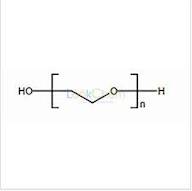
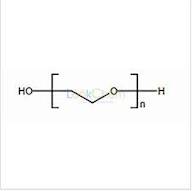
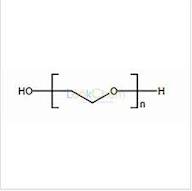
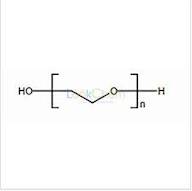
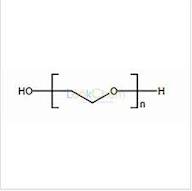
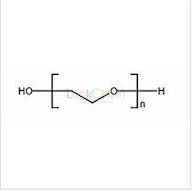
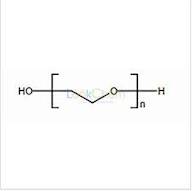
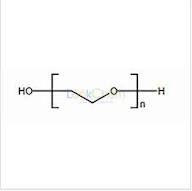
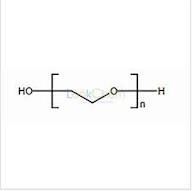
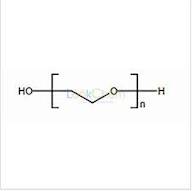
Polyethylenglykol (PEG), mit der CAS-Nummer 25322-68-3, ist ein vielseitiges Polymer, das für seine hydrophilen Eigenschaften und Biokompatibilität bekannt ist. Es besteht aus sich wiederholenden Einheiten von Ethylenoxid, was zu einer Struktur führt, die im Molekulargewicht variieren kann, was seine physikalischen und chemischen Eigenschaften beeinflusst. PEG ist typischerweise eine farblose, geruchlose und viskose Flüssigkeit oder ein wachsartiger Feststoff, abhängig von seinem Molekulargewicht. Es ist in Wasser und vielen organischen Lösungsmitteln löslich, was es in einer Vielzahl von Anwendungen nützlich macht, einschließlich Pharmazie, Kosmetik und Lebensmittelprodukten. PEG dient als Schmiermittel, Feuchthaltemittel und Emulgator und wird häufig in Arzneimittelformulierungen verwendet, um die Löslichkeit und Bioverfügbarkeit zu verbessern. Darüber hinaus macht seine ungiftige Natur und die Fähigkeit, Hydrogels zu bilden, es wertvoll in biomedizinischen Anwendungen, wie z.B. Arzneimittelabgabesystemen und Gewebeengineering. Die spezifischen Eigenschaften von PEG können jedoch erheblich variieren, abhängig von seinem Molekulargewicht und seiner Formulierung, was bei der Auswahl für bestimmte Anwendungen berücksichtigt werden muss.
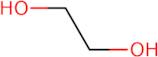
Formel:(C2H4O)nH2O
InChl:InChI=1S/C2H6O2/c3-1-2-4/h3-4H,1-2H2
InChI Key:InChIKey=LYCAIKOWRPUZTN-UHFFFAOYSA-N
SMILES:C(CO[H])O
Synonyme:- 1660O
- 1660S
- 3,6,9,12,15,18,21,24,27,30,33,36,39-Tridecaoxahentetracontane-1,41-diol
- 400Dab8
- Alkox
- Aquaffin
- Badimol
- Carbowachs
- Carbowax
- Colonsoft
- Db-Wax
- Duraseal
- FPR
- Forlax
- GlycoLax
- IW
- Isocolan
- KleanPrep
- Macrogol
- MiraLax
- Modopeg
- Muvinlax
- Nosilen
- Nycoline
- OEG
- PEB
- PEG
- PEG-(OH)<sub>2</sub>
- PEG-diol
- PEO
- PER
- Pegorion
- Peo-Pf
- Peo-Pfz
- Peo-Pfzr
- Peopo-A
- Polikol
- Poly(Oxy-1,2-Ethanediyl),A-Hydro-W-Hydroxy
- Poly(oxy-1,2-ethanediyl)
- Polyaethylenglykol
- Polyethox
- Polyethyleneglycol
- Polyetox
- Polygol
- Polyhydroxyethylene
- Polyosm
- Polyox
- Polyoxydin
- Polyoxyethylenediol
- Postonal
- Sed-Fix
- Slovapeg
- Solbase
- SpaceOAR
- Superox
- Ucarfloc
- α-Hydro-ω-hydroxypoly(oxy-1,2-ethanediyl)
- α-Hydro-ω-hydroxypoly(oxyethylene)
- PEG 6000
- Polyethylene glycol
- Polyethylene Glycol
- PEG 6000, MB Grade (1.12033)
- Poly(oxy-1,2-ethanediyl), α-hydro-ω-hydroxy-
- PEG 200
- Poly(ethylene oxide)
- Poly(ethylene glycol)
- Polyethyleneoxidemonomethacryloxymonotrimethylsiloxyterminated
- Poly ethylene glycol
- O-Methacryloxy(polyethyleneoxy)trimethylsilane
- poly(oxyethylene)
- Polyethylene glygcol
- PEG 200-8000
- Polyethylene glycol
- Ethylene oxide, homopolymer
- Polyethylene Glycol 5000000
- PolyethyleneoxideMW
- Aquacide III
- Polyethylene glycol series
- Tri-(2,3-Dibromopropyl) Phosphate
- Glycols, polyethylene
- Polyethylene glycol PEG
- Polyethylene glycol - 6000 grade
- Carmowax
- PEG 8000
- PEG 1000
- Ethylene glycol 8000 polymer
- PEG-400
- polyethylene oxide standard 511000
- Oxide Wax AN
- PEG 400
- Polyethylene Oxide
- PEG 600
- Weitere Synonyme anzeigen
Filtern nach
Reinheitsanteil
0
100
|
0
|
50
|
90
|
95
|
100
- Niedrigster Preis
- Höchster Preis
- Niedrigste Reinheit
- Höchste Reinheit
- Schnellste Lieferung
PEG 4000
CAS:Kontrolliertes ProduktPEG 4000 is a polyethylene glycol polymer used as a linker. It is used to attached PEG to proteins, peptides, oligonucleotides, nanoparticles and small molecules via pegylation, a bioconjugation technique
Formel:(C2H4O)n•H2OReinheit:Min. 95%Farbe und Form:White PowderPolyethylene Glycol 9000 Flakes (PEG 9000) ExiPlus, Multi-Compendial
CAS:Farbe und Form:White, Crystalline powder/flakes, Clear, ColourlessPolyethylene Glycol 9000 Flakes (PEG 9000)
CAS:Farbe und Form:White, Crystalline powder/flakes, Clear, ColourlessPolyethylene Glycol 3350 Flakes (PEG 3350) ExiPlus, Multi-Compendial
CAS:Farbe und Form:White, Crystalline flake, Clear, ColourlessMolekulargewicht:3000-3500Polyethylene Glycol 400 (PEG 400)
CAS:Farbe und Form:Clear, Colourless, Viscous liquidMolekulargewicht:380 -420Polyethylene Glycol 20000 Flakes (PEG 20000) ExiPlus, Multi-Compendial
CAS:Farbe und Form:White, Hard flakes, Clear, ColourlessPolyethylene Glycol 8000 Flakes (PEG 8000) ExiPlus, Multi-Compendial
CAS:Farbe und Form:White, Flakes/Powder, Clear, ColourlessMolekulargewicht:~8000Polyethylene Glycol 20000 Flakes (PEG 20000)
CAS:Farbe und Form:White, Hard Flakes/Powder, Clear, ColourlessPolyethylene Glycol 6000 Flakes (PEG 6000) ExiPlus, Multi-Compendial
CAS:Farbe und Form:White, Flakes, Clear, ColourlessMolekulargewicht:5000-7000Polyethylene Glycol 400 (PEG 400) ExiPlus, Multi-Compendial
CAS:Farbe und Form:Clear, Colourless, Viscous liquidMolekulargewicht:380 -420Polyethylene Glycol 4000 Flakes (PEG 4000) Flakes ExiPlus, Multi-Compendial
CAS:Farbe und Form:White, Flakes, Clear, ColourlessMolekulargewicht:3500 - 4500Polyethylene Glycol 6000 Flakes (PEG 6000)
CAS:Farbe und Form:White, Flakes/Powder, Clear, ColourlessMolekulargewicht:5000 - 7000Polyethylene Glycol 8000 Flakes (PEG 8000) for molecular biology
CAS:Farbe und Form:White, Flakes/Powder, Clear, ColourlessMolekulargewicht:~8000