CAS 28469-92-3
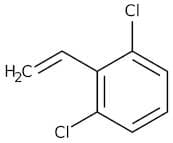
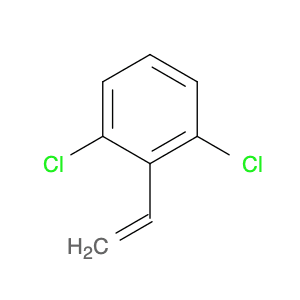
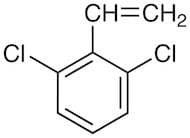
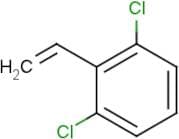
:2,6-Dichlorstyrol
Beschreibung:
2,6-Dichlorstyrol ist eine organische Verbindung, die durch ihre aromatische Struktur gekennzeichnet ist und ein Styrol-Rückgrat mit zwei Chlor-Substituenten an den Positionen 2 und 6 des Phenylrings aufweist. Diese Verbindung erscheint typischerweise als farblose bis blassgelbe Flüssigkeit und ist bekannt für ihren charakteristischen aromatischen Geruch. Sie ist mäßig in organischen Lösungsmitteln löslich, hat jedoch eine begrenzte Löslichkeit in Wasser. Die Anwesenheit von Chloratomen erhöht ihre Reaktivität, was sie in verschiedenen chemischen Synthesen nützlich macht, insbesondere bei der Herstellung von Polymeren und anderen chlorierten Verbindungen. 2,6-Dichlorstyrol kann typischen elektrophilen aromatischen Substitutionsreaktionen unterzogen werden, und ihre chlorierte Natur kann einzigartige Eigenschaften wie erhöhte thermische Stabilität und veränderte elektronische Eigenschaften verleihen. Sicherheitsüberlegungen sind wichtig, wenn man mit dieser Verbindung umgeht, da sie Gesundheitsrisiken durch Inhalation oder Hautkontakt darstellen kann. Es sollten geeignete Lagerungs- und Handhabungsprotokolle befolgt werden, um potenzielle Gefahren im Zusammenhang mit ihrer Verwendung in industriellen oder Laborumgebungen zu mindern.
Formel:C8H6Cl2
InChl:InChI=1/C8H6Cl2/c1-2-6-7(9)4-3-5-8(6)10/h2-5H,1H2
InChI Key:InChIKey=YJCVRMIJBXTMNR-UHFFFAOYSA-N
SMILES:C(=C)C1=C(Cl)C=CC=C1Cl
Synonyme:- 1,3-Dichloro-2-Ethenylbenzene
- 1,3-Dichloro-2-vinylbenzene
- Benzene, 1,3-dichloro-2-ethenyl-
- NSC 89716
- Styrene, 2,6-dichloro-
- 2,6-Dichlorostyrene
- 2,6-DICHLOROVINYLBENZENE
- Ethenyl-2,6-dichlorobenzol
- 1-Vinyl-2,6-dichlorobenzene
- 2,6-DICHLOROSTYRENE Stabilised with 0.1% 4-tert-buylcatechol
- 2,6-Dichloro-1-ethenylbenzene
- 2,6-Dichlorostyrene (stabilized with TBC)
- 2,6-Dichloro-1-vinylbenzene
- 2,6-Dichlorostyrene, 96%, stab. with 0.1% 4-tert-butylcatechol
- 2,6-DICHLOROSTYRENE 98%
- Weitere Synonyme anzeigen
Sortieren nach
Reinheit (%)
0
100
|
0
|
50
|
90
|
95
|
100
6 Produkte.
2,6-Dichlorostyrene, 96%, stab. with 0.1% 4-tert-butylcatechol
CAS:2,6-Dichlorostyrene is used in the preparation of 1,3-dichloro-2-(1,2-dibromo-ethyl)-benzene by bromination reaction using bromine. This Thermo Scientific Chemicals brand product was originally part of the Alfa Aesar product portfolio. Some documentation and label information may refer to the legacFormel:C8H6Cl2Reinheit:0.1%Farbe und Form:Clear colorless to yellow, LiquidMolekulargewicht:173.04Benzene, 1,3-dichloro-2-ethenyl-
CAS:Formel:C8H6Cl2Reinheit:98%Farbe und Form:LiquidMolekulargewicht:173.03921,3-Dichloro-2-vinylbenzene (stabilized with TBC)
CAS:Formel:C8H6Cl2Reinheit:>95.0%(GC)Farbe und Form:Colorless to Yellow clear liquidMolekulargewicht:173.042,6-Dichlorostyrene, stabilised with 0.1% 4-tert-butylcatechol
CAS:The 2,6-Dichlorostyrene stabilised with 0.1% 4-tert-buylcatechol (2,6-DC) is a primary alcohol with an inelastic molecule. It has been shown to be a good solvent for the analytical method of solute and chloride. The compound can also be used as a monomer in the synthesis of polystyrene. The 2,6-Dichlorostyrene stabilised with 0.1% 4-tert-buylcatechol has been used in copolymerization reactions at temperatures ranging from -10 to 50 degrees Celsius, which are known to produce copolymers that are soluble and elastomeric.Formel:C8H6Cl2Reinheit:Min. 95%Farbe und Form:Clear LiquidMolekulargewicht:173.04 g/mol