CAS 2903-45-9
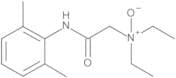
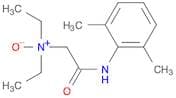
:2-(diethylnitroyl)-N-(2,6-dimethylphenyl)acetamid
Beschreibung:
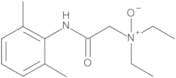
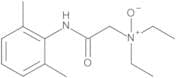
2-(Diethylnitrosamin)-N-(2,6-Dimethylphenyl)acetamid, identifiziert durch seine CAS-Nummer 2903-45-9, ist eine chemische Verbindung, die zur Klasse der Nitrosamine gehört, die für ihre potenziellen krebserregenden Eigenschaften bekannt sind. Diese Substanz weist eine diethyl-Nitrosamin-Gruppe auf, die durch das Vorhandensein einer Nitroso-Gruppe (-NO) gekennzeichnet ist, die an ein Stickstoffatom gebunden ist, das Teil einer Aminstruktur ist. Die Verbindung enthält auch eine Acetamid-Funktionalgruppe, was darauf hinweist, dass sie sowohl Amin- als auch Carbonylmerkmale aufweist. Ihre Struktur umfasst eine 2,6-Dimethylphenylgruppe, die zu ihrer hydrophoben Natur beiträgt und möglicherweise ihre biologische Aktivität und Löslichkeit beeinflusst. Aufgrund der Anwesenheit der Nitrosamingruppe ist diese Verbindung von Interesse in der Toxikologie und Umweltchemie, da Nitrosamine unter bestimmten Bedingungen entstehen können und mit verschiedenen Gesundheitsrisiken verbunden sind. Der Umgang mit und die Verwendung dieser Verbindung erfordern Vorsicht aufgrund ihrer potenziellen Gefahren.
Formel:C14H22N2O2
InChl:InChI=1/C14H22N2O2/c1-5-16(18,6-2)10-13(17)15-14-11(3)8-7-9-12(14)4/h7-9H,5-6,10H2,1-4H3,(H,15,17)
SMILES:CCN(=O)(CC)CC(=Nc1c(C)cccc1C)O
Synonyme:- acetamide, 2-(diethylnitroryl)-N-(2,6-dimethylphenyl)-
- Lidocaine EP Impurity B
- 2-(Diethylnitroryl)-N-(2,6-dimethylphenyl)acetamide
Sortieren nach
Reinheit (%)
0
100
|
0
|
50
|
90
|
95
|
100
12 Produkte.
Lidocaine N2-oxide (2-[(2,6-Dimethylphenyl)amino]-N,N-diethyl-2-oxoethan-1-amine oxide)
CAS:Cyclic amides and their derivatives, nesoiFormel:C14H22N2O2Farbe und Form:White SolidMolekulargewicht:250.16813Acetamide, 2-(diethyloxidoamino)-N-(2,6-dimethylphenyl)-
CAS:Formel:C14H22N2O2Reinheit:97%Farbe und Form:SolidMolekulargewicht:250.3367Lidocaine EP Impurity B (Lidocaine N-Oxide)
CAS:Formel:C14H22N2O2Farbe und Form:White To Off-White SolidMolekulargewicht:250.342-((2,6-Dimethylphenyl)Amino)-N,N-Diethyl-2-Oxoethan-1-Amine Oxide
CAS:2-((2,6-Dimethylphenyl)Amino)-N,N-Diethyl-2-Oxoethan-1-Amine OxideReinheit:98%Molekulargewicht:250.34g/mol2-(Diethylazinoyl)-N-(2,6-dimethylphenyl)acetamide (Lidocaine N2-Oxide)
CAS:Kontrolliertes ProduktFormel:C14H22N2O2Farbe und Form:NeatMolekulargewicht:250.34Lidocaine N-oxide
CAS:Kontrolliertes ProduktFormel:C14H22N2O2Farbe und Form:NeatMolekulargewicht:250.34Lidocaine N-Oxide
CAS:Impurity Lidocaine EP impurity B
Applications A novel metabolite of Lidocaine (L397800).
References Kupfer, A., et al.: Drug Metab. Dispos., 8, 1 ( 1980), Patterson, L., et al.: J. Pharm. Pharmacol., 38, 326 (1986), Gerding, T., et al.: Xenobiotica, 20, 525 (1990),Formel:C14H22N2O2Farbe und Form:WhiteMolekulargewicht:250.34Lignocaine N-oxide
CAS:Lignocaine N-oxide is a metabolite of Lidocaine, which is an antiarrhythmic and anesthetic agent.Formel:C14H22N2O2Reinheit:98%Farbe und Form:SolidMolekulargewicht:250.34Lidocaine N-oxide
CAS:Lidocaine N-oxide is a metabolite of lidocaine. It is produced by the oxidation of lidocaine by cytochrome P450 in the liver. Lidocaine N-oxide is an analytical marker for assessing the potential toxicity of environmental contaminants on cardiac tissue and ventricular fibrillation. The chemical denaturation of lidocaine, which occurs at high temperatures, can be used to detect its presence in wastewater. Lidocaine N-oxide has been shown to inhibit the cytosolic enzyme hydrogen bond, which is required for protein synthesis in cells.Formel:C14H22N2O2Reinheit:Min. 95%Farbe und Form:White SolidMolekulargewicht:250.34 g/mol