CAS 292634-27-6
:Dianicline
Beschreibung:
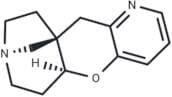
Dianicline ist eine chemische Verbindung, die als selektiver Agonist für nikotinische Acetylcholinrezeptoren wirkt, insbesondere des Subtyps α4β2. Sie wird hauptsächlich auf ihr potenzielles Einsatzgebiet in der Raucherentwöhnungstherapie untersucht, da sie in der Lage ist, die Wirkungen von Nikotin im Gehirn zu modulieren. Die Verbindung zeichnet sich durch ihre Fähigkeit aus, die dopaminerge Aktivität zu steigern, was helfen kann, Entzugssymptome im Zusammenhang mit Nikotinabhängigkeit zu lindern. Dianicline hat eine relativ komplexe molekulare Struktur, die zu ihren pharmakologischen Eigenschaften beiträgt. Ihr Wirksamkeits- und Sicherheitsprofil war Gegenstand verschiedener Studien, die sich auf ihre potenziellen therapeutischen Anwendungen und Nebenwirkungen konzentrieren. Wie bei vielen Verbindungen, die auf Neurotransmittersysteme abzielen, ist das Verständnis ihrer Pharmakokinetik, einschließlich Absorption, Verteilung, Metabolismus und Exkretion, entscheidend für die Bewertung ihrer klinischen Nützlichkeit. Insgesamt stellt Dianicline ein bedeutendes Forschungsgebiet im Bereich der Neuropharmakologie dar, insbesondere im Kontext von Sucht und Strategien zur Raucherentwöhnung.
Formel:C13H16N2O
InChl:InChI=1S/C13H16N2O/c1-2-11-10(14-5-1)8-13-4-7-15(9-13)6-3-12(13)16-11/h1-2,5,12H,3-4,6-9H2/t12-,13+/m0/s1
InChI Key:InChIKey=SUPRUPHAEXPGPF-QWHCGFSZSA-N
SMILES:[C@@]123[C@@](OC=4C(C1)=NC=CC4)(CC[N@@](C2)CC3)[H]
Synonyme:- (5aS,8S,10aR)-5a,6,9,10-Tetrahydro-7H,11H-8,10a-methanopyrido[2′,3′:5,6]pyrano[2,3-d]azepine
- 7H,11H-8,10a-Methanopyrido[2′,3′:5,6]pyrano[2,3-d]azepine, 5a,6,9,10-tetrahydro-, (5aS,8S,10aR)-
- Dianicline
- Ssr 591813
Sortieren nach
Reinheit (%)
0
100
|
0
|
50
|
90
|
95
|
100
2 Produkte.
Dianicline dihydrochloride
CAS:Dianicline dihydrochloride is a partial agonist of α4β2 nicotinic acetylcholine receptor. It increases cessation rates in a dose-dependent manner.Formel:C13H16N2OReinheit:98%Farbe und Form:SolidMolekulargewicht:216.28Dianicline
CAS:Dianicline is a dopaminergic agent that has been used in the treatment of Parkinson's disease. It is a nicotinic acetylcholine receptor agonist with cholinergic properties. This drug binds to the α7 nicotinic acetylcholine receptors, which are located on postsynaptic neurons, and increases dopamine release from the presynaptic terminal by inhibiting the reuptake of dopamine into the presynaptic neuron. It also acts as a receptor antagonist for cholinergic receptors of muscarinic type M1 and M2. The primary analysis of dianicline showed that it was more effective than placebo in treating Parkinson's disease symptoms, such as tremors and muscular rigidity. Clinical studies have shown that this drug may be beneficial for patients with early-stage Parkinson's disease who have not responded to levodopa therapy. Dianicline is metabolized by CYP2D6, which may lead to drug interactions with other drugs that are metabolFormel:C13H16N2OReinheit:Min. 95%Molekulargewicht:216.28 g/mol