CAS 29346-51-8
:1-ethyl-3-(2-hydroxyethyl)harnstoff
Beschreibung:
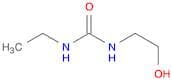
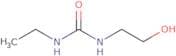
1-ethyl-3-(2-hydroxyethyl)harnstoff ist eine organische Verbindung, die durch ihre Harnstofffunktionalgruppe gekennzeichnet ist, die durch Ethyl- und Hydroxyethylsubstituenten modifiziert ist. Diese Verbindung erscheint typischerweise als weißer bis schmutzig-weißer Feststoff oder kristalline Substanz. Sie ist aufgrund der Anwesenheit der Hydroxyethylgruppe in Wasser löslich, was ihre Hydrophilie erhöht. Die molekulare Struktur umfasst eine Ethylgruppe, die an das Stickstoffatom der Harnstoffgruppe gebunden ist, während die Hydroxyethylgruppe an das Kohlenstoffatom der Harnstoffeinheit angeschlossen ist, was zu ihren einzigartigen Eigenschaften beiträgt. Diese Verbindung kann aufgrund der Hydroxylgruppe Wasserstoffbrückenbindungen aufweisen, die ihre Wechselwirkungen in verschiedenen chemischen Umgebungen beeinflussen. Sie wird häufig wegen ihrer potenziellen Anwendungen in der Pharmazie, Landwirtschaft und als chemisches Zwischenprodukt untersucht. Sicherheitsdatenblätter sollten für Handhabungs- und Lagerungsrichtlinien konsultiert werden, wie bei jeder chemischen Substanz, um sicherzustellen, dass während der Verwendung angemessene Sicherheitsmaßnahmen getroffen werden.
Formel:C5H12N2O2
InChl:InChI=1/C5H12N2O2/c1-2-6-5(9)7-3-4-8/h8H,2-4H2,1H3,(H2,6,7,9)
SMILES:CCN=C(NCCO)O
Sortieren nach
Reinheit (%)
0
100
|
0
|
50
|
90
|
95
|
100
2 Produkte.
1-Ethyl-3-(2-hydroxyethyl)urea
CAS:1-Ethyl-3-(2-hydroxyethyl)urea is a chemical compound that is an equimolar mixture of two isomers, 1-ethyl-3-(2-hydroxyethyl)urea and 3-(2-hydroxyethyl)-1-methylurea. It has been shown to induce death in tumor cells, but not in normal cells. The molecular targets for this compound are the mitochondria and the DNA, which are essential for cell growth and division. This drug also has carcinogenic properties, meaning that it can cause cancer. In animal studies, 1-ethyl-3-(2-hydroxyethyl)urea has been shown to cause thyroid tumors and astrocytomas (brain tumors). In addition, this drug causes hepatocellular carcinoma in rats and gliomas (brain tumors) in animals.Formel:C5H12N2O2Reinheit:Min. 95%Molekulargewicht:132.16 g/mol