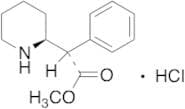
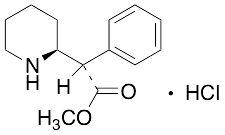
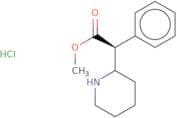
CAS 29419-95-2
:Methyl (αS,2S)-α-phenyl-2-piperidinacetat-hydrochlorid (1:1)
- 2-Piperidineacetic acid, a-phenyl-, methyl ester, hydrochloride, (aS,2S)-(-)- (8CI)
- 2-Piperidineacetic acid, a-phenyl-, methyl ester,hydrochloride, [S-(R*,R*)]-
- 2-Piperidineacetic acid, α-phenyl-, methyl ester, hydrochloride (1:1), (αS,2S)-
- 2-Piperidineacetic acid, α-phenyl-, methyl ester, hydrochloride, (αS,2S)-
- 2-Piperidineaceticacid, a-phenyl-, methyl ester,hydrochloride, (aS,2S)-(9CI)
- Methyl (αS,2S)-α-phenyl-2-piperidineacetate hydrochloride (1:1)
L-threo-Methylphenidate Hydrochloride (1.0mg/ml in Methanol)
CAS:Kontrolliertes ProduktFormel:C14H19NO2·ClHFarbe und Form:Single SolutionMolekulargewicht:269.77L-threo-Methylphenidate Hydrochloride
CAS:Kontrolliertes ProduktApplications Controlled substance. CNS stimulant. The less potent threo-enantiomer of Methylphenidate. The threo enantomers have shown that the pharmacological activity residues predominantly in the d-threo enantiomer.
References Greenblatt, E.N., et al.: J. Pharmacol. Exp. Ther., 131, 115 (1961), Padmanabhan, G.R., et al.: Anal. Profiles Drug Subs., 10, 473 (1981), Kuczenski, R., et al.: J. Pharmacol. Exp. Ther., 296, 876 (2001), Pelham, W.E., et al.: J. Consult. Clin. Psychol., 61, 506 (1993), Srinivas, N.R., et al.: Pharm. Res., 10, 14 (1993),Formel:C14H19NO2·ClHFarbe und Form:NeatMolekulargewicht:269.77L-Threo-methylphenidate hydrochloride
CAS:Kontrolliertes ProduktL-Threo-methylphenidate hydrochloride is a drug used to treat ADHD. It is a central nervous system stimulant that is believed to work by increasing levels of dopamine and norepinephrine in the brain, which helps to improve symptoms of ADHD. L-Threo-methylphenidate hydrochloride can be administered orally, but has also been shown to be effective when injected into the brain or applied as a skin patch. The pharmacodynamics of L-threo methylphenidate hydrochloride are not fully understood, but it has been shown that the drug binds to both dopamine and norepinephrine transporters. Monitoring treatment with L-threo methylphenidate hydrochloride should include assessing side effects such as changes in mood, sleep patterns, weight loss or gain, heart rate, blood pressure, and blood sugar levels.
Formel:C14H19NO2·HClReinheit:Min. 95%Molekulargewicht:269.77 g/mol