CymitQuimica logo

CAS 2943-73-9

:

Decyltriethoxysilan

Beschreibung:
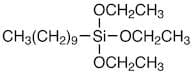
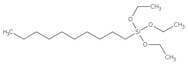
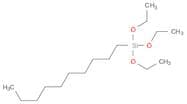
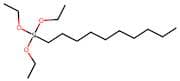
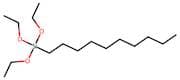
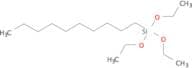
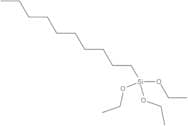
Decyltriethoxysilan, mit der CAS-Nummer 2943-73-9, ist eine organosiliciumverbindung, die durch ihre Silanstruktur gekennzeichnet ist, die eine Decylgruppe und drei Ethoxygruppen umfasst. Diese Verbindung ist typischerweise eine farblose bis blassgelbe Flüssigkeit und ist bekannt für ihre hydrophoben Eigenschaften, was sie nützlich als Oberflächenmodifikator und Kopplungsagent macht. Sie zeigt eine gute Verträglichkeit mit organischen Materialien und kann die Haftung zwischen anorganischen Substraten und organischen Polymeren verbessern. Decyltriethoxysilan wird häufig in Anwendungen wie Beschichtungen, Dichtstoffen und Klebstoffen eingesetzt, wo sie die Wasserabweisung und Haltbarkeit verbessert. Darüber hinaus kann sie die Bildung von Siloxan-Netzwerken erleichtern, was zur mechanischen Festigkeit und thermischen Stabilität von Materialien beiträgt. Ihre Reaktivität ermöglicht es ihr, sich mit verschiedenen Oberflächen zu verbinden, einschließlich Glas, Metallen und Keramiken, was sie in Branchen wie Bauwesen, Automobil und Elektronik wertvoll macht. Sicherheitsdatenblätter sollten konsultiert werden, um Richtlinien für Handhabung und Lagerung zu erhalten, wie bei jeder chemischen Substanz.
Formel:C16H36O3Si
InChl:InChI=1S/C16H36O3Si/c1-5-9-10-11-12-13-14-15-16-20(17-6-2,18-7-3)19-8-4/h5-16H2,1-4H3
InChI Key:InChIKey=BAAAEEDPKUHLID-UHFFFAOYSA-N
SMILES:[Si](CCCCCCCCCC)(OCC)(OCC)OCC
Synonyme:
  • 1-(Triethoxysilyl)decane
  • Decyltriethoxysilane
  • Kbe 3103
  • Sid 2265.0
  • Silane, decyltriethoxy-
  • Tri(ethoxo)(decyl)silane
  • Triethoxydecylsilane
Sortieren nach

Reinheit (%)
0
100
|
0
|
50
|
90
|
95
|
100
7 Produkte.
  • Decyltriethoxysilane

    CAS:
    Formel:C16H36O3Si
    Reinheit:>98.0%(GC)
    Farbe und Form:Colorless to Almost colorless clear liquid
    Molekulargewicht:304.55

    Ref: 3B-D5197

    25ml
    104,00€
  • n-Decyltriethoxysilane, 98%

    CAS:
    <p>n-Decyltriethoxysilane is used as coupling agent and as a chemical additive. It is also used as an intermediate of OLED, pharmaceuticals and in cosmetics. It is employed in many industries like adhesives, coatings, crude oil, glass fibers, filler treatment, polymer modification, printing, elastomers</p>
    Formel:C16H36O3Si
    Reinheit:98%
    Farbe und Form:Clear colorless, Liquid
    Molekulargewicht:304.55

    Ref: 02-L16965

    25g
    99,00€
    100g
    Nachfragen
  • Silane, decyltriethoxy-

    CAS:
    Formel:C16H36O3Si
    Reinheit:98%
    Farbe und Form:Liquid
    Molekulargewicht:304.5407

    Ref: IN-DA002YD9

    5g
    25,00€
    25g
    52,00€
    100g
    127,00€
  • N-Decyltriethoxysilane

    CAS:
    N-Decyltriethoxysilane
    Reinheit:98%
    Molekulargewicht:304.54g/mol

    Ref: 54-OR1014339

    1g
    32,00€
    5g
    36,00€
    25g
    66,00€
    100g
    157,00€
    500g
    652,00€
  • N-Decyltriethoxysilane

    CAS:
    N-Decyltriethoxysilane
    Reinheit:98%
    Molekulargewicht:304.54g/mol

    Ref: 54-OR1014340

    1g
    32,00€
    5g
    36,00€
    25g
    66,00€
    100g
    157,00€
    500g
    652,00€
  • n-Decyltriethoxysilane

    CAS:
    <p>S05600 - n-Decyltriethoxysilane</p>
    Formel:C16H36O3Si
    Reinheit:98%
    Farbe und Form:Liquid
    Molekulargewicht:304.546

    Ref: 10-S05600

    1g
    24,00€
    5g
    28,00€
    25g
    57,00€
    100g
    179,00€
  • n-DECYLTRIETHOXYSILANE

    CAS:
    <p>Alkyl Silane - Conventional Surface Bonding<br>Aliphatic, fluorinated aliphatic or substituted aromatic hydrocarbon substituents are the hydrophobic entities which enable silanes to induce surface hydrophobicity. The organic substitution of the silane must be non-polar. The hydrophobic effect of the organic substitution can be related to the free energy of transfer of hydrocarbon molecules from an aqueous phase to a homogeneous hydrocarbon phase. A successful hydrophobic coating must eliminate or mitigate hydrogen bonding and shield polar surfaces from interaction with water by creating a non-polar interphase. Although silane and silicone derived coatings are in general the most hydrophobic, they maintain a high degree of permeability to water vapor. This allows coatings to breathe and reduce deterioration at the coating interface associated with entrapped water. Since ions are not transported through non-polar silane and silicone coatings, they offer protection to composite structures ranging from pigmented coatings to rebar reinforced concrete. A selection guide for hydrophobic silanes can be found on pages 22-31 of the Hydrophobicity, Hydrophilicity and Silane Surface Modification brochure.<br>n-Decyltriethoxysilane; Triethoxysilyldecane<br>Trialkoxy silane<br></p>
    Formel:C16H36O3Si
    Reinheit:97%
    Farbe und Form:Straw Liquid
    Molekulargewicht:304.54