CymitQuimica logo

CAS 2973-10-6

:

Diisopropylsulfat

Beschreibung:
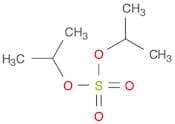
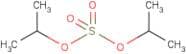
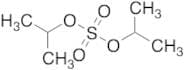
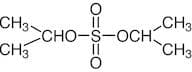
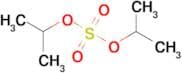
Diisopropylsulfat, mit der CAS-Nummer 2973-10-6, ist ein organisches Sulfatester, das durch seine zwei Isopropylgruppen, die an eine Sulfatgruppe gebunden sind, gekennzeichnet ist. Es handelt sich typischerweise um eine farblose bis blassgelbe Flüssigkeit mit einem stechenden Geruch. Diese Verbindung ist bekannt für ihre Reaktivität, insbesondere als sulfonierendes Mittel in der organischen Synthese, wo sie Sulfatgruppen in verschiedene Substrate einführen kann. Diisopropylsulfat ist in organischen Lösungsmitteln löslich, hat jedoch eine begrenzte Löslichkeit in Wasser. Es wird als gefährliches Material angesehen, da es die Haut, die Augen und das Atmungssystem reizen kann. Eine ordnungsgemäße Handhabung und Lagerung sind entscheidend, um die mit seiner Verwendung verbundenen Risiken zu mindern. Darüber hinaus ist es wichtig zu beachten, dass Diisopropylsulfat in Gegenwart von Wasser hydrolysiert werden kann, was zur Bildung von Isopropanol und Schwefelsäure führt, was die Handhabung in Laborumgebungen weiter komplizieren kann. Insgesamt ist Diisopropylsulfat ein wertvolles Reagenz in der synthetischen Chemie, erfordert jedoch eine sorgfältige Verwaltung aufgrund seiner potenziellen Gefahren.
Formel:C6H14O4S
InChl:InChI=1S/C6H14O4S/c1-5(2)9-11(7,8)10-6(3)4/h5-6H,1-4H3
InChI Key:InChIKey=HWBLTYHIEYOAOL-UHFFFAOYSA-N
SMILES:O(S(OC(C)C)(=O)=O)C(C)C
Synonyme:
  • 221-011-9
  • Diisopropyl sulfate
  • Dipropan-2-Yl Sulfate
  • Isopropyl sulfate ((C<sub>3</sub>H<sub>7</sub>O)<sub>2</sub>SO<sub>2</sub>)
  • Sulfuric Acid, Bis(1-Methylethyl) Ester
  • Sulfuric acid, diisopropyl ester
  • Isopropyl sulfate ((C3H7O)2SO2)
Sortieren nach

Reinheit (%)
0
100
|
0
|
50
|
90
|
95
|
100
7 Produkte.
  • Diisopropyl Sulfate

    CAS:
    Formel:C6H14O4S
    Reinheit:>97.0%(GC)
    Farbe und Form:Colorless to Light yellow clear liquid
    Molekulargewicht:182.23

    Ref: 3B-D2954

    5g
    112,00€
    25g
    414,00€
  • Sulfuric acid, bis(1-methylethyl) ester

    CAS:
    Formel:C6H14O4S
    Reinheit:97%
    Farbe und Form:Liquid
    Molekulargewicht:182.2380

    Ref: IN-DA002Z97

    1g
    39,00€
    5g
    97,00€
    10g
    148,00€
    25g
    256,00€
    100g
    Nachfragen
    250mg
    27,00€
  • Diisopropyl Sulfate

    CAS:
    Formel:C6H14O4S
    Molekulargewicht:182.23

    Ref: 4Z-S-168011

    5mg
    Nachfragen
    10mg
    444,00€
    25mg
    635,00€
    50mg
    825,00€
    100mg
    Nachfragen
  • Diisopropyl sulfate

    CAS:
    Diisopropyl sulfate
    Reinheit:97%
    Molekulargewicht:182.24g/mol

    Ref: 54-OR921753

    1g
    48,00€
    5g
    178,00€
    25g
    576,00€
    100g
    1.163,00€
    250mg
    32,00€
  • Diisopropyl sulfate

    CAS:
    Reinheit:97%
    Molekulargewicht:182.22999572753906

    Ref: 10-F608782

    1g
    Nachfragen
    5g
    Nachfragen
    10g
    Nachfragen
    250mg
    Nachfragen
  • Diisopropyl Sulfate

    Kontrolliertes Produkt
    CAS:
    <p>Applications DIISOPROPYL SULFATE (cas# 2973-10-6) is a useful research chemical.<br> Not a dangerous good if item is equal to or less than 1g/ml and there is less than 100g/ml in the package<br></p>
    Formel:C6H14O4S
    Farbe und Form:Neat
    Molekulargewicht:182.24

    Ref: TR-D493230

    50mg
    97,00€
    100mg
    127,00€
    500mg
    181,00€
  • Diisopropyl sulfate

    CAS:
    <p>Diisopropyl sulfate (DPS) is a chemical compound used in analytical chemistry as an alkylation agent. It is used to prepare derivatives of carboxylic acids, amines, and other compounds. DPS has been shown to cause cancer in animals when administered at high doses. DPS has been detected in the environment and can be found in food and drinking water at low levels. It is also present in some pharmaceuticals and personal care products. DPS may also be found in cosmetics and toiletries such as shampoos, toothpastes, soaps, detergents, hair dyes, and nail polish remover. DPS may react with nitric acid or nitrous acid to produce genotoxic impurities such as hydrogen sulfate or hydrogen chloride. DPS may also react with hydroxylamine to form dibutyl sulfoxide, which has been shown to cause heart disease in animals when administered at high doses.</p>
    Formel:C6H14O4S
    Reinheit:Min. 95%
    Molekulargewicht:182.24 g/mol

    Ref: 3D-FD172857

    25g
    863,00€