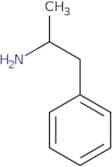
CAS 300-62-9
:Amphetamin
Beschreibung:
Amphetamin, mit der CAS-Nummer 300-62-9, ist ein potentes Stimulans des zentralen Nervensystems, das zur Klasse der Phenethylamin-Verbindungen gehört. Es ist durch seine Strukturformel gekennzeichnet, die einen Phenylring zeigt, der an eine Ethylamin-Kette gebunden ist. Amphetamin ist bekannt für seine Fähigkeit, die Freisetzung von Neurotransmittern, insbesondere Dopamin und Noradrenalin, zu erhöhen, was zu einer gesteigerten Wachsamkeit, Konzentration und Energie führt. Es wird häufig zur Behandlung von Aufmerksamkeitsdefizit-Hyperaktivitätsstörung (ADHS) und Narkolepsie eingesetzt. Die Substanz zeigt eine Reihe von pharmakologischen Effekten, einschließlich erhöhter Herzfrequenz und Blutdruck sowie Potenzial für Missbrauch und Abhängigkeit. Amphetamin wird typischerweise in seinen Salzformen verabreicht, wie DextroAmphetamin oder gemischte Amphetamin-Salze, die seine Potenz und Wirkungsdauer beeinflussen können. Aufgrund seiner stimulierenden Eigenschaften wird Amphetamin in vielen Jurisdiktionen als kontrollierte Substanz eingestuft, was eine sorgfältige Regulierung und Überwachung seiner Verwendung erforderlich macht.
Formel:C9H13N
InChl:InChI=1S/C9H13N/c1-8(10)7-9-5-3-2-4-6-9/h2-6,8H,7,10H2,1H3
InChI Key:InChIKey=KWTSXDURSIMDCE-UHFFFAOYSA-N
SMILES:C(C(C)N)C1=CC=CC=C1
Synonyme:- (.+-.)-1-Phenyl-2-aminopropane
- (.+-.)-Desoxynorephedrine
- (.+-.)-Phenylisopropylamine
- (.+-.)-α-Methylphenethylamine
- (.+-.)-α-Methylphenylethylamine
- (.+-.)-β-Phenylisopropylamine
- 1-Benzylethylamine
- 1-Methyl-2-phenylethylamine
- 1-Phenyl-2-propanamine
- 1-Phenyl-2-propylamine
- 2-Amino-1-phenylpropane
- 3-Phenyl-2-propylamine
- 3-Phenylpropan-2-amine
- Actedron
- Adderall
- Adderall XR
- Adipan
- Allodene
- Amfetamina
- Amfetamine
- Amphetamin
- Amphetamine
- Anorexine
- Benzebar
- Benzedrine
- Benzolone
- Elastonon
- Fenopromin
- Finam
- Isoamyne
- Isomyn
- Mecodrin
- Norephedrane
- Novydrine
- Nsc 27159
- Obesin
- Obesine
- Oktedrin
- Ortedrine
- Percomon
- Phenamine
- Phenedrine
- Phenethylamine, α-methyl-, (.+-.)-
- Profamina
- Propisamine
- Racemic Amphetamine
- Raphetamine
- Rhinalator
- Simpatedrin
- Simpatina
- Sli 381
- Sympamine
- Sympatedrine
- Weckamine
- dl-α-Methylphenethylamine
- α-Methyl-β-phenylethylamine
- α-Methylbenzeneethanamine
- β-Aminopropylbenzene
- Mydrial
- 3-Amino-1-propylbenzene
- Amfetamina [INN-Spanish]
- (+-)-alpha-Methylphenethylamine
- Phenethylamine, alpha-methyl-, (+-)-
- Anfetamina [Spanish]
- alpha-Methylphenethylamine
- AI3-02438
- (+-)-alpha-Methylphenylethylamine
- Amphetamine (Narcotics)
- 1-Phenyl-2-amino-propan
- Fenylo-izopropylaminyl
- beta-Aminopropylbenzene (VAN)
- Fenylo-izopropylaminyl [Polish]
- beta-Phenylisopropylamin
- sodium chloride 4-[6-(diethylamino)-3-(diethyliminio)-3H-xanthen-9-yl]benzene-1,3-dicarboxylate (2:1:1)
- beta-Aminopropylbenzene
- Benzeneethanamine, α-methyl-, (±)-
- 1-phenylpropan-2-amine
- Protioamphetamine
- 1-Phenyl-2-aminopropane (VAN)
- DEA No. 1100
- alpha-Methylbenzeneethaneamine
- dl-alpha-Methylphenethylamine
- Benzeneethanamine, alpha-methyl-, (+-)-
- Amfetamine [INN:BAN]
- 2-phenylpropan-2-amine
- Psychedrine
- Anfetamina
- Benzeneethanamine, α-methyl-
- Amphetamine, its salts, optical isomers, and salts of its optical isomers
- Phenethylamine, alpha-methyl-
- racemic-Desoxynor-ephedrine
- (2S)-1-phenylpropan-2-amine
- Amfetaminum [INN-Latin]
- (+-)-alpha-Methylbenzeneethanamine
- Benzeneethanamine, alpha-methyl-
- Amfetamina [Italian]
- beta-Phenylisopropylamin [German]
- HSDB 3287
- 1-Phenyl-2-amino-propan [German]
- Anorexide
- Amfetaminum
- Weitere Synonyme anzeigen
Sortieren nach
Reinheit (%)
0
100
|
0
|
50
|
90
|
95
|
100
2 Produkte.
DL-amphetamine
CAS:Kontrolliertes ProduktDL-amphetamine is a medicinal compound that has been shown to be an inhibitor of protein kinases. It has been studied extensively for its potential as an anticancer agent, particularly in tumor cells. DL-amphetamine has been shown to induce apoptosis in human and Chinese hamster ovary cells, which suggests that it may have potential as a cancer therapy. This compound is structurally similar to other kinase inhibitors, such as imatinib and dasatinib, and has been found in urine samples of individuals taking these drugs. While further research is needed to fully understand the potential therapeutic benefits of DL-amphetamine, its ability to inhibit kinases makes it a promising candidate for future cancer research.
Formel:C9H13NReinheit:Min. 95%Molekulargewicht:135.21 g/molRef: 3D-AAA30062
Ausgelaufenes produkt