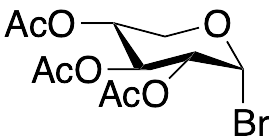
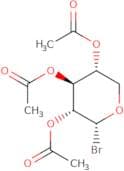
CAS 3068-31-3
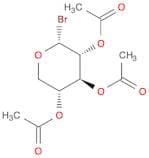
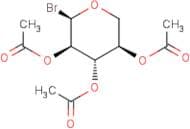
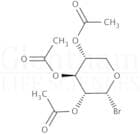
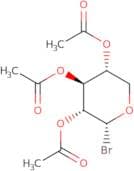
:2,3,4-Tri-O-acetyl-β-D-xylopyranosylbromid
α-D-Xylopyranosyl bromide, 2,3,4-triacetate
CAS:Formel:C11H15BrO7Reinheit:95%Farbe und Form:SolidMolekulargewicht:339.13662,3,4-Tri-O-acetyl-α-D-xylopyranosyl bromide
CAS:2,3,4-Tri-O-acetyl-α-D-xylopyranosyl bromideReinheit:95%Molekulargewicht:339.14g/mol2,3,4-Tri-O-acetyl-a-D-xylopyranosyl bromide - Stabilised with 2.5% CaCO3
CAS:2,3,4-Tri-O-acetyl-a-D-xylopyranosyl bromide - Stabilised with 2.5% CaCO3 is a chiral compound that is a drug for the treatment of estrogen deficiency in postmenopausal women. It is synthesized from D-xylose and acetone by reductive elimination using an organotin catalyst. The resulting product has a nitro group at the 4 position and can be activated as a priming agent for DNA synthesis. This compound has been shown to be effective in treating intestinal disorders such as ulcerative colitis.
2,3,4-Tri-O-acetyl-a-D-xylopyranosyl bromide - Stabilised with 2.5% CaCO3 has been used to conjugate estrogens with various drugs to create new compounds that are more potent than free estrogens alone. Bioavailability of these conjugates hasFormel:C11H15BrO7Reinheit:(%) Min. 85%Farbe und Form:PowderMolekulargewicht:339.14 g/mol(2R,3R,4S,5R)-2-Bromotetrahydro-2H-pyran-3,4,5-triyl triacetate
CAS:Formel:C11H15BrO7Reinheit:95.0%Molekulargewicht:339.138Bromo 2,3,4-Tri-O-acetyl-α-D-xylopyranoside (Stabilized with 2.5% CaCO3)
CAS:Kontrolliertes ProduktFormel:C11H15BrO7Farbe und Form:NeatMolekulargewicht:339.14a-Acetobromo-D-xylose
CAS:a-Acetobromo-D-xylose is an oligosaccharide sugar used in glycosylation and polysaccharide modifications. It is synthesized by the fluorination of xylose with acetic acid, bromine, and a base. The product is purified by vacuum distillation and recrystallization. In addition to its use as a carbohydrate, this product can be modified using methylation or click chemistry to create derivatives.
Formel:C11H15BrO7Reinheit:Min. 95%Molekulargewicht:339.14 g/mol