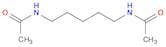
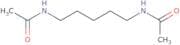
![N-[5-(Acetylamino)pentylene]acetamide](/_next/image/?url=https%3A%2Fstatic.cymitquimica.com%2Fcas-image%2Fthumb-webp%2F585549-n-5-acetylamino-pentylene-acetamide.webp&w=3840&q=75)
CAS 3073-58-3
:N-[5-(Acetylamino)pentyl]acetamid
- Acetamide, N,N′-1,5-pentanediylbis-
- Acetamide, N,N′-pentamethylenebis-
- Pentamethylene bisacetamide
- N-[5-(Acetylamino)pentylene]acetamide
- N,N′-1,5-Pentanediylbis[acetamide]
N-(5-Acetamidopentyl)acetamide
CAS:5-Acetamidopentylacetamide (5AA) is a molecule that is used in the treatment of cancer. It inhibits the growth of tumor cells by causing cell death in the cytoplasm. 5AA has been shown to inhibit the production of tumor necrosis factor alpha, as well as protein kinase C and phospholipase A2, which are involved in tumor cell proliferation. This molecule also induces apoptosis and inhibits viral replication by preventing viral RNA transcription. 5AA is a potent inducer of gene expression in diploid lymphoblastoid cells, which may be due to its ability to stimulate uptake and metabolism of the drug. It has been shown that 5AA can be taken up by fibroblast cells in culture through passive diffusion or an active transport mechanism. This agent is metabolized into an organic solvent and excreted via trichloroacetic acid (TCA) or salivary routes. The use of 5AA has
Formel:C9H18N2O2Reinheit:Min. 95%Molekulargewicht:186.25 g/mol