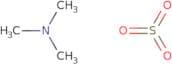
CAS 3162-58-1
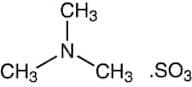
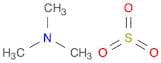
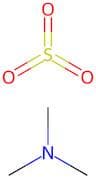
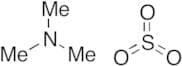
:Methanamin, N,N-dimethyl-, Verbindung mit Schwefeltrioxid (1:1)
Beschreibung:
Methanamin, N,N-Dimethyl-, Verbindung mit Schwefeltrioxid (1:1), allgemein bekannt als Dimethylaminsulfonsäure, ist eine organische Verbindung, die durch ihre Kombination aus einer Dimethylamin-Gruppe und Schwefeltrioxid gekennzeichnet ist. Diese Verbindung erscheint typischerweise als weißer kristalliner Feststoff und ist aufgrund der Anwesenheit polarer funktioneller Gruppen hoch wasserlöslich. Sie weist Eigenschaften auf, die typisch für Amine sind, wie Basizität, und kann an verschiedenen chemischen Reaktionen teilnehmen, einschließlich Sulfonierung und nucleophiler Substitution. Die Anwesenheit von Schwefeltrioxid verleiht starke saure Eigenschaften, was sie in verschiedenen industriellen Anwendungen nützlich macht, einschließlich als Reagenz in der organischen Synthese und als Katalysator in chemischen Reaktionen. Darüber hinaus kann sie als Zwischenprodukt bei der Herstellung von Tensiden und anderen chemischen Produkten dienen. Sicherheitsüberlegungen sind wichtig, wenn man mit dieser Verbindung umgeht, da sie korrosiv sein kann und Gesundheitsrisiken darstellen kann, wenn sie eingeatmet oder eingenommen wird. Es sollten geeignete Lager- und Handhabungsprotokolle befolgt werden, um potenzielle Gefahren im Zusammenhang mit ihrer Verwendung zu mindern.
Formel:C3H9N·O3S
InChl:InChI=1S/C3H9N.O3S/c2*1-4(2)3/h1-3H3;
InChI Key:InChIKey=DXASQZJWWGZNSF-UHFFFAOYSA-N
SMILES:S(=O)(=O)=O.N(C)(C)C
Synonyme:- Methanamine, N,N-dimethyl-, compd. with sulfur trioxide (1:1)
- NSC 9838
- Sulfur trioxide trimethylamine complex
- Sulfur trioxide, compd. with N,N-dimethylmethanamine (1:1)
- Sulfur trioxide, compd. with trimethylamine (1:1)
- Sulfur trioxide�Trimethylamine complex
- Sulphur trioxide-trimethylamine complex
- Trimethylamine compound with sulfur trioxide
- Trimethylamine sulfur trioxide
- Trimethylamine, compd. with sulfur trioxide (1:1)
- Trimethylamine-sulphur trioxide complex
Sortieren nach
Reinheit (%)
0
100
|
0
|
50
|
90
|
95
|
100
7 Produkte.
Sulfur trioxide-trimethylamine complex, 95%
CAS:Sulfur trioxide-trimethylamine complex acts as a reagent for sulfonation and sulfamation reactions. It is used as a reactant for the synthesis of sulfate-conjugated resveratrol metabolites and chitooligosaccharides. It is used in association with dodecyl thioglycopyranoside, which acts as a surfactaFormel:C3H9NO3SReinheit:95%Farbe und Form:Powder, White to creamMolekulargewicht:139.17Sulfur trioxide trimethylamine complex
CAS:Formel:C3H9NO3SReinheit:95%Farbe und Form:SolidMolekulargewicht:139.1735Ref: IN-DA003UH0
5kgNachfragen10kgNachfragen25kgNachfragen5g19,00€10g27,00€25g46,00€100g107,00€500g293,00€Sulphur trioxide trimethylamine complex
CAS:Sulphur trioxide trimethylamine complexFormel:C3H9N·O3SReinheit:95%Farbe und Form: white powderMolekulargewicht:139.17345g/molSulfur trioxide trimethylamine complex
CAS:Formel:C3H9NO3SReinheit:95%Farbe und Form:SolidMolekulargewicht:139.17Sulfur Trioxide Trimethylamine Complex
CAS:Kontrolliertes ProduktApplications Sulfur Trioxide Trimethylamine Complex is a reagent that is used for the design and synthesis of Rho kinase inhibitors.
Not a dangerous good if item is equal to or less than 1g/ml and there is less than 100g/ml in the package
References Takami, A., et al.: Bioorg. Med. Chem., 12, 6317 (2004);Formel:C3H9NO3SFarbe und Form:NeatMolekulargewicht:139.17Sulfur Trioxide Trimethylamine Complex
CAS:Sulfur Trioxide Trimethylamine Complex is a metabolic disorder drug that is used to treat hepatic steatosis. It inhibits the production of fatty acids and hydroxyl groups by inhibiting de novo lipogenesis in the liver. The reaction solution of this drug has been shown to inhibit the growth of Hl-60 cells, which are human leukemia cells. The surface methodology for this drug has been shown to be effective against bacteria such as Pseudomonas aeruginosa and Staphylococcus aureus. Sulfur Trioxide Trimethylamine Complex also binds to bacterial 16S ribosomal RNA and inhibits protein synthesis, leading to cell death by inhibiting the production of proteins vital for cell division. This drug also has been shown to have antimicrobial properties through its ability to inhibit bacterial phospholipid synthesis, which may lead to death by lysis or inhibition of cell membrane function.Formel:C3H9NO3SReinheit:Min. 95%Molekulargewicht:139.17 g/mol