CAS 34298-84-5
:1H-Indol-5-ylessigsäure
Beschreibung:
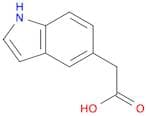
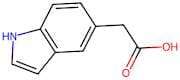
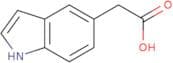
1H-Indol-5-ylessigsäure, auch bekannt als Indol-3-essigsäure (IAA), ist ein natürlich vorkommendes Pflanzenhormon, das zur Auxin-Klasse gehört. Es spielt eine entscheidende Rolle bei der Regulierung verschiedener physiologischer Prozesse in Pflanzen, einschließlich Zellstreckung, Wurzelbildung und Reaktion auf Licht und Schwerkraft. Die Verbindung weist eine Indolringstruktur auf, die eine bicyclische Struktur ist, die aus einem sechsgliedrigen Benzolring besteht, der mit einem fünfgliedrigen Pyrrolring mit Stickstoff verbunden ist. Ihre Carbonsäurefunktion trägt zu ihren sauren Eigenschaften und biologischen Aktivitäten bei. 1H-Indol-5-ylessigsäure ist in polaren Lösungsmitteln wie Wasser und Alkohol löslich und weist ein relativ niedriges Molekulargewicht auf. Neben seiner Rolle im Pflanzenwachstum und -entwicklung wurde es auch auf seine potenziellen Anwendungen in der Landwirtschaft und Gartenbau sowie auf seine Auswirkungen auf die menschliche Gesundheit, insbesondere im Kontext der Krebsforschung, untersucht. Insgesamt ist diese Verbindung sowohl in der Pflanzenbiologie als auch in potenziellen therapeutischen Kontexten von Bedeutung.
Formel:C10H9NO2
InChl:InChI=1/C10H9NO2/c12-10(13)6-7-1-2-9-8(5-7)3-4-11-9/h1-5,11H,6H2,(H,12,13)
SMILES:c1cc2c(cc[nH]2)cc1CC(=O)O
Synonyme:- 1H-indole-5-acetic acid
- 2-(1H-indol-5-yl)acetic acid
- 1H-Indol-5-ylacetic acid
Sortieren nach
Reinheit (%)
0
100
|
0
|
50
|
90
|
95
|
100
4 Produkte.
2-(1H-Indol-5-yl)acetic acid
CAS:Formel:C10H9NO2Reinheit:98%Farbe und Form:SolidMolekulargewicht:175.18402-(1H-Indol-5-yl)acetic acid
CAS:2-(1H-Indol-5-yl)acetic acidReinheit:98%Molekulargewicht:175.18g/mol2-(1H-Indol-5-yl)acetic acid
CAS:2-(1H-Indol-5-yl)acetic acid is a lipogenic agent that is used in the treatment of cancer. It binds to nuclear hormone receptors, which regulate lipid biosynthesis. 2-(1H-Indol-5-yl)acetic acid has been shown to inhibit the growth of human bladder cancer cells and increase the uptake of fatty acids by these cells. This agent also has anti-inflammatory properties and causes an increase in reactive oxygen species in microglia, which are immune system cells found in the brain. 2-(1H-Indol-5-yl)acetic acid has been shown to have cytotoxic effects on mammalian cells, but not on bacteria or yeast. 2-(1H-Indol-5-yl)acetic acid may be administered intravenously or intraperitoneally.
Formel:C10H9NO2Reinheit:Min. 95%Molekulargewicht:175.18 g/mol