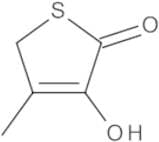
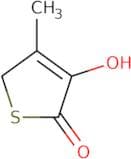
CAS 34876-35-2
:2(5H)-Thiophenon, 3-hydroxy-4-methyl-
Cephalexin Related Compound D (3-Hydroxy-4-methylthiophen-2(5H)-one)
CAS:Nucleic acids and their salts, whether or not chemically defined; other heterocyclic compounds, nesoiFormel:C5H6O2SFarbe und Form:SolidMolekulargewicht:130.00885Cefalexin (Cephalexin) EP Impurity D (Cefradine EP Impurity F, Cefadroxil EP Impurity G, Cephalexin USP Related Compound D)
CAS:Formel:C5H6O2SFarbe und Form:Off-White SolidMolekulargewicht:130.163-Hydroxy-4-methyl-2(5H)-thiophenone
CAS:Kontrolliertes ProduktImpurity Cefalexin EP Impurity D
Applications 3-Hydroxy-4-methyl-2(5H)-thiophenone (Cefalexin EP Impurity D) is an acid degradation product of Cephalexin (C256800) and Cefaclor (C235250), antibiotics.
References Dinner, A.: J. Med. Chem. 20, 963 (1977); Baetschi, S.W., et. al.: J. Pharmaceut., Sci., 86, 526 (1997)Formel:C5H6O2SFarbe und Form:NeatMolekulargewicht:130.165Cefradine impurity F
CAS:Cefradine impurity F is a hydrolysis product of cefradine, which is an antibiotic. It is catalysed by β-lactamase enzymes and undergoes nucleophilic attack on the carbon atom adjacent to the carbonyl group. Cefradine impurity F has been shown to be effective against enterobacter, which is a type of bacteria that can cause urinary tract infections. The uptake of cefradine impurity F into bacteria can occur through passive diffusion or active transport mechanisms. This drug was also found to be hydrolyzed by buffers such as phosphate and acetate in vitro, but not by other substances such as EDTA and citrate. Cefradine impurity F has been shown to be hydrolyzed in vivo, with the most likely mechanism being spontaneous hydrolysis.
Formel:C5H6O2SReinheit:Min. 95%Farbe und Form:PowderMolekulargewicht:130.17 g/mol