CAS 3515-93-3
:4-Oxobutanenitril
Beschreibung:
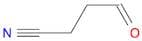
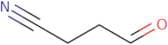
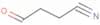
4-Oxobutanenitril, auch bekannt unter seinem IUPAC-Namen 4-Cyanbutan-2-on, ist eine organische Verbindung, die durch das Vorhandensein sowohl einer Nitrilgruppe (-C≡N) als auch einer Ketogruppe (C=O) innerhalb einer vier Kohlenstoffatome umfassenden Kette gekennzeichnet ist. Seine molekulare Formel ist C4H5NO, was darauf hinweist, dass es vier Kohlenstoffatome, fünf Wasserstoffatome, ein Stickstoffatom und ein Sauerstoffatom enthält. Diese Verbindung erscheint typischerweise als farblose bis blassgelbe Flüssigkeit mit einem charakteristischen Geruch. Sie ist in polaren Lösungsmitteln wie Wasser und Alkoholen löslich, was auf das Vorhandensein der polaren Nitril- und Carbonylfunktionalgruppen zurückzuführen ist. 4-Oxobutanenitril wird in der organischen Synthese verwendet, insbesondere bei der Herstellung verschiedener Arzneimittel und Agrochemikalien, aufgrund seiner Reaktivität und Fähigkeit, an nucleophilen Additionsreaktionen teilzunehmen. Darüber hinaus kann es eine moderate Toxizität aufweisen, was angemessene Sicherheitsvorkehrungen beim Umgang und Gebrauch erforderlich macht. Wie viele organische Verbindungen kann seine Stabilität und Reaktivität durch Umweltbedingungen wie Temperatur und pH beeinflusst werden.
Formel:C4H5NO
InChl:InChI=1S/C4H5NO/c5-3-1-2-4-6/h4H,1-2H2
InChI Key:InChIKey=CGFGIKNLZTZJDE-UHFFFAOYSA-N
SMILES:C(CC=O)C#N
Synonyme:- 3-Cyanopropanal
- 3-Cyanopropionaldehyde
- 3-Formylpropionitrile
- 4-Oxobutanenitrile
- 4-Oxobutyronitrile
- Butanenitrile, 4-oxo-
- Propionaldehyde, 3-cyano-
- Succinaldehydonitrile
- β-Cyanopropionaldehyde
- β-Cyanopropionic aldehyde
Sortieren nach
Reinheit (%)
0
100
|
0
|
50
|
90
|
95
|
100
3 Produkte.
3-Cyanopropanal
CAS:3-Cyanopropanal is a copolymerization agent that is used in the production of polyacrylonitrile. It can be synthesized by reduction of acrylic acid with sodium borohydride and hydrogen cyanide, or by alkylation of propanol with acrylonitrile in the presence of an acidic catalyst. 3-Cyanopropanal has been shown to adsorb onto organic molecules such as chalcones, alkyl halides, and amino acids. This reaction mechanism is due to its weakly acidic character and high affinity for these compounds. 3-Cyanopropanal also has a low bioavailability because it is metabolized into vinyl alcohol and ester hydrochloride, which are not readily absorbed by the body.Formel:C4H5NOReinheit:Min. 95%Farbe und Form:Clear LiquidMolekulargewicht:83.09 g/mol