CAS 352-97-6
:Guanidinoessigsäure
Beschreibung:
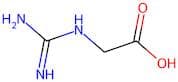
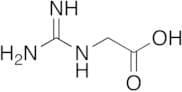
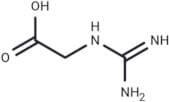
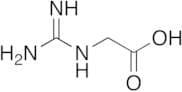
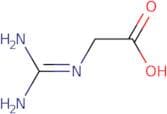
Guanidinoessigsäure, auch bekannt als Glycocyamin, ist eine organische Verbindung mit der chemischen Formel C3H7N5O2. Sie ist gekennzeichnet durch das Vorhandensein einer Guanidin-Gruppe und einer Essigsäure-Einheit, was sie zu einem Derivat sowohl von Aminosäuren als auch von Guanidin macht. Diese Verbindung ist ein natürlich vorkommendes Zwischenprodukt in der Biosynthese von Kreatin, das für den Energiestoffwechsel in Muskelgeweben entscheidend ist. Guanidinoessigsäure ist typischerweise ein weißes kristallines Feststoff, das in Wasser löslich ist, was seine polare Natur aufgrund der Anwesenheit von Amino- und Carbonsäure-Funktionalgruppen widerspiegelt. Es wurde auf seine potenziellen Vorteile zur Verbesserung der sportlichen Leistung und der kognitiven Funktion untersucht, da es als Vorläufer von Kreatin dient. Darüber hinaus könnte es Auswirkungen auf verschiedene biochemische Wege haben und ist von Interesse in der Forschung zu Stoffwechselstörungen. Sicherheitsdaten zeigen, dass es mit Vorsicht behandelt werden sollte, wie viele chemische Substanzen, um potenzielle Gesundheitsrisiken zu vermeiden.
Formel:C3H7N3O2
InChl:InChI=1S/C3H7N3O2/c4-3(5)6-1-2(7)8/h1H2,(H,7,8)(H4,4,5,6)
InChI Key:InChIKey=BPMFZUMJYQTVII-UHFFFAOYSA-N
SMILES:C(NC(=N)N)C(O)=O
Synonyme:- 2-(Diaminomethylideneazaniumyl)acetate
- 2-Carbamimidamidoacetic acid
- 2-Guanidinoacetic acid
- 2-[(Diaminomethylidene)amino]acetic acid
- 2-[[Amino(imino)methyl]amino]acetic acid
- Acetic acid, [(aminoiminomethyl)amino]-
- Betacyamine
- Betasyamine
- Glycine, N-(aminoiminomethyl)-
- Glycine, N-amidino-
- Glycocyamine
- Guanidine, (carboxymethyl)-
- Guanidinoacetic acid
- Guanidoacetic Acid
- Guanidylacetic acid
- Guanyl glycine
- N-(Aminoiminomethyl)glycine
- N-(diaminomethylidene)glycine
- N-Amidinoglycine
- NSC 1901
- NSC 227847
- NSC 26360
- α-Guanidinoacetic acid
- Weitere Synonyme anzeigen
Sortieren nach
Reinheit (%)
0
100
|
0
|
50
|
90
|
95
|
100
12 Produkte.
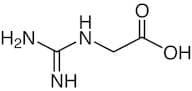
Glycocyamine
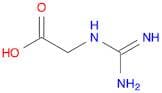
CAS:Formel:C3H7N3O2Reinheit:>97.0%(T)Farbe und Form:White to Almost white powder to crystalMolekulargewicht:117.112-{[amino(imino)methyl]amino}acetic acid
CAS:2-{[amino(imino)methyl]amino}acetic acidFormel:C3H7N3O2Reinheit:98%Farbe und Form: white solidMolekulargewicht:117.11g/molGuanidinoacetic acid
CAS:Kontrolliertes ProduktFormel:C3H7N3O2Farbe und Form:NeatMolekulargewicht:117.11Glycocyamine
CAS:Glycocyamine, a creatine precursor and dietary arginine substitute, aids in bird energy balance and indicates renal health.Formel:C3H7N3O2Reinheit:99.42%Farbe und Form:SolidMolekulargewicht:117.11Guanidinoacetic Acid
CAS:Applications Guanidinoacetic Acid is an important marker for renal failure, in kidney transplantation, and for the renal metabolic activity.
References Zugno, A., et al.: Neurochem. Res., 33, 1804 (2008), Debray, F., et al.: Neurol., 71, 44 (2008), da Silva, R., et al.: Am. J. Physiol., 296, E256 (2009),Formel:C3H7N3O2Farbe und Form:WhiteMolekulargewicht:117.112-Guanidinoacetic acid
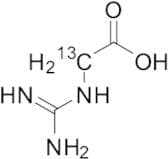
CAS:Formel:C3H7N3O2Reinheit:95%Farbe und Form:Solid, No data available.Molekulargewicht:117.108Guanidinoacetic-13C Acid
CAS:Kontrolliertes ProduktFormel:CC2H7N3O2Farbe und Form:NeatMolekulargewicht:118.099Guanidinoacetic acid
CAS:Guanidinoacetic acid is a metabolite of creatine and is formed by reaction with the amino acid arginine. It is also synthesized from guanidinoacetate, which is derived from the oxidation of arginine. Guanidinoacetic acid can be found in human serum and eye disorders such as glaucoma. The analytical method for guanidinoacetic acid involves the conversion of guanidine to guanidinoacetic acid using nitrous acid, followed by gas chromatographic separation of the products. The concentration of guanidinoacetic acid in human serum has been shown to have an inverse relationship with body mass index (BMI). This means that people with a higher BMI have lower levels of guanidinoacetic acids in their blood than those who are thinner. Guanidinoacetate has also been shown to increase energy metabolism and inhibit glycolysis in humans.Formel:C3H7N3O2Reinheit:Min. 95%Molekulargewicht:117.11 g/mol


![2-{[amino(imino)methyl]amino}acetic acid](/_next/image/?url=https%3A%2Fstatic.cymitquimica.com%2Fproducts%2F54%2Fthumb%2FOR27969.jpg&w=3840&q=75)