CAS 356068-99-0
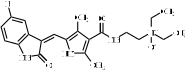
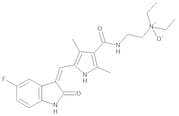
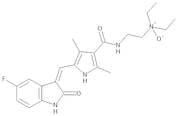
:Sunitinib N-Oxide ((Z)-N,N-diethyl-2-(5-((5-fluoro-2-oxoindolin-3-ylidene)methyl)-2,4-dimethyl-1H-pyrrole-3-carboxamido)ethan-1-amine oxide)
CAS:Lactams, nesoiFormel:C22H27FN4O3Farbe und Form:Yellow Orange SolidMolekulargewicht:414.20672Sunitinib N-Oxide
CAS:Stability Hygroscopic
Applications Sunitinib N-Oxide, is a derivative of Sunitinib (S820000), a multi-kinase inhibitor targeting several receptor tyrosine kinases (RTK), used for the treatment of renal cell carcinoma (RCC) and imatinib-resistant gastrointestinal stromal tumor. It is a COVID19-related research product.
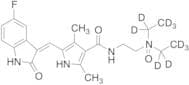
References Sun, L., et al.: J. Med. Chem., 46, 1116 (2003), Mendel, D.B., et al.: Clin. Cancer Res., 9, 327 (2003), Sistla, A., et al.: Drug Dev. Ind. Pharm., 30, 19 (2004), Sakamoto, K.M., et al.: Curr. Opin. Invest. Drugs, 5. 1329 (2004),Formel:C22H27FN4O3Farbe und Form:NeatMolekulargewicht:414.47Sunitinib N-Oxide-d10
CAS:Kontrolliertes ProduktFormel:C22D10H17FN4O3Farbe und Form:NeatMolekulargewicht:424.535Sunitinib N-oxide
CAS:Sunitinib N-oxide is the active form of sunitinib, a drug that is used to treat cancer. Sunitinib N-oxide is a photolabile n-oxide and can be converted to sunitinib by exposure to light. This conversion process can be used as an analytical technique for determining the concentration of the drug in blood or tissue samples. Sunitinib N-oxide has been shown to reduce tumor growth in mouse models and also inhibits angiogenesis and tumor metastasis. The drug has also been shown to have anti-inflammatory effects, which may be due to its inhibition of prostaglandin synthesis.
Formel:C22H27FN4O3Reinheit:Min. 95%Farbe und Form:White PowderMolekulargewicht:414.47 g/mol