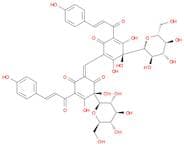
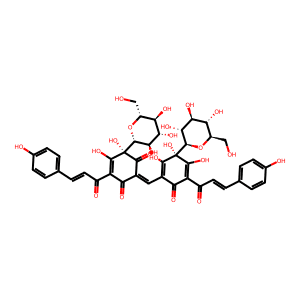
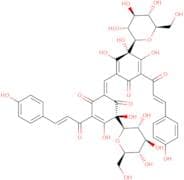
CAS 36338-96-2
:Färberdistel
Beschreibung:
Färberdistel, identifiziert durch die CAS-Nummer 36338-96-2, bezieht sich auf eine chemische Verbindung, die aus Färberdistel (Färberdistel tinctorius) gewonnen wird, die für ihre Verwendung in der traditionellen Medizin und als Farbstoff bekannt ist. Diese Substanz zeichnet sich durch ihre potenziellen antioxidativen Eigenschaften aus und wird häufig hinsichtlich ihrer Anwendungen in Lebensmitteln, Kosmetika und Pharmazeutika untersucht. Die Verbindung kann verschiedene biologische Aktivitäten aufweisen, einschließlich entzündungshemmender und kardioprotektiver Wirkungen, was sie für die gesundheitsbezogene Forschung von Interesse macht. Ihre chemische Struktur umfasst typischerweise funktionelle Gruppen, die zu ihrer Reaktivität und Interaktion mit biologischen Systemen beitragen. Darüber hinaus wird Färberdistel für seine Rolle bei der Herstellung von Färberdistelöl anerkannt, das reich an ungesättigten Fettsäuren ist. Wie bei vielen Naturprodukten können die spezifischen Eigenschaften, wie Löslichkeit, Stabilität und Reaktivität, je nach den verwendeten Extraktions- und Reinigungsmethoden variieren. Insgesamt stellt Färberdistel eine wertvolle Verbindung mit vielfältigen Anwendungen in verschiedenen Bereichen dar, insbesondere in der Gesundheit und Ernährung.
Formel:C43H42O22
InChl:InChI=1S/C43H42O22/c44-14-24-30(52)32(54)34(56)40(64-24)42(62)36(58)20(28(50)26(38(42)60)22(48)11-5-16-1-7-18(46)8-2-16)13-21-29(51)27(23(49)12-6-17-3-9-19(47)10-4-17)39(61)43(63,37(21)59)41-35(57)33(55)31(53)25(15-45)65-41/h1-13,24-25,30-35,40-41,44-47,52-58,60-63H,14-15H2/b11-5+,12-6+,21-13-/t24-,25-,30-,31-,32+,33+,34-,35-,40-,41-,42+,43-/m1/s1
InChI Key:InChIKey=WLYGSPLCNKYESI-RSUQVHIMSA-N
SMILES:O[C@@]1(C(=O)/C(=C\C2=C(O)[C@](O)(C(O)=C(C(/C=C/C3=CC=C(O)C=C3)=O)C2=O)[C@@]4(O[C@H](CO)[C@@H](O)[C@H](O)[C@H]4O)[H])/C(=O)C(C(/C=C/C5=CC=C(O)C=C5)=O)=C1O)[C@@]6(O[C@H](CO)[C@@H](O)[C@H](O)[C@H]6O)[H]
Synonyme:- (2Z,6S)-6-β-<span class="text-smallcaps">D</smallcap>-Glucopyranosyl-2-[[(3S)-3-β-<smallcap>D</span>-glucopyranosyl-2,3,4-trihydroxy-5-[(2E)-3-(4-hydroxyphenyl)-1-oxo-2-propen-1-yl]-6-oxo-1,4-cyclohexadien-1-yl]methylene]-5,6-dihydroxy-4-[(2E)-3-(4-hydroxyphenyl)-1-oxo-2-propen-1-yl]-4-cyclohexene-1,3-dione
- 4-Cyclohexene-1,3-dione, 6-beta-D-glucopyranosyl-2-((3-beta-D-glucopyranosyl-2,3,4-trihydroxy-5-(3-(4-hydroxyphenyl)-1-oxo-2-propenyl)-6-oxo-1,4-cyclohexadien-1-yl)methylene)-5,6-dihydroxy-4-(3-(4-hydroxyphenyl)-1-oxo-2-propenyl)-
- 4-Cyclohexene-1,3-dione, 6-β-<span class="text-smallcaps">D</smallcap>-glucopyranosyl-2-[[(3S)-3-β-<smallcap>D</span>-glucopyranosyl-2,3,4-trihydroxy-5-[(2E)-3-(4-hydroxyphenyl)-1-oxo-2-propen-1-yl]-6-oxo-1,4-cyclohexadien-1-yl]methylene]-5,6-dihydroxy-4-[(2E)-3-(4-hydroxyphenyl)-1-oxo-2-propen-1-yl]-, (2Z,6S)-
- 4-Cyclohexene-1,3-dione, 6-β-<span class="text-smallcaps">D</smallcap>-glucopyranosyl-2-[[(3S)-3-β-<smallcap>D</span>-glucopyranosyl-2,3,4-trihydroxy-5-[(2E)-3-(4-hydroxyphenyl)-1-oxo-2-propenyl]-6-oxo-1,4-cyclohexadien-1-yl]methylene]-5,6-dihydroxy-4-[(2E)-3-(4-hydroxyphenyl)-1-oxo-2-propenyl]-, (2Z,6S)-
- 4-Cyclohexene-1,3-dione, 6-β-<span class="text-smallcaps">D</smallcap>-glucopyranosyl-2-[[3-β-<smallcap>D</span>-glucopyranosyl-2,3,4-trihydroxy-5-[3-(4-hydroxyphenyl)-1-oxo-2-propenyl]-6-oxo-1,4-cyclohexadien-1-yl]methylene]-5,6-dihydroxy-4-[3-(4-hydroxyphenyl)-1-oxo-2-propenyl]-, [S-(R*,R*)]-
- 5,6-dihydroxy-4-[3-(4-hydroxyphenyl)prop-2-enoyl]-6-[(2R,3R,4S,5S,6R)-3,4,5-trihydroxy-6-(hydroxymethyl)tetrahydropyran-2-yl]-2-[[2,3,4-trihydroxy-5-[3-(4-hydroxyphenyl)prop-2-enoyl]-6-oxo-3-[(2R,3R,4S,5S,6R)-3,4,5-trihydroxy-6-(hydroxymethyl)tetrahydropyran-2-yl]-1-cyclohexa-1,4-dienyl]methylene]cyclohex-4-ene-1,3-dione
- Carthamin
- Carthamin Yellow
- Carthamine
- Carthamus
- Carthamus (dye)
- Carthamus Red AP
- Liofresh Red CR
- Natural Red 26
- Safflower red
- 4-Cyclohexene-1,3-dione, 6-β-D-glucopyranosyl-2-[[(3S)-3-β-D-glucopyranosyl-2,3,4-trihydroxy-5-[(2E)-3-(4-hydroxyphenyl)-1-oxo-2-propen-1-yl]-6-oxo-1,4-cyclohexadien-1-yl]methylene]-5,6-dihydroxy-4-[(2E)-3-(4-hydroxyphenyl)-1-oxo-2-propen-1-yl]-, (2Z,6S)-
- 4-Cyclohexene-1,3-dione, 6-β-D-glucopyranosyl-2-[[(3S)-3-β-D-glucopyranosyl-2,3,4-trihydroxy-5-[(2E)-3-(4-hydroxyphenyl)-1-oxo-2-propenyl]-6-oxo-1,4-cyclohexadien-1-yl]methylene]-5,6-dihydroxy-4-[(2E)-3-(4-hydroxyphenyl)-1-oxo-2-propenyl]-, (2Z,6S)-
- 4-Cyclohexene-1,3-dione, 6-β-D-glucopyranosyl-2-[[3-β-D-glucopyranosyl-2,3,4-trihydroxy-5-[3-(4-hydroxyphenyl)-1-oxo-2-propenyl]-6-oxo-1,4-cyclohexadien-1-yl]methylene]-5,6-dihydroxy-4-[3-(4-hydroxyphenyl)-1-oxo-2-propenyl]-, [S-(R*,R*)]-
- Weitere Synonyme anzeigen
Sortieren nach
Reinheit (%)
0
100
|
0
|
50
|
90
|
95
|
100
5 Produkte.
Safflower-yellow
CAS:Safflower yellow, from Carthamus tinctorius, is used in Chinese medicine for heart and brain vessel health.Formel:C43H42O22Reinheit:98%Farbe und Form:SolidMolekulargewicht:910.78Ref: TM-T6263
5mg46,00€10mg59,00€1mL*10mM (DMSO)69,00€25mg95,00€50mg129,00€100mg177,00€200mg268,00€500mg420,00€Carthamus red
CAS:Carthamus red is a natural dye, which is obtained from the petals of the safflower plant, Carthamus tinctorius. This dye is known for its vibrant red hue and is extracted through a meticulous process involving the drying and steeping of safflower petals. The primary pigments responsible for its coloration are carthamin and carthamidin, which are anthocyanin derivatives.
Formel:C43H42O22Reinheit:Min. 95 Area-%Farbe und Form:Red PowderMolekulargewicht:910.78 g/mol