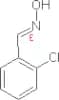
CAS 3717-28-0
:2-Chlorbenzaldehydoxim
Beschreibung:
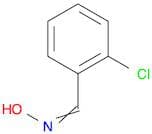
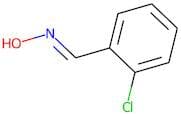
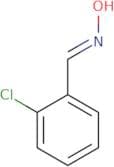
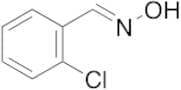
2-Chlorbenzaldehydoxim, mit der CAS-Nummer 3717-28-0, ist eine organische Verbindung, die durch das Vorhandensein sowohl einer Chlorbenzaldehyd- als auch einer Oxim-Funktionalgruppe gekennzeichnet ist. Sie erscheint typischerweise als ein blassgelbes bis hellbraunes Feststoff oder Flüssigkeit, abhängig von ihrer Reinheit und Form. Die Verbindung weist einen Benzolring auf, der an der zweiten Position mit einem Chloratom substituiert ist, und eine Oximgruppe (-C=N-OH), die am carbonyl-C-Atom des Aldehyds angebracht ist. Diese Struktur verleiht spezifische chemische Eigenschaften, einschließlich der Reaktivität gegenüber Nucleophilen und der potenziellen Teilnahme an Kondensationsreaktionen. 2-Chlorbenzaldehydoxim wird häufig in der organischen Synthese verwendet, insbesondere bei der Herstellung verschiedener Arzneimittel und Agrochemikalien. Sie kann eine moderate Toxizität aufweisen, was angemessene Sicherheitsvorkehrungen während der Handhabung erforderlich macht. Darüber hinaus ist es wichtig, ihre Löslichkeit in organischen Lösungsmitteln zu berücksichtigen, da dies ihre Anwendung in verschiedenen chemischen Prozessen beeinflussen kann. Insgesamt dient 2-Chlorbenzaldehydoxim als wertvolles Zwischenprodukt in der synthetischen organischen Chemie.
Formel:C7H6ClNO
InChl:InChI=1S/C7H6ClNO/c8-7-4-2-1-3-6(7)5-9-10/h1-5,10H
InChI Key:InChIKey=FZIVKDWRLLMSEJ-UHFFFAOYSA-N
SMILES:C(=NO)C1=C(Cl)C=CC=C1
Synonyme:- 2-Chlorobenzaldoxime
- 2-Chlorobenzenecarbaldehyde Oxime
- Benzaldehyde, 2-chloro-, oxime
- Benzaldehyde, o-chloro-, oxime
- NSC 61415
- o-Chlorobenzaldehyde Oxime
- o-Chlorobenzaldoxime
- 2-Chlorobenzaldehyde oxime
Sortieren nach
Reinheit (%)
0
100
|
0
|
50
|
90
|
95
|
100
5 Produkte.
2-Chlorobenzaldehyde oxime
CAS:Formel:C7H6ClNOReinheit:95%Farbe und Form:SolidMolekulargewicht:155.58162-Chlorobenzaldehyde oxime
CAS:2-Chlorobenzaldehyde oxime is a compound that inhibits the growth of mycobacterium tuberculosis. It reacts with chloride in the environment to form 2-chlorobenzaldehyde, which reacts with an isoxazole to produce a quinone. Quinones are toxic to mammals and are thought to be responsible for the antimycobacterial activity of this compound. The reaction mechanism of 2-chlorobenzaldehyde oxime has been studied using various techniques and its toxicity has been evaluated in both culture and animal studies. This compound has shown no significant effects on mice at up to 100 mg/kg body weight, but it was found to cause death in rats at doses as low as 0.1 mg/kg body weight. 2-Chlorobenzaldehyde oxime was synthesised by reacting 2-chlorobenzaldehyde with oxalyl chloride under conditions suitable for safety, and the product was purified by recrystallisation from acetone. The synthesisFormel:C7H6ClNOReinheit:Min. 95%Farbe und Form:PowderMolekulargewicht:155.58 g/mol2-Chlorobenzaldehyde oxime
CAS:Formel:C7H6ClNOReinheit:98%(sum of cis and trans)Farbe und Form:SolidMolekulargewicht:155.582-Chlorobenzaldehyde Oxime
CAS:Kontrolliertes ProduktApplications 2-Chlorobenzaldehyde Oxime is a chemical reagent used in the synthesis of antimicrobial hydroxamates which are potential inhibitors of deoxy-D-xylulose 5-phosphate synthase inhibiting growth of influenzae. Also used in the preparation ofsubstituted oxazole based firefly luciferase inhibitors.
References Poutiainen, P. et al.: J. Med. Chem., 56, 1064 (2013); Hayashi, D. et al.: Chem. Comm., 49, 5535 (2013);Formel:C7H6ClNOFarbe und Form:NeatMolekulargewicht:155.58