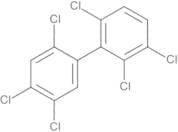
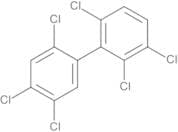
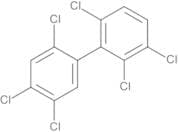
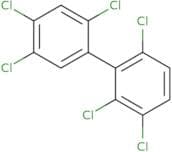
CAS 38380-04-0
:PCB 149
Beschreibung:
PCB 149, oder polychloriertes Biphenyl 149, ist ein Mitglied der Familie der polychlorierten Biphenyle (PCB), die aus synthetischen organischen Chemikalien besteht, die für ihre Umweltpersistenz und potenzielle Toxizität bekannt sind. PCB 149 ist durch seine chlorierte Biphenylstruktur gekennzeichnet, die mehrere Chloratome enthält, die an Biphenylringen befestigt sind, was seine physikalischen und chemischen Eigenschaften beeinflusst. Es ist typischerweise eine viskose, ölige Flüssigkeit oder ein Feststoff, abhängig von der Temperatur, und ist in Wasser unlöslich, aber in organischen Lösungsmitteln löslich. PCBs, einschließlich PCB 149, sind bekannt für ihre Stabilität, Widerstandsfähigkeit gegen Abbau und Fähigkeit zur Bioakkumulation in der Umwelt und in lebenden Organismen. Aufgrund ihrer potenziellen Gesundheitsrisiken, einschließlich krebserzeugender Wirkungen und endokriner Störungen, wurden PCBs in vielen Ländern verboten oder stark reguliert. PCB 149 wurde speziell auf seine Umweltauswirkungen und Toxizität untersucht, was zur laufenden Forschung über die Sanierung kontaminierter Standorte und die Auswirkungen von PCBs auf die menschliche Gesundheit und Ökosysteme beiträgt.
Formel:C12H4Cl6
InChl:InChI=1S/C12H4Cl6/c13-6-1-2-7(14)12(18)11(6)5-3-9(16)10(17)4-8(5)15/h1-4H
InChI Key:InChIKey=LKHLFUVHHXCNJH-UHFFFAOYSA-N
SMILES:ClC1=C(C=C(Cl)C(Cl)=C1)C2=C(Cl)C(Cl)=CC=C2Cl
Synonyme:- (.+-.)-Pcb 149
- 1,1'-Biphenyl, 2,2',3,4',5',6-Hexachloro-
- 1,1′-Biphenyl, 2,2′,3,4′,5′,6-hexachloro-
- 2,2',3',4,5,6'-Hexachlorobiphenyl
- 2,2',3,4',5',6-Pcb
- 2,2',4',5,5',6-Hexachlorobiphenyl
- 2,2′,3,4′,5′,6-Hexachloro-1,1′-biphenyl
- 2,2′,3,4′,5′,6-Hexachlorobiphenyl
- 2,2′,4′,5,5′,6-Hexachlorobiphenyl
- 2,3,6,2',4',5'-Hexachlorobiphenyl
- 2,3,6,2′,4′,5′-Hexachlorobiphenyl
- 2,4,5,2',3',6'-Hexachlorobiphenyl
- 2,4,5,2′,3′,6′-Hexachlorobiphenyl
- 38380-04-0
- Cb 149
- Weitere Synonyme anzeigen
Sortieren nach
Reinheit (%)
0
100
|
0
|
50
|
90
|
95
|
100
12 Produkte.
PCB No. 149 10 µg/mL in Isooctane
CAS:Kontrolliertes ProduktFormel:C12H4Cl6Farbe und Form:Single SolutionMolekulargewicht:360.88PCB-Mix 37 10 µg/mL in Isooctane
CAS:Kontrolliertes Produkt- 31508-00-6
- 32598-14-4
- 35065-27-1
- 35065-28-2
- 35065-29-3
- 35065-30-6
- 35693-99-3
- 37680-73-2
- 38379-99-6
- 38380-01-7
- 38380-03-9
- 38380-04-0
- 51908-16-8
- 52663-63-5
- 52663-68-0
- 52663-69-1
- 52663-70-4
- 7012-37-5
Formel:C12H4Cl6Farbe und Form:MixtureMolekulargewicht:360.88PCB Congener Mixture 465 100 µg/mL in Isooctane
CAS:Kontrolliertes Produkt- 31508-00-6
- 32598-14-4
- 32690-93-0
- 35065-27-1
- 35065-28-2
- 35065-29-3
- 35065-30-6
- 35693-99-3
- 37680-65-2
- 37680-73-2
- 38379-99-6
- 38380-01-7
- 38380-03-9
- 38380-04-0
- 38380-08-4
- 52663-68-0
- 7012-37-5
Formel:C12H4Cl6Farbe und Form:MixtureMolekulargewicht:360.88PCB-Mix 19 10 µg/mL in Isooctane
CAS:Kontrolliertes Produkt- 16606-02-3
- 2051-24-3
- 31508-00-6
- 35065-27-1
- 35065-28-2
- 35065-29-3
- 35065-30-6
- 35693-99-3
- 35694-08-7
- 37680-65-2
- 37680-73-2
- 38380-04-0
- 41464-39-5
- 7012-37-5
Formel:C12H4Cl6Farbe und Form:MixtureMolekulargewicht:360.88PCB-Mix 19 10 µg/mL in Isooctane
CAS:Kontrolliertes Produkt- 16606-02-3
- 2051-24-3
- 31508-00-6
- 35065-27-1
- 35065-28-2
- 35065-29-3
- 35065-30-6
- 35693-99-3
- 35694-08-7
- 37680-65-2
- 37680-73-2
- 38380-04-0
- 41464-39-5
- 7012-37-5
Formel:C12H4Cl6Farbe und Form:MixtureMolekulargewicht:360.88PCB Mixture for Food & Human Tissue Analysis 297 10 µg/mL in Isooctane
CAS:Kontrolliertes Produkt- 15862-07-4
- 31508-00-6
- 32598-10-0
- 32598-11-1
- 32598-13-3
- 32598-14-4
- 32690-93-0
- 32774-16-6
- 33025-41-1
- 34883-43-7
- 35065-27-1
- 35065-28-2
- 35065-29-3
- 35065-30-6
- 35693-99-3
- 37680-73-2
- 38379-99-6
- 38380-01-7
- 38380-02-8
- 38380-03-9
- 38380-04-0
- 38380-07-3
- 38380-08-4
- 38444-90-5
- 39635-31-9
- 41411-63-6
- 41464-39-5
- 41464-40-8
- 51908-16-8
- 52663-62-4
- 52663-63-5
- 52663-64-6
- 52663-68-0
- 52663-69-1
- 52663-70-4
- 57465-28-8
- 7012-37-5
- 70362-50-4
- 74472-37-0
- 74472-42-7
Farbe und Form:MixtureWHO/Europe ISS PCB Mixture 319 10 µg/mL in Isooctane
CAS:Kontrolliertes Produkt- 16606-02-3
- 31508-00-6
- 32598-13-3
- 32598-14-4
- 32774-16-6
- 35065-27-1
- 35065-28-2
- 35065-29-3
- 35065-30-6
- 35693-99-3
- 37680-65-2
- 37680-73-2
- 38379-99-6
- 38380-01-7
- 38380-03-9
- 38380-04-0
- 38380-07-3
- 38380-08-4
- 39635-31-9
- 41464-39-5
- 51908-16-8
- 52663-63-5
- 52663-68-0
- 52663-69-1
- 52663-70-4
- 52663-72-6
- 57465-28-8
- 65510-44-3
- 69782-90-7
- 7012-37-5
- 70362-50-4
- 74472-37-0
Farbe und Form:MixtureEN 12766/CEN EN 61619 PCB Calibration Mixture 10 µg/mL in Isooctane
CAS:Kontrolliertes Produkt- 16606-02-3
- 2051-24-3
- 31508-00-6
- 35065-27-1
- 35065-28-2
- 35065-29-3
- 35065-30-6
- 35693-99-3
- 35694-08-7
- 37680-65-2
- 37680-73-2
- 38380-04-0
- 41464-39-5
- 7012-37-5
Formel:C12H4Cl6Farbe und Form:MixtureMolekulargewicht:360.88EPA Method 525.3 PCB Mixture 500 µg/mL in Acetone
CAS:Kontrolliertes Produkt- 2051-60-7
- 2051-62-9
- 31508-00-6
- 32598-11-1
- 34883-43-7
- 35065-27-1
- 35065-28-2
- 35065-29-3
- 35693-99-3
- 37680-65-2
- 38380-03-9
- 38380-04-0
- 41464-39-5
- 7012-37-5
Formel:C12H4Cl6Farbe und Form:MixtureMolekulargewicht:360.882,4,5,2',3',6'-Hexachlorobiphenyl
CAS:Kontrolliertes ProduktApplications 2,4,5,2',3',6'-Hexachlorobiphenyl is a toxic and persistent organic pollutant.
References Shoeib, M., Harner, T.: Environ. Sci. Technol., 36, 4142 (2002); Harner, T., et al.: Environ. Sci. Technol., 38, 4474 (2004);Formel:C12H4Cl6Farbe und Form:NeatMolekulargewicht:360.88PCB No 149
CAS:Kontrolliertes ProduktPCB No 149 is a polychlorinated biphenyl (PCB) which has been shown to cause toxicity in humans. PCBs are lipophilic and accumulate in adipose tissue, where they can affect enzyme activities. PCBs also interfere with the synthesis of cholesterol, which is important for normal development and function of the adrenocortical cells. PCB No 149 has been shown to cause an increase in the incidence of adrenocortical carcinoma in rats. It also inhibits bacterial growth, as well as polymerase chain reaction-based assays when tested on model organisms such as Escherichia coli and Saccharomyces cerevisiae. PCB No 149 contains a number of congeners that have different effects on cellular activity. The α subunit is responsible for the inhibition of bacterial growth and protein synthesis by binding to ribosomes at the peptidyl transferase center, blocking peptide bond formation during translation.Formel:C12H4Cl6Reinheit:Min. 95%Molekulargewicht:360.88 g/mol