CAS 39319-11-4
:Phosphin, (4-ethenylphenyl)diphenyl-, Polymer mit Diethenylbenzol und Ethenylbenzol
Beschreibung:
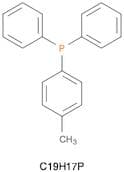
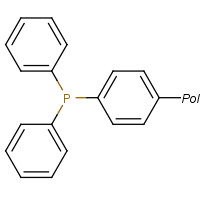
Die chemische Substanz, die als "Phosphin, (4-ethenylphenyl)diphenyl-, Polymer mit Diethenylbenzol und Ethenylbenzol," mit der CAS-Nummer 39319-11-4, bekannt ist, ist eine Art Polymer, das Phosphin-Funktionalitäten in seiner Struktur integriert. Dieses Polymer ist durch seine komplexe Anordnung von Phenylgruppen und Ethenyl- (Vinyl-) Substituenten gekennzeichnet, die zu seinen einzigartigen physikalischen und chemischen Eigenschaften beitragen. Typischerweise zeigen solche Polymere eine gute thermische Stabilität und können je nach spezifischer Anordnung der Monomereinheiten unterschiedliche Grade von Steifigkeit und Flexibilität aufweisen. Das Vorhandensein von Phosphingruppen kann spezifische Reaktivität verleihen, was das Polymer in Anwendungen wie Katalyse oder als Ligand in der Koordinationschemie nützlich macht. Darüber hinaus kann die Struktur des Polymers seine Löslichkeit, mechanische Festigkeit und optischen Eigenschaften beeinflussen, was es für verschiedene industrielle Anwendungen, einschließlich Beschichtungen, Klebstoffe und elektronische Materialien, geeignet macht. Detaillierte Sicherheits- und Handhabungsinformationen sollten jedoch konsultiert werden, da potenzielle Gefahren im Zusammenhang mit Phosphinderivaten bestehen.
Formel:(C20H17P·C10H10·C8H8)x
Synonyme:- Benzene, diethenyl-, polymer with ethenylbenzene and (4-ethenylphenyl)diphenylphosphine
- (4-Ethenylphenyl)diphenylphosphine-diethenylbenzene-ethenylbenzene copolymer
- Phosphine, (4-ethenylphenyl)diphenyl-, polymer with diethenylbenzene and ethenylbenzene
- Benzene, ethenyl-, polymer with diethenylbenzene and (4-ethenylphenyl)diphenylphosphine
- Diphenyl(4-vinylphenyl)phosphine-divinylbenzene-styrene copolymer
- TRIPHENYLPHOSPHINE POLYSTYRENE
- MACROPOROUS POLYMER SUPPORTED TRIPHENYLPHOSPHINE
- Triphenylphosphine, polymer supported1.4-2.0mmol/g on polystyrene 200-400 mesh2% DVB loading
- Triphenylphosphine, polymer-supported, 1.4 to 2.0mmol/g on polystyrene
- Triphenylphosphine, polymer-bound 100-200 mesh, extent of labeling: ~1.6 mmol/g loading
- PL-TPP MP-RESIN
- 4-Diphenylphosphino polystyrene resin, cross-linked with 2% DVB
- TriphenylphosphineResin1%DvbMesh,1-1.5Mmol/G
- TRIPHENYLPHOSPHINE POL. BOUND, 200-400 M ESH, ~3 MMOL/G
- POLYMER-BOUND TRIPHENYLPHOSPHINE
- -C6H4P(C6H5)2
- Triphenylphosphine resin, 1% crosslinked with DVB
- TRIPHENYLPHOSPHINE, POLYMER-SUPPORTED
- TRIPHENYLPHOSPHINE NOVAGEL
- POLYSTYRENE-PPH2
- Triphenylphosphine resin(1.0-1.5 meq/g, 100-200 mesh)
- TRIPHENYLPHOSPHINE RESIN, 1% CROSSL.WITH DVB, 1.2-1.5 MMOL/G, 200-400 MESH
- DIPHENYLPHOSPHINOBENZOYL NOVAGEL(TM) AM RESIN
- diphenylphosphinated
- Triphenylphosphine polystyrene (200-400 mesh, 1.0-1.5 mmol
- TRIPHENYLPHOSPHINE POL. BOUND, 100-200 M ESH, ~1.6 MMOL/G
- DIPHENYLPHOSPHINO-POLYSTYRENE
- POLYMER SUPPORTED TRIPHENYLPHOSPHINE
- Triphenylphosphine resin, 1% crossl. with DVB, 1.2-1.5 mmol/g, 100-200 mesh
- Triphenylphosphine, polymer-bound 100-200 mesh, extent of labeling: ~3 mmol/g triphenylphosphine loading
- 4-Diphenylphosphino Polystyrene Resin cross-linked with 2% DVB (200-400mesh) (1.0-2.0mmol/g)
- Triphenylphosphine, polyMer-bound 100-200 Mesh, extent of labeling: ~3.0 MMol/g loading, 2 % cross-linked with divinylbenzene
- TRIPHENYLPHOSPHINE POLYMER BOUND
- TRIPHENYLPHOSPHINE NOVAGEL(TM)
- PL-TPP RESIN
- COPOLYMER OF STYRENE AND DIVINYLBENZENE, DIPHENYLPHOSPHINATED
- Triphenylphosphine polystyrene (100-200 mesh, 0.8-1.6 mmol
- TRIPHENYLPHOSPHINE PS RESIN
- TRIPHENYLPHOSPHINE PS
- TRIPHENYLPHOSPHINE RESIN
- 4-DIPHENYLPHOSPHINO POLYSTYRENE RESIN
- Triphenylphosphine resin, Crosslinked with 1% DVB, 1.2-1.5 mmol/g, 100-200 mesh
- POLYSTYRENE CROSSLINKED WITH DIVINYL-BENZENE, DIPHENYLPHOSPHINATED
- Triphenylphosphine resin, 1% crosslinked with DVB, 1.0-1.5mmol/g
- 4-DIPHENYLPHOSPHINO POLYSTYRENE RESIN, CROSS-LINKED WITH 2% DVB: (1.0-2.0MMOLP/G), 200-400MESH
- Weitere Synonyme anzeigen
Sortieren nach
Reinheit (%)
0
100
|
0
|
50
|
90
|
95
|
100
7 Produkte.
Triphenylphosphine, polymer bound
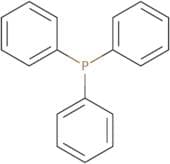
CAS:Triphenylphosphine, polymer boundReinheit:100-200 mesh, extent of labeling: ~1.6 mmol/g loadFarbe und Form:SolidMolekulargewicht:261.28g/molTriphenylphosphine, polymer bound, 1.4-2.0 mmol/g on polystyrene, 200-400 mesh, 1% cross linked with DVB
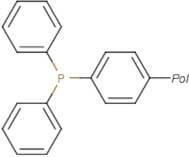
CAS:Triphenylphosphine, polymer bound, 1.4-2.0 mmol/g on polystyrene, 200-400 mesh, 1% cross linked with DVBFormel:C18H14PPolReinheit:≥95%Farbe und Form: cream to off white resin beads solidMolekulargewicht:261.27752g/molTriphenylphosphine, polymer supported 1.4-2.0mmol/g on polystyrene 200-400 mesh 1% DVB loading
CAS:Formel:C18H14PFarbe und Form:SolidMolekulargewicht:261.284Triphenylphosphine, polymer bound, 1.4-2.0 mmol/g on polystyrene, 200-400 mesh, 2% cross linked with DVB
CAS:Triphenylphosphine, polymer bound, 1.4-2.0 mmol/g on polystyrene, 200-400 mesh, 2% cross linked with DVBReinheit:≥95%Triphenylphosphine, polymer supported 1.4-2.0mmol/g on polystyrene 200-400 mesh 2% DVB loading
CAS:Kontrolliertes ProduktFormel:(C20H17P·C10H10·C8H8)xFarbe und Form:MixtureMolekulargewicht:262.29Triphenylphosphine resin
CAS:Triphenylphosphine resin is a solid catalyst that is used in organic synthesis. It is obtained by the reaction of triphenylphosphine and trifluoroacetic acid with fatty acids. Triphenylphosphine resin can be used to synthesize compounds, such as pharmaceuticals, plastics, and pesticides. This catalyst has been shown to produce light emission when it reacts with diphenyl sulfoxide in an acidic environment. The light emission indicates that the reaction proceeds via a radical chain mechanism. Triphenylphosphine resin also has transport properties and can be used to study reactions involving mitochondrial membranes with potential. In addition, this catalyst has been shown to react with hydrochloric acid and sodium carbonate to generate nuclear DNA without harming mitochondrial DNA or proteins. The structural analysis of this compound shows that it consists of biphenyl-type molecules connected through phosphorous atoms.br>br>NMR spectroscopic data for triphenylphosphine resinFormel:(C20H17P)m•(C10H10)n•(C8H8)xReinheit:Min. 95%Farbe und Form:Powder