CAS 39590-81-3
:1,1-Cyclopropandimethanol
Beschreibung:
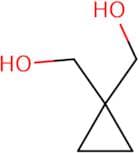
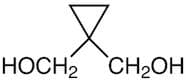
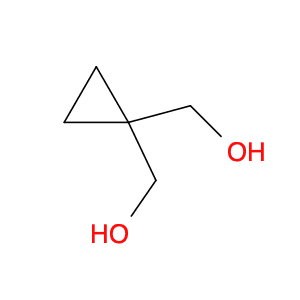
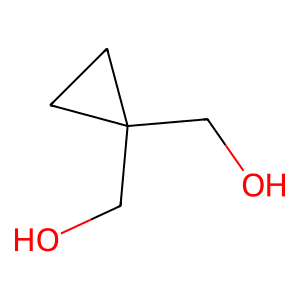
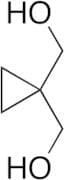
1,1-Cyclopropandimethanol, mit der CAS-Nummer 39590-81-3, ist eine organische Verbindung, die durch ihre einzigartige Cyclopropanstruktur gekennzeichnet ist, die aus einem dreigliedrigen Kohlenstoffring besteht. Diese Verbindung weist zwei Hydroxymethylgruppen (-CH2OH) auf, die an dasselbe Kohlenstoffatom des Cyclopropanrings gebunden sind, was sie zu einem Diol macht. Das Vorhandensein dieser Hydroxymethylgruppen verleiht hydrophile Eigenschaften, die es der Verbindung ermöglichen, Wasserstoffbrückenbindungen einzugehen, was ihre Löslichkeit in Wasser und anderen polaren Lösungsmitteln beeinflussen kann. 1,1-Cyclopropandimethanol ist typischerweise eine farblose Flüssigkeit oder ein fester Stoff, abhängig von der Temperatur, und wird in verschiedenen chemischen Synthesen und Anwendungen verwendet, einschließlich als potenzielles Zwischenprodukt in der organischen Synthese. Ihre Reaktivität wird weitgehend durch die vorhandenen funktionellen Gruppen bestimmt, was eine weitere Derivatisierung ermöglicht. Sicherheitsdaten sollten für den Umgang konsultiert werden, wie bei jeder chemischen Substanz, um sicherzustellen, dass während der Verwendung die richtigen Vorsichtsmaßnahmen getroffen werden.
Formel:C5H10O2
InChl:InChI=1S/C5H10O2/c6-3-5(4-7)1-2-5/h6-7H,1-4H2
InChI Key:InChIKey=YAINYZJQSQEGND-UHFFFAOYSA-N
SMILES:C(O)C1(CO)CC1
Synonyme:- (1-Hydroxymethylcyclopropyl)methanol
- 1,1-Bis(Hydroxymethyl)Cyclopropane
- 1,1-Bis(hydroxymethyl)cyclopropan
- 1,1-Cyclopropanedimethanol
- 1,1-Cyclopropyldimethanol
- 1,1-Di(hydroxymethyl)cyclopropane
- 1,1-Dimethylcyclopropane
- 2,2-(1,2-Ethylene)-1,3-propanediol
- Cyclopropane,1,1-Dimethyl-
- Cyclopropane-1,1-Diyldimethanol
- Cyclopropane-1,1-bis(methanol)
- Cyclopropanedimethanol
- Weitere Synonyme anzeigen
Sortieren nach
Reinheit (%)
0
100
|
0
|
50
|
90
|
95
|
100
6 Produkte.
1,1-Bis(hydroxymethyl)cyclopropane
CAS:Formel:C5H10O2Reinheit:>96.0%(GC)Farbe und Form:Colorless to Light yellow to Light orange clear liquidMolekulargewicht:102.131,1-Bis(hydroxymethyl)cyclopropane
CAS:Formel:C5H10O2Reinheit:96%Farbe und Form:LiquidMolekulargewicht:102.1317(Cyclopropane-1,1-diyl)dimethanol
CAS:(Cyclopropane-1,1-diyl)dimethanolFormel:C5H10O2Reinheit:98%Farbe und Form: clear liquidMolekulargewicht:102.13g/mol1,1-Bis(hydroxymethyl)cyclopropane
CAS:Kontrolliertes ProduktApplications 1,1-Bis(hydroxymethyl)cyclopropane is used in the synthesis of morphine alkaloids. It also serves as an inhibitor of 5-lipoxygenase.
References Evans, D.A. et al.: Tetrahedron Lett., 23, 285 (1982); Arai, Y. et al.: J. Med. Chem., 26, 72 (1983);Formel:C5H10O2Farbe und Form:NeatMolekulargewicht:102.13[1-(Hydroxymethyl)cyclopropyl]methanol
CAS:Formel:C5H10O2Reinheit:96%Farbe und Form:ViscousMolekulargewicht:102.1331,1-Bis(hydroxymethyl)cyclopropane
CAS:Disulfonates are a class of compounds that have a sulfonyl group bound to two adjacent carbon atoms. They are typically synthetic and rarely occur in nature. Disulfonates are used as industrial solvents, such as for the manufacture of polyurethane foams and plastics. The most common disulfonate is 1,1-Bis(hydroxymethyl)cyclopropane (HMC). HMC is synthesized from 2-hydroxypropene by the addition of hydrogen chloride, followed by conversion to the imine and then hydrolysis to the final product. In addition to being an industrial solvent, HMC has been shown to be an effective inhibitor of HIV replication. It binds to chemokine receptors on cells, preventing HIV entry into the cell. HMC also inhibits the growth of cancer cells in vitro and exhibits anti-inflammatory properties that may be due to its ability to inhibit prostaglandin synthesis. END>Formel:C5H10O2Reinheit:Min. 95%Molekulargewicht:102.13 g/mol




![[1-(Hydroxymethyl)cyclopropyl]methanol](/_next/image/?url=https%3A%2Fstatic.cymitquimica.com%2Fproducts%2F10%2Fthumb%2FF067771.jpg&w=3840&q=75)