CAS 39800-63-0
:Dibutoxybiphenyl
Beschreibung:
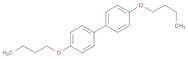
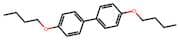
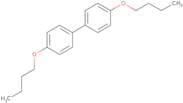
Dibutoxybiphenyl, mit der CAS-Nummer 39800-63-0, ist eine organische Verbindung, die durch ihre biphenylische Struktur gekennzeichnet ist, die mit zwei Butoxygruppen substituiert ist. Diese Verbindung erscheint typischerweise als farblose bis blassgelbe Flüssigkeit oder Feststoff, abhängig von ihrer spezifischen Formulierung und Reinheit. Sie ist bekannt für ihre geringe Volatilität und relativ hohe thermische Stabilität, was sie für verschiedene Anwendungen geeignet macht, einschließlich als Lösungsmittel oder Zwischenprodukt in der organischen Synthese. Dibutoxybiphenyl ist im Allgemeinen unlöslich in Wasser, aber in organischen Lösungsmitteln löslich, was ihre Nützlichkeit in chemischen Prozessen erhöht. Ihre chemische Stabilität und Widerstandsfähigkeit gegen Oxidation tragen zu ihrer Wirksamkeit in Formulierungen bei, die eine langanhaltende Leistung erfordern. Sicherheitsdaten zeigen, dass, wie bei vielen organischen Verbindungen, Vorsicht geboten ist, da sie Gesundheitsrisiken bei Exposition darstellen kann. Insgesamt wird Dibutoxybiphenyl in industriellen Anwendungen für seine einzigartigen Eigenschaften und Vielseitigkeit in chemischen Reaktionen geschätzt.
Formel:C20H26O2
InChl:InChI=1/C20H26O2/c1-3-5-15-21-19-11-7-17(8-12-19)18-9-13-20(14-10-18)22-16-6-4-2/h7-14H,3-6,15-16H2,1-2H3
SMILES:CCCCOc1ccc(cc1)c1ccc(cc1)OCCCC
Synonyme:- 4,4-Di-n-butoxybiphenyl
- 4,4'-Dibutoxybiphenyl
Sortieren nach
Reinheit (%)
0
100
|
0
|
50
|
90
|
95
|
100
5 Produkte.
4,4'-Dibutoxy-1,1'-biphenyl
CAS:Formel:C20H26O2Reinheit:98%Farbe und Form:SolidMolekulargewicht:298.41924,4'-Dibutoxybiphenyl
CAS:Formel:C20H26O2Reinheit:>98.0%(GC)Farbe und Form:White to Almost white powder to crystalMolekulargewicht:298.434,4'-Dibutoxybiphenyl
CAS:4,4'-Dibutoxybiphenyl is a crystalline solid that has a density of 1.902 g/cm3. It is a mesophase and has the ability to form liquid crystals with other molecules. 4,4'-Dibutoxybiphenyl can be used to create devices such as light-emitting diodes and liquid crystal displays. This molecule also has dicarboxylic acid esters, which are compounds that have two carboxylic acids on one carbon chain. The electronic theory of liquid crystals proposes that the molecules in this class are dipoles, with an uneven distribution of charge across their molecular structure. This uneven distribution causes the molecules to align in a particular direction when they come into contact with other molecules or surfaces. Liquid crystals are characterized by having long rod-like molecules that form helical structures when in contact with each other or surfaces. The molecule's orientation affects how light passes through it, making itFormel:C20H26O2Reinheit:Min. 95%Molekulargewicht:298.42 g/mol