CAS 4290-13-5
:Santamarín
Beschreibung:
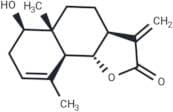
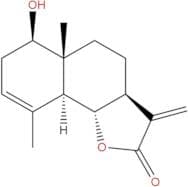
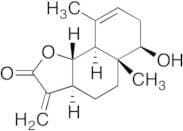
Santamarín, mit der CAS-Nummer 4290-13-5, ist eine chemische Verbindung, die als Sesquiterpenlacton klassifiziert wird. Es stammt hauptsächlich von verschiedenen Pflanzenarten, insbesondere von solchen aus der Familie der Asteraceae. Santamarín ist bekannt für seinen ausgeprägten bitteren Geschmack und wird oft mit bestimmten medizinischen Eigenschaften in Verbindung gebracht. Die Verbindung zeigt entzündungshemmende und antimikrobielle Aktivitäten, was sie für die pharmakologische Forschung von Interesse macht. Ihre Struktur weist einen Lactonring auf, der zu ihrer biologischen Aktivität beiträgt. Santamarín kommt typischerweise in niedrigen Konzentrationen in Pflanzenextrakten vor und kann in traditionellen Heilpraktiken verwendet werden. Aufgrund seiner potenziellen Toxizität in höheren Dosen ist jedoch Vorsicht geboten, wenn man seine Verwendung in Betracht zieht. Die Löslichkeitseigenschaften der Verbindung können variieren und sind oft in organischen Lösungsmitteln besser löslich als in Wasser. Insgesamt stellt Santamarín ein faszinierendes Forschungsgebiet innerhalb der Naturstoffchemie dar, mit laufenden Studien, die sein therapeutisches Potenzial und seine Wirkmechanismen untersuchen.
Formel:C15H20O3
InChl:InChI=1/C15H20O3/c1-8-4-5-11(16)15(3)7-6-10-9(2)14(17)18-13(10)12(8)15/h4,10-13,16H,2,5-7H2,1,3H3/t10-,11+,12+,13-,15-/m0/s1
InChI Key:InChIKey=PLSSEPIRACGCBO-PFFFPCNUSA-N
SMILES:C[C@]12[C@@]([C@@]3([C@@](CC1)(C(=C)C(=O)O3)[H])[H])(C(C)=CC[C@H]2O)[H]
Synonyme:- (3aS,5aR,6R,9aS,9bS)-3a,4,5,5a,6,7,9a,9b-Octahydro-6-hydroxy-5a,9-dimethyl-3-methylenenaphtho[1,2-b]furan-2(3H)-one
- Balchanin
- Eudesma-3,11(13)-dien-12-oic acid, 1β,6α-dihydroxy-, γ-lactone
- Naphtho(1,2-b)furan-2(3H)-one, 3a,4,5,5a,6,7,9a,9b-octahydro-6-hydroxy-5a,9-dimethyl-3-methylene-, (3aS,5aR,6R,9aS,9bS)-
- Naphtho[1,2-b]furan-2(3H)-one, 3a,4,5,5a,6,7,9a,9b-octahydro-6-hydroxy-5a,9-dimethyl-3-methylene-, [3aS-(3aα,5aβ,6β,9aα,9bβ)]-
- Santamarin
- Santamarine
- (3aS,5aR,6R,9aS,9bS)-6-hydroxy-5a,9-dimethyl-3-methylidene-4,5,6,7,9a,9b-hexahydro-3aH-benzo[g][1]benzofuran-2-one
- (3aS,5aR,6R,9aS,9bS)-6-hydroxy-5a,9-dimethyl-3-methylene-4,5,6,7,9a,9b-hexahydro-3aH-benzo[g]benzofuran-2-one
- (3aS)-2,3,3aβ,4,5,5a,6,7,9aβ,9bα-Decahydro-6α-hydroxy-5aα,9-dimethyl-3-methylenenaphtho[1,2-b]furan-2-one
Sortieren nach
Reinheit (%)
0
100
|
0
|
50
|
90
|
95
|
100
5 Produkte.
Santamarine
CAS:Santamarine has significant anticancer activity, can inhibit L1210 cells because of its cytotoxic,cytostatic and blocking mitosis and reducing uptake ofFormel:C15H20O3Reinheit:98%Farbe und Form:SolidMolekulargewicht:248.32Santamarine
CAS:Applications Santamarine is a sesquiterpene lactone shows anticancer properties by inhibiting proliferation and inducing apoptosis.
References Mehmood, T., et al.: J. Cancer, 8, 1-11 (2017)Formel:C15H20O3Farbe und Form:NeatMolekulargewicht:248.32Santamarine
CAS:Santamarine is a bioactive compound, specifically a sesquiterpene lactone, which is derived from marine organisms, often isolated from certain species of marine algae or fungi. Its mode of action primarily involves interfering with microbial cell membranes and metabolic pathways, resulting in the inhibition of microbial growth and replication. This compound has demonstrated significant potential in scientific research, especially for its antimicrobial and anticancer properties. It is often employed in studies aimed at understanding microbial resistance mechanisms, drug development, and exploring novel therapeutic approaches. With its marine origin, Santamarine provides insights into unique biological processes and interactions that are not typically observed with terrestrial compounds, making it a valuable subject of study in both pharmacological and biochemical research contexts.Formel:C15H20O3Reinheit:Min. 95%Farbe und Form:PowderMolekulargewicht:248.32 g/mol