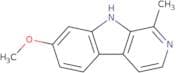
CAS 442-51-3
:Harminderivat
Beschreibung:
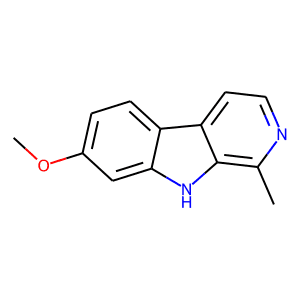
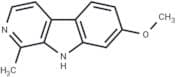
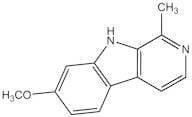
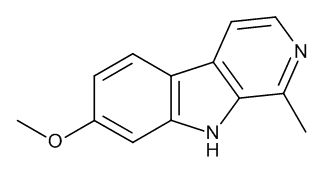
Harminderivat, identifiziert durch die CAS-Nummer 442-51-3, ist eine Verbindung, die mit Harmine verwandt ist, einem Beta-Carbolin-Alkaloid. Diese Substanz weist mehrere bemerkenswerte Eigenschaften auf, einschließlich ihrer Rolle als reversibler Inhibitor der Monoaminoxidase A (MAO-A), was im Kontext der Neuropharmakologie und potenzieller therapeutischer Anwendungen von Bedeutung ist. Harminderivats werden oft wegen ihrer psychoaktiven Eigenschaften und ihrer potenziellen Verwendung bei der Behandlung verschiedener psychischer Erkrankungen untersucht. Sie können auch antioxidative und entzündungshemmende Aktivitäten aufweisen, was zu ihrem Interesse in der medizinischen Chemie beiträgt. Strukturell enthalten Harminderivats typischerweise ein verschmolzenes Indol- und Pyridinringsystem, das für ihre biologische Aktivität entscheidend ist. Darüber hinaus können diese Verbindungen mit verschiedenen Neurotransmittersystemen interagieren und Stimmung sowie Kognition beeinflussen. Die Studie von Harminderivats entwickelt sich weiter, mit laufender Forschung, die ihr pharmakologisches Potenzial und ihre Wirkmechanismen im zentralen Nervensystem untersucht.
Formel:C13H12N2O
InChl:InChI=1S/C13H12N2O/c1-8-13-11(5-6-14-8)10-4-3-9(16-2)7-12(10)15-13/h3-7,15H,1-2H3
InChI Key:InChIKey=BXNJHAXVSOCGBA-UHFFFAOYSA-N
SMILES:CC1=C2C(C=3C(N2)=CC(OC)=CC3)=CC=N1
Synonyme:- 1-Methyl-7-methoxy-β-carboline
- 7-Methoxy-1-methyl-9H-beta-carbolin
- 7-Methoxy-1-methyl-9H-beta-carboline
- 7-Methoxy-1-methyl-9H-pyrido[3,4-b]indole
- 9H-Pyrido(3,4-b)indole, 7-methoxy-1-methyl-
- Banisterin
- Banisterine
- Banisterine Monohydrate
- Harmin
- Harmine
- Leucoharmine
- Telepathin
- Telepathine
- Yagein
- Yageine
- 4-b)indole,7-methoxy-1-methyl-9h-pyrido(
- TELEPATHINE MONOHYDRATE
- 1-Methyl-7-methoxy-beta-carboline
- Telepathien
- PYRIDO(3,4-B)INDOLE,7-METHOXY-1-METHYL-
- Harmine,98+%
- HARMINE FREE BASE
- Garmin
- HARMINE MONOHYDRATE
- HARMAN MONOHYDROCHLORIDE MONOHYDRATE
- Weitere Synonyme anzeigen
Sortieren nach
Reinheit (%)
0
100
|
0
|
50
|
90
|
95
|
100
14 Produkte.
Harmine
CAS:Formel:C13H12N2OReinheit:>98.0%(T)Farbe und Form:White to Orange to Green powder to crystalMolekulargewicht:212.259H-Pyrido[3,4-b]indole, 7-methoxy-1-methyl-
CAS:Formel:C13H12N2OReinheit:98%Farbe und Form:SolidMolekulargewicht:212.2472Harmine
CAS:Formel:C13H12N2OReinheit:97.5 - 102.5 %Farbe und Form:White to off-white crystalline powderMolekulargewicht:212.25Harmine
CAS:Harmine (Telepathine) is an alkaloid isolated from seeds of Peganum harmala.Formel:C13H12N2OReinheit:98.29% - 99.92%Farbe und Form:Off-White SolidMolekulargewicht:212.25Harmine
CAS:Natural alkaloidFormel:C13H12N2OReinheit:≥ 98.0 % (HPLC)Farbe und Form:PowderMolekulargewicht:212.25Harmine
CAS:Applications Harmine is a natural β-carboline alkaloid and a CNS stimulant (1,2). Harmine has been shown to be a potent and selective inhibitor of dual specificity tyrosine phosphorylation regulated kinase 1A (DYRK1A) (3). DYRK1A is a potential therapeutic target for treating diabetes, Down Syndrome, and HIV (4).
References (1) DiStefano, S., et al.: J. Pharmacol. Exp. Ther., 174, 456 (1970)(2) Dos Santos, R. G. and Hallak, J. E. J Psychoactive Drugs. 5,1 (2016) (3) Atteya, R., et al.: Mech Ageing Dev. 6, S0047 (2016)(4) Bol, S. M., et al.: PLoS One. 6, e17190 (2011)Formel:C13H12N2OFarbe und Form:White To BrownMolekulargewicht:212.25Harmine
CAS:Kontrolliertes ProduktHarmine is a molecule that interacts with DNA by binding to the minor groove, which is the non-helical area of DNA. Harmine has been shown to have cytotoxic properties in murine hepatoma cells, as well as anticancer activity in mouse tumor cells. Harmine also has antiviral and antimicrobial effects, and has been shown to inhibit the growth of human cancer cells. Harmine binds to Toll-like receptor 4 (TLR4), which is a pattern recognition receptor that plays an important role in innate immunity. Harmine inhibits TLR4 signaling, thereby inhibiting inflammatory responses such as acute toxicities. The molecular docking analysis of harmine shows that it has high affinity for polymerase chain reaction (PCR) enzymes and can be used for PCR inhibition studies. The analytical method for harmine was developed using a natural compound crystal structure as a model system.Formel:C13H12N2OMolekulargewicht:212.25 g/molHarmine
CAS:Formel:C13H12N2OReinheit:99%Farbe und Form:Solid, Very pale yellow to pale yellow powderMolekulargewicht:212.252



![9H-Pyrido[3,4-b]indole, 7-methoxy-1-methyl-](/_next/image/?url=https%3A%2Fstatic.cymitquimica.com%2Fproducts%2FIN%2Fthumb%2FDA00I8E6.jpg&w=3840&q=75)