CAS 4532-33-6
:9H-Carbazol, 1-methoxy-3-methyl-
Beschreibung:
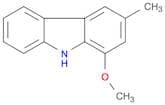
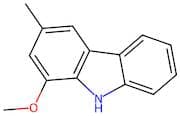
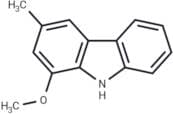
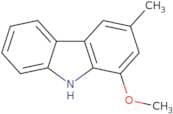
9H-Carbazol, 1-Methoxy-3-methyl- (CAS 4532-33-6) ist eine organische Verbindung, die durch ihre Struktur gekennzeichnet ist, die einen Carbazol-Kern mit einer Methoxygruppe und einer Methylgruppe umfasst. Diese Verbindung weist typischerweise eine verschmolzene bicyclische Struktur auf, die zu ihren aromatischen Eigenschaften beiträgt. Sie ist in der Regel bei Raumtemperatur ein Feststoff und kann in kristalliner oder pulverförmiger Form erscheinen. Das Vorhandensein der Methoxygruppe erhöht ihre Löslichkeit in organischen Lösungsmitteln und kann ihre Reaktivität und Wechselwirkung mit anderen chemischen Spezies beeinflussen. 9H-Carbazol-Derivate werden häufig wegen ihrer potenziellen Anwendungen in der organischen Elektronik, wie in Leuchtdioden (LEDs) und photovoltaischen Zellen, aufgrund ihrer günstigen elektronischen Eigenschaften untersucht. Darüber hinaus können Verbindungen wie diese Fluoreszenz zeigen und Implikationen in der Materialwissenschaft und der medizinischen Chemie haben. Sicherheitsdaten sollten für Handhabungs- und Expositionsrichtlinien konsultiert werden, wie bei jeder chemischen Substanz.
Formel:C14H13NO
Synonyme:- Carbazole,1-methoxy-3-methyl- (7CI,8CI)
- 1-Methoxy-3-methylcarbazole
- Murrayafoline A
- Nsc 654284
Sortieren nach
Reinheit (%)
0
100
|
0
|
50
|
90
|
95
|
100
5 Produkte.
1-Methoxy-3-Methylcarbazole
CAS:Formel:C14H13NOReinheit:97%Farbe und Form:SolidMolekulargewicht:211.25911-Methoxy-3-Methyl-9H-Carbazole
CAS:1-Methoxy-3-Methyl-9H-CarbazoleReinheit:97%Molekulargewicht:211.26g/molMurrayafoline A
CAS:Murrayafoline A is a useful organic compound for research related to life sciences. The catalog number is T124835 and the CAS number is 4532-33-6.Formel:C14H13NOFarbe und Form:SolidMolekulargewicht:211.2641-Methoxy-3-methyl-9H-carbazole
CAS:Formel:C14H13NOReinheit:97%Farbe und Form:SolidMolekulargewicht:211.2641-Methoxy-3-methyl-9H-carbazole
CAS:Vinorelbine tartrate is a semisynthetic anti-cancer drug that inhibits the growth of cancer cells. It is structurally related to natural products and has an inhibitory effect on cell growth. Vinorelbine tartrate binds to the cell membrane receptor, which causes an increase in intracellular calcium levels and subsequent activation of protein kinases. It also inhibits the production of certain growth factors and increases the synthesis of wst-1, a marker for cellular proliferation. Vinorelbine tartrate has been shown to cause significant cytotoxicity in cardiomyocytes from rats and ventricular myocytes from humans. This chemical has been shown to enhance the cytotoxicity of other chemotherapeutic agents, such as doxorubicin, vincristine sulfate, cisplatin, and etoposide phosphate. Vinorelbine tartrate binds to ryanodine receptors on the sarcoplasmic reticulum membrane, causing anFormel:C14H13NOReinheit:Min. 95%Molekulargewicht:211.26 g/mol