CAS 471-34-1
:Calciumcarbonat
Beschreibung:
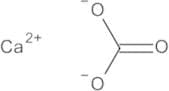
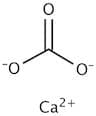
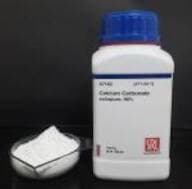
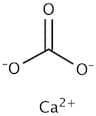
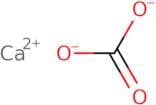
Calciumcarbonat, mit der CAS-Nummer 471-34-1, ist eine weit verbreitete anorganische Verbindung, die durch ihre chemische Formel CaCO₃ gekennzeichnet ist. Es handelt sich um ein weißes, geruchloses Pulver oder einen kristallinen Feststoff, der in Wasser unlöslich, aber in sauren Lösungen löslich ist. Calciumcarbonat kommt in der Natur häufig als Mineralien wie Calcit und Aragonit vor und ist ein Hauptbestandteil von Kalkstein und Marmor. Diese Verbindung spielt eine bedeutende Rolle in verschiedenen Industrien, einschließlich Bauwesen, Landwirtschaft und Pharmazie. In der Bauindustrie wird es als Baumaterial und als Bestandteil von Zement verwendet. In der Landwirtschaft dient es als Bodenverbesserer und als Calciumquelle für Pflanzen. Darüber hinaus wird Calciumcarbonat in der Produktion von Antazida und Nahrungsergänzungsmitteln verwendet. Seine thermische Zersetzung erfolgt bei erhöhten Temperaturen und produziert Calciumoxid und Kohlendioxid. Insgesamt wird Calciumcarbonat für seine Vielseitigkeit, Fülle und wesentliche Rolle sowohl in natürlichen Prozessen als auch in industriellen Anwendungen geschätzt.
Formel:CCaO3
InChl:InChI=1/CH2O3.Ca.2H/c2-1(3)4;;;/h(H2,2,3,4);;;/p-2/rCH2O3.CaH2/c2-1(3)4;/h(H2,2,3,4);1H2/p-2
InChI Key:InChIKey=FYHXNYLLNIKZMR-UHFFFAOYSA-N
SMILES:C(=O)(O)O.[Ca]
Synonyme:- 1180Tl
- 150B
- 1A
- 2200Lm
- 2T-Ji
- 2T-Sa
- 3N-A
- 5008A
- 700Cc
- Adcal
- Aeromatt
- Akadama
- Albacar
- Albafil
- Albaglos
- Atomite
- Baracarb
- Beatite
- CCR
- CCW
- Cal-Sup
- Calcichew
- Calcicoll
- Calcidia
- Calcimore
- Calcit
- Calciumcarbonat
- Calmaru
- Calmos
- Calseeds
- Caltec
- Caltrate
- Camel-Cal
- Camel-Carb
- Camel-TEX
- Camel-Wite
- Carbilux
- Carbium
- Cc-A
- Ccr-B
- Ccr-S
- Ce(Cl)
- Chalk
- Chemcarb
- Chooz
- Clefnon
- Cs-D
- Dacote
- Domar
- Dreisacarb
- Ds-Cfpcc
- Duramite
- EMforce
- ES
- Ed-Iii
- Ed-Siii
- Ed-Sx
- Ed-V
- Ed-X
- Ed-Xx
- Fmt-Op
- Gamaco
- Gofun
- Granicalcium
- Iadccr
- Iipc
- K-Cn
- Kks101
- Klnm-S
- Kotamite
- Ldr-Ca
- Limestone
- MCC
- Mamakaruso
- Marblemite
- Marblend
- Marfil
- Mc-T
- Microcarb
- Milcarb
- Mj-Hxqg
- Mks-C
- Msk-A
- Msk-C
- Msk-G
- Msk-K
- Msk-P
- Msk-Po
- Msk-V
- NS
- NZ
- Ncc-A
- Ncc-P
- Nccp-1000
- Neoanticid
- Non-Fer-Al
- Npcc-Sl
- Okyumhwa-Tsp
- Opacimite
- Os-Cal
- PC
- PCX
- PGW
- PX
- PZ
- Pcc-P
- Polcarb
- Porecal
- Purecal
- ReagentPlus
- Rectapur
- S-Sss
- SPT
- Safecarb
- Sertuerner
- Seta-K
- Snowflake
- Socal
- Somelite
- SpheriCarb
- Starcarb
- Super-Pflex
- Supercoat
- Superfil
- Supermite
- Suspenso
- Synko
- Tankaru
- Tfgax
- Tonaso
- Toyo-White
- Tp-Cpc
- Tp-Npf
- Tums
- Turboplex
- Ultrapaque
- Unica
- Velacarb
- Velvetone
- Vicron
- Vigor-Cal
- Vp-Da
- W-Sbo
- Whiscal
- Whiton
- Witcarb
- Xwh-Ccb
- Xwh-P
- Ycc-Fd
- adaCAL-B1
- adaCAL-N1-C
- Calcene CO
- C.I. 77220
- Calcium carbonate (CaCO3)
- Oyster Shell Powder
- Carbonic acid calcium salt (1:1)
- Calcium Carbonate Light
- Carbonic acid calcium salt (1:1)
- Allied Whiting
- Biological Calcium Carbonate
- Weightily Calcium Carbonate
- Calcium Carbonate Heavy
- Calcium carbonate (1:1)
- C.I. Pigment White 18
- CALCIUM CARBONATE
- CHALK, PRECIPITATED
- LIME
- MAGGRAN(R) CC
- FORMAXX(R) CALCIUM CARBONATE
- CALCII CARBONAS
- ENGLISH WHITE
- ICELAND SPAR
- KALKSPAR
- CALCITE
- GROUND LIMESTONE
- CARBONIC ACID CALCIUM SALT
- ARAGONITE
- MAGNESIA 84470
- MAGGRAN(R) CCPLUS
- MAGNESIA 84460
- Weitere Synonyme anzeigen
Sortieren nach
Reinheit (%)
0
100
|
0
|
50
|
90
|
95
|
100
Calcium carbonate, 99.9%
CAS:Formel:CaCO3Reinheit:≥ 99.9%Farbe und Form:White to off-white powderMolekulargewicht:100.09Calcium carbonate (precipitated)
CAS:Formel:CCaO3Reinheit:98%Farbe und Form:Liquid, No data available.Molekulargewicht:100.086Calcium Carbonate
CAS:Kontrolliertes Produkt<p>Applications Calcium Carbonate is a common chemical reagent used in various organic reactions. It is used in the synthesis of small molecules which disrupt Wnp-dependent signalling in tissue regeneration and cancer. Also used in the preparation of non-cytotoxic, silver nanoparticle-polysaccharide nanocomposites shown to provide antimicrobial activity.<br>References Chen, B. et al.: Nat. Chem. Biol., 5, 100 (2009); Travan, A. et al.: Biomacromol., 10, 1429 (2009);<br></p>Formel:CCaO3Farbe und Form:NeatMolekulargewicht:100.09Calcium Carbonate extrapure AR, 99.5%
CAS:Formel:CaCO3Reinheit:min. 99.5%Farbe und Form:White, Amorphous powder, Clear, ColourlessMolekulargewicht:100.09Calcium Carbonate extrapure, 98%
CAS:Formel:CaCO3Reinheit:min. 98%Farbe und Form:White to off - white, Powder, Slight opalescentMolekulargewicht:100.09Calcium Carbonate extrapure AR, ACS, ExiPlus, Multi-Compendial, 99.5%
CAS:Formel:CaCO3Reinheit:min. 99.5%Farbe und Form:White, Amorphous powder, Clear, ColourlessMolekulargewicht:100.09Calcium Carbonate Nanopowder, 80nm, 98%
CAS:Formel:CaCO3Reinheit:min. 98%Farbe und Form:White, PowderMolekulargewicht:100.09Calcium carbonate
CAS:Calcium carbonate is a chemical compound that can be found in natural limestone, marble and seashells. It is used as an industrial mineral for the production of lime and cement, as well as a chemical agent in wastewater treatment. Calcium carbonate has been shown to have synergistic effects with sodium carbonate when used to treat sewage effluent. It also has a high solubility in water, which makes it suitable for use in the production of concrete. The reaction mechanism is dependent on the particle size and temperature. The thermal expansion coefficient of calcium carbonate is 2.6x10^-5/°C, meaning that it expands by 0.26% per degree Celsius increase in temperature.Formel:CaCO3Reinheit:Min. 95%Farbe und Form:PowderMolekulargewicht:100.09 g/mol