CAS 478164-48-6
:Sortieren nach
Reinheit (%)
0
100
|
0
|
50
|
90
|
95
|
100
3 Produkte.
Cathepsin L-IN-3
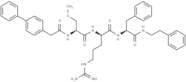
CAS:Cathepsin L-IN-3, a tripeptide-sized inhibitor of cathepsin L, effectively targets this specific enzyme.Formel:C41H49N7O4SFarbe und Form:SolidMolekulargewicht:735.94N-(4-Biphenylacetyl)-Cys(Me)-D-Arg-Phe-N-Phenylethylamide
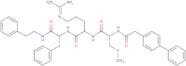
CAS:N-(4-Biphenylacetyl)-Cys(Me)-D-Arg-Phe-N-Phenylethylamide is an inhibitor of serine proteases. It prevents the breakdown of proteins, which may result in a number of pathologies. N-(4-Biphenylacetyl)-Cys(Me)-D-Arg-Phe-N-Phenylethylamide has been shown to prevent reperfusion injury and proteinuria in mice by inhibiting renal inflammation and oxidative stress. This compound has also been shown to be effective in preventing the development of cancer, for example prostate cancer, by inhibiting angiogenesis, leading to reduced vascularization.Formel:C41H49N7O4SReinheit:Min. 95%Molekulargewicht:735.96 g/mol4-Biphenylac-Cys(Me)-D-Arg-Phe-(2-phenylethyl)amide
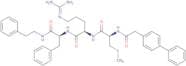
CAS:4-Biphenylac-Cys(Me)-D-Arg-Phe-(2-phenylethyl)amide is a tetrapeptide that has been shown to have antihypertensive properties. This drug binds to the regulatory proteins of the renin angiotensin system and blocks the production of angiotensin II, which decreases blood pressure. 4-Biphenylac-Cys(Me)-D-Arg-Phe-(2-phenylethyl)amide has also shown to be an effective treatment for skin care products, especially those used for inflammatory skin diseases. 4-Biphenylac-Cys(Me)-D-Arg-Phe-(2-phenylethyl)amide has been shown to be a potent inhibitor of serine proteases and can inhibit cellular proliferation and induce apoptosis in cancer cells.
Formel:C41H49N7O4SReinheit:Min. 95%Molekulargewicht:735.94 g/mol