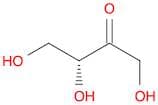
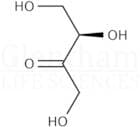
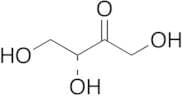
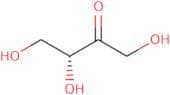
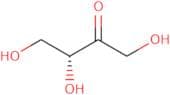
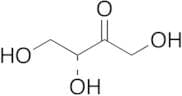
CAS 496-55-9
:D-Erythrulose
- (3R)-1,3,4-Trihydroxy-2-butanone
- (R)-1,3,4-Trihydroxybutan-2-one
- 2-Butanone, 1,3,4-trihydroxy-, (R)-
- 2-butanone, 1,3,4-trihydroxy-, (3R)-
- <span class="text-smallcaps">D</span>-Erythrulose
- <span class="text-smallcaps">D</span>-Threulose
- <span class="text-smallcaps">D</span>-glycero-2-Tetrulose
- <span class="text-smallcaps">D</span>-glycero-Tetrulose
- Erythrulose, <span class="text-smallcaps">D</span>-
- D-Threulose
- D-glycero-Tetrulose
D-Erythrulose (1M in Water), 90%
CAS:Kontrolliertes ProduktApplications D-Erythrulose is a tetrose carbohydrate that is used in various self-tanning cosmetics combined with dihydroxyacetone.
References Maeda, M., et al.: J. Biochem., 123, 602 (1998); Baykal, A., et al.: Bioorg. Chem., 34, 380 (2006);Formel:C4H8O4Reinheit:90%Farbe und Form:Single SolutionMolekulargewicht:120.1D-Erythrulose - Aqueous solution
CAS:D-Erythrulose is a sugar that can be synthesized from the chemical structures of glycolaldehyde and carbonyl group. It can also be produced by hydrolysis of erythritol, which is found in plant cell walls. D-Erythrulose has been used as an alternative to glucose for fermentation processes because it does not inhibit the growth of most bacteria. D-Erythrulose has been shown to increase ATP levels in Escherichia coli K-12 cells and to affect the activities of enzymes involved in glycolysis, such as glyceraldehyde 3-phosphate dehydrogenase, phosphoglycerate kinase, and enolase. The metabolic pathways that produce D-erythrulose are found in many organisms, including Corynebacterium glutamicum, Brucella melitensis, and Brucella suis.Formel:C4H8O4Reinheit:Min. 95%Farbe und Form:Colorless PowderMolekulargewicht:120.1 g/molD-Erythrulose - 1M Aqueous solution
CAS:D-erythrulose is a monosaccharide with the chemical structure of erythrose. It is structurally related to glycolaldehyde, which is a precursor in the biosynthesis of ribose. D-Erythrulose has been used for diagnosis and identification of various bacteria, such as C. glutamicum and Brucella species, by serological tests, as well as for the detection of gene products in E. coli K-12 cells. The determination of ATP levels in Brucella species has also been performed using magnetic resonance spectroscopy (MRS) after incubation with D-erythrulose.
Formel:C4H8O4Reinheit:Min. 90 Area-%Farbe und Form:Clear LiquidMolekulargewicht:120.1 g/molD-Erythrulose (~0.3 M in Water, ~90%)
CAS:Kontrolliertes ProduktApplications D-Erythrulose is a tetrose carbohydrate that is used in various self-tanning cosmetics combined with dihydroxyacetone.
References Maeda, M., et al.: J. Biochem., 123, 602 (1998); Baykal, A., et al.: Bioorg. Chem., 34, 380 (2006);Formel:C4H8O4Reinheit:~90%Farbe und Form:NeatMolekulargewicht:120.1