CAS 50-29-3
:DDT
Beschreibung:
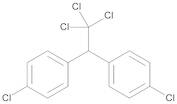
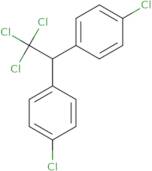
DDT, oder Dichlordiphenyltrichlorethan, ist eine synthetische organische Verbindung, die für ihre insektiziden Eigenschaften bekannt ist. Sie ist durch ihre chemische Formel C14H9Cl5 gekennzeichnet und gehört zur Klasse der chlorierten Kohlenwasserstoffe. DDT ist ein farbloser, kristalliner Feststoff, der relativ stabil ist und eine geringe Löslichkeit in Wasser, aber eine hohe Löslichkeit in organischen Lösungsmitteln aufweist. Ihr Wirkungsmechanismus besteht darin, das Nervensystem von Insekten zu stören, was sie gegen eine Vielzahl von Schädlingen wirksam macht. DDT ist jedoch auch für seine Umweltpersistenz und Bioakkumulation in der Nahrungskette bekannt, was zu erheblichen ökologischen und gesundheitlichen Bedenken führt. Es wurde mit negativen Auswirkungen auf die Tierwelt, insbesondere auf Vögel, in Verbindung gebracht, wo es zu einer Verdünnung der Eierschalen und einem Rückgang der Populationen führen kann. Aufgrund dieser Umweltauswirkungen wurde DDT in vielen Ländern ab den 1970er Jahren verboten oder eingeschränkt, obwohl es in einigen Regionen weiterhin zur Bekämpfung von Malaria-Vektoren eingesetzt wird. Sein Erbe beeinflusst weiterhin die Diskussionen über die Regulierung von Pestiziden und die Umweltgesundheit.
Formel:C14H9Cl5
InChl:InChI=1S/C14H9Cl5/c15-11-5-1-9(2-6-11)13(14(17,18)19)10-3-7-12(16)8-4-10/h1-8,13H
InChI Key:InChIKey=YVGGHNCTFXOJCH-UHFFFAOYSA-N
SMILES:C(C(Cl)(Cl)Cl)(C1=CC=C(Cl)C=C1)C2=CC=C(Cl)C=C2
Synonyme:- 1,1'-(2,2,2-Trichloroethane-1,1-Diyl)Bis(4-Chlorobenzene)
- 1,1'-(2,2,2-Trichloroethylidene)Bis[4-Chlorobenzene]
- 1,1,1-Trichloro-2,2-bis(p-chlorophenyl)ethane
- 1,1,1-Trichloro-2,2-di(p-chlorophenyl)ethane
- 1,1,1-Trichloro-2-2,2-bis(p-chlorophenyl)ethane
- 1,1,1-Trichlorobis(chlorophenyl)ethane
- 1,1-Bis(4-chlorophenyl)-2,2,2-trichloroethane
- 1,1-Bis(P-Chlorophenyl)-2,2,2-Trichloroethane
- 2,2,2-Trichloro-1,1-bis(4-chlorophenyl)ethane
- 2,2,2-Trichlorobis(4-Chlorophenyl)Ethane
- 2,2-Bis(4-chlorophenyl)-1,1,1-trichloroethane
- 2,2-Bis(P-Chlorophenyl)-1,1,1-Trichloroethane
- 4,4'-Ddt
- 4,4'-Dichlorodiphenyltrichloroethane
- 4,4-Dichlorodiphenyl-trichloroethane
- Aavero-extra
- Agritan
- Alpha,Alpha-Bis(P-Chlorophenyl)-Beta,Beta,Beta-Trichlorethane
- Anofex
- Arkotine
- Azotox
- Azotox M 33
- Benzene, 1,1′-(2,2,2-trichloroethylidene)bis[4-chloro-
- Benzochloryl
- Bis(p-chlorophenyl)-2,2,2-trichloroethane
- Bosan supra
- Bovidermol
- Chlorophenothane
- Chlorophenotoxum
- Chlorphenothan
- Chlorphenotoxum
- Citox
- Clofenotan
- Clofenotano
- D.D.T.
- DDT
- Dedelo
- Deoval
- Detox
- Detox (pesticide)
- Detoxan
- Dibovan
- Dibovin
- Dichlorodiphenyltrichloroethane
- Dicophane
- Dicophaner
- Didigam
- Didimac
- Dnsbp
- Dodat
- Dykol
- Ent-1506
- Estonate
- Ethane, 1,1,1-trichloro-2,2-bis(4-chlorophenyl)-
- Ethane, 1,1,1-trichloro-2,2-bis(p-chlorophenyl)-
- Genitox
- Gesafid
- Gesapon
- Gesarex
- Gesarol
- Geusapon
- Guesapon
- Guesarol
- Gyron
- Havero-Extra
- Hildit
- Ivoran
- Ixodex
- Kopsol
- Mutoxan
- Mutoxin
- NSC 8939
- Neocid
- Neocidol
- Neocidol (solid)
- PEB<sub>1</sub>
- Parachlorocidum
- Peb1
- Pentachlorin
- Pentech
- Penticidum
- Ppzeidan
- R50
- Rukseam
- Santobane
- Tafidex
- Trichlorobis(4'-chlorophenyl)ethane
- Zeidane
- Zerdane
- o,p′-1,1,1-Trichloro-2-2,2-bis(p-chlorophenyl)ethane
- p,p'-DDT
- p,p'-DDT~p,p'-Dichloro-1,1-diphenyl-2,2,2-trichloroethane
- p,p'-Dichlorodiphenyltrichloroethane
- p,p'-Dichlorodiphenyltrichloromethylmethane
- para,para'-DDT
- Weitere Synonyme anzeigen
Filtern nach
Reinheitsanteil
0
100
|
0
|
50
|
90
|
95
|
100
- Niedrigster Preis
- Höchster Preis
- Niedrigste Reinheit
- Höchste Reinheit
- Schnellste Lieferung
Pesticide-Mix 13 10 µg/mL in Toluene
CAS:Kontrolliertes Produkt- 1024-57-3
- 118-74-1
- 2385-85-5
- 27304-13-8
- 28044-83-9
- 309-00-2
- 319-84-6
- 319-85-7
- 319-86-8
- 33213-65-9
- 3424-82-6
- 35065-27-1
- 35065-28-2
- 35065-29-3
- 35693-99-3
- 37680-73-2
- 465-73-6
- 50-29-3
- 5103-71-9
- 5103-74-2
- 53-19-0
- 58-89-9
- 60-57-1
- 6108-10-7
- 7012-37-5
- 72-20-8
- 72-43-5
- 72-54-8
- 72-55-9
- 76-44-8
- 789-02-6
- 959-98-8
Formel:C12H4Cl6Farbe und Form:MixtureMolekulargewicht:360.88Single Column Analytes Mix 4 2000 µg/mL in Toluene/Hexane
CAS:Kontrolliertes Produkt- 1031-07-8
- 28044-83-9
- 309-00-2
- 319-84-6
- 319-85-7
- 319-86-8
- 33213-65-9
- 50-29-3
- 5103-71-9
- 5103-74-2
- 53494-70-5
- 58-89-9
- 60-57-1
- 72-20-8
- 72-43-5
- 72-54-8
- 72-55-9
- 7421-93-4
- 76-44-8
- 959-98-8
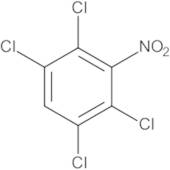
Formel:C14H10Cl4Farbe und Form:MixtureMolekulargewicht:320.04Pesticide-Mix 71 10 µg/mL in Cyclohexane
CAS:Kontrolliertes Produkt- 1024-57-3
- 117-18-0
- 118-74-1
- 28044-83-9
- 309-00-2
- 319-84-6
- 319-85-7
- 33213-65-9
- 3424-82-6
- 50-29-3
- 5103-71-9
- 5103-74-2
- 53-19-0
- 58-89-9
- 60-57-1
- 72-20-8
- 72-43-5
- 72-54-8
- 72-55-9
- 76-44-8
- 789-02-6
- 82-68-8
- 959-98-8
Formel:C6HCl4NO2Farbe und Form:MixtureMolekulargewicht:260.894,4'-Dichlorodiphenyltrichloroethane
CAS:Kontrolliertes ProduktApplications 4,4'-Dichlorodiphenyltrichloroethane is a synthetic organochlorine insecticide. 4,4'-Dichlorodiphenyltrichloroethane functions by opening sodium ion channels in the insects’ neurons, causing them to fire spontaneously which in turn leads to death. 4,4'-Dichlorodiphenyltrichloroethane is banned for agricultural use in North America, it is still commonly used in some countries and particularly as a means of malaria control.
Not a dangerous good if item is equal to or less than 1g/ml and there is less than 100g/ml in the package
References Balkew, M. et al.: Paras. Vect., 3, No pp. given (2010); Kikankie, C.K. et al.: Malaria J., 9, No pp. given. (2010); Battu, R.S. et al.: Sci. Total Environ., 78, 173 (1989);Formel:C14H9Cl5Farbe und Form:NeatMolekulargewicht:354.494.4′-DDT in Acetone
CAS:Kontrolliertes ProduktAcetoneFormel:C14H9Cl5Farbe und Form:SolidMolekulargewicht:354.54.4′-DDT in Methanol
CAS:Kontrolliertes ProduktMethanolFormel:C14H9Cl5Farbe und Form:SolidMolekulargewicht:354.54.4′-DDT in Methanol
CAS:Kontrolliertes ProduktFormel:C14H9Cl5Farbe und Form:SolidMolekulargewicht:354.54,4²-DDT
CAS:Kontrolliertes Produkt4,4²-DDT is a metabolite of the insecticide DDT and has been shown to have anti-inflammatory properties. 4,4²-DDT undergoes a phase transition from its liquid to solid state at around -10°C. When colloidal gold is added to 4,4²-DDT it forms an insoluble complex that can be used as a fluorescent probe for bacterial enzymes. It has also been shown that 4,4²-DDT can inhibit the activity of many different enzymes in biological samples such as fetal bovine serum and Aerobacter aerogenes. The rate constant for this inhibition is dependent on the concentration of glycol ethers in the sample. This compound also affects energy metabolism by inhibiting dinucleotide phosphate (NADPH) reductase and ATPase activities in rat liver cells.Formel:C14H9Cl5Reinheit:Min. 95%Molekulargewicht:354.49 g/mol