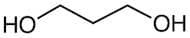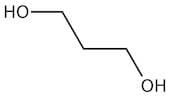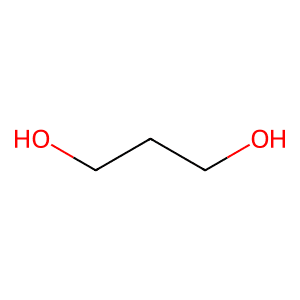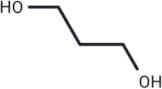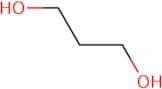
CAS 504-63-2
:1,3-Propandiol
Beschreibung:
1,3-Propandiol, mit der CAS-Nummer 504-63-2, ist eine farblose, geruchlose und hygroskopische Flüssigkeit, die als Diol oder Glykol dient. Es handelt sich um eine einfache aliphatische Verbindung mit der chemischen Formel C3H8O2, die zwei Hydroxylgruppen (-OH) auf dem ersten und dritten Kohlenstoffatom der drei-Kohlenstoff-Kette aufweist. Diese Struktur verleiht ihm Eigenschaften, die typisch für Polyole sind, wie eine hohe Löslichkeit in Wasser und verschiedenen organischen Lösungsmitteln. 1,3-Propandiol ist ungiftig und biologisch abbaubar, was es zu einer attraktiven Alternative zu erdölbasierten Glykolen in verschiedenen Anwendungen macht. Es wird häufig als Lösungsmittel, Feuchthaltemittel und in der Herstellung von Polymeren, insbesondere Polytrimethylenterephthalat (PTT), verwendet, das in Textilien und Kunststoffen eingesetzt wird. Darüber hinaus hat es Anwendungen in Kosmetika und Körperpflegeprodukten aufgrund seiner feuchtigkeitsspendenden Eigenschaften. Seine Produktion kann durch Fermentationsprozesse unter Verwendung erneuerbarer Ressourcen erreicht werden, was mit nachhaltigen Praktiken in der chemischen Herstellung übereinstimmt.
Formel:C3H8O2
InChl:InChI=1S/C3H8O2/c4-2-1-3-5/h4-5H,1-3H2
InChI Key:InChIKey=YPFDHNVEDLHUCE-UHFFFAOYSA-N
SMILES:C(CO)CO
Synonyme:- 1,3-Dihydroxypropane
- 1,3-Propylene Glycol
- 1,3-Propylenediol
- 2-Deoxyglycerol
- Bio-PDO
- Nsc 65426
- P 0486
- PG
- Propan-1,3-diol
- Propane-1,3-diol
- Propano-1,3-Diol
- Susterra
- Trimethylene glycol
- Zemea
- Zemea propanediol
- β-Propylene glycol
- ω-Propanediol
- Trimethyleneglycol
- 1,3-Propandiol
- beta-Propylene glycol
- 2-(Hydroxymethyl)ethanol
- nsc65426
- 1,3-Propanediol
- Weitere Synonyme anzeigen
Sortieren nach
Reinheit (%)
0
100
|
0
|
50
|
90
|
95
|
100
16 Produkte.
1,3-Propanediol
CAS:Formel:C3H8O2Reinheit:>98.0%(GC)Farbe und Form:Colorless to Almost colorless clear liquidMolekulargewicht:76.101,3-Propanediol, 99%
CAS:1,3-Propanediol is used as a solvent for thin film preparations, in the production of polymers such as polytrimethylene terephthalate, adhesives, laminates, coatings, moldings, aliphatic polyesters, as an antifreeze and in wood paint. It also acts as a reagent for vinyl epoxide synthon, for epoxideFormel:C3H8O2Reinheit:99%Farbe und Form:Liquid, Clear colorlessMolekulargewicht:76.101,3-Propanediol
CAS:Acyclic dihydric alcohols not elsewhere specified or includedFormel:C3H8O2Farbe und Form:Colorless LiquidMolekulargewicht:76.052431,3-Propanediol
CAS:1,3-PropanediolFormel:C3H8O2Reinheit:98%Farbe und Form: colorless to almost colorless to white liquidMolekulargewicht:76.09g/mol1,3-Propanediol
CAS:1,3-Propanediol is a natural product produced by microbial fermentation of glycerol.Formel:C3H8O2Reinheit:99% - 99.91%Farbe und Form:SolidMolekulargewicht:76.091,3-Propanediol
CAS:Kontrolliertes ProduktApplications 1,3-Propanediol is a common organic reagent used in the synthesis of polymers and used in industrial organic chemistry for the synthesis of lubricants, foods, medicines and cosmetics.
References Sun, Y. et al.: Bioproc. Renew. Res. Commod. Bioprod., 289 (2014);Formel:C3H8O2Farbe und Form:NeatMolekulargewicht:76.09Ref: IN-DA003DLF
Ausgelaufenes produktGB 24410-2009 VOC Mixture 640 1000 µg/mL in Methanol
CAS:Kontrolliertes Produkt- 100-41-4
- 106-42-3
- 107-21-1
- 107-98-2
- 108-01-0
- 108-88-3
- 109-86-4
- 110-12-3
- 110-80-5
- 111-46-6
- 111-76-2
- 112-34-5
- 121-44-8
- 122-99-6
- 123-86-4
- 124-68-5
- 144-19-4
- 29911-28-2
- 34590-94-8
- 504-63-2
- 5131-66-8
- 57-55-6
- 64-17-5
- 67-63-0
- 67-64-1
- 71-23-8
- 71-36-3
- 71-43-2
- 770-35-4
- 872-50-4
- 95-47-6
Farbe und Form:Mixture1,3-Propanediol
CAS:aliphatic diol. It has been shown to have an inhibitory effect on bacterial growth
Formel:C3H8O2Reinheit:Min. 95%Farbe und Form:Colorless Clear LiquidMolekulargewicht:76.09 g/molRef: 3D-FP33131
Ausgelaufenes produkt