CAS 5042-53-5
:1-(phenylsulfanyl)propan-2-on
Beschreibung:
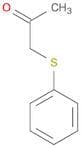
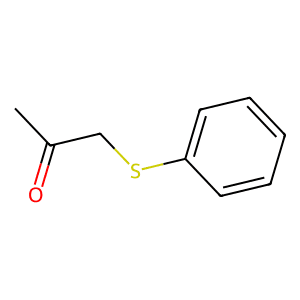
1-(phenylsulfanyl)propan-2-on, auch bekannt als Phenylthioacetone, ist eine organische Verbindung, die durch das Vorhandensein einer Thioether-Funktionalgruppe und einer Ketone gekennzeichnet ist. Es weist ein Propan-2-on-Rückgrat mit einem Phenylsulfanylsubstituenten am ersten Kohlenstoff auf. Diese Verbindung erscheint typischerweise als farblose bis blassgelbe Flüssigkeit mit einem ausgeprägten Geruch. Sie ist in organischen Lösungsmitteln wie Ethanol und Ether löslich, hat jedoch eine begrenzte Löslichkeit in Wasser aufgrund ihrer hydrophoben Natur. Das Vorhandensein der Thioether-Gruppe verleiht eine einzigartige Reaktivität, die sie in verschiedenen Anwendungen der organischen Synthese nützlich macht, einschließlich der Bildung von Thioethern und anderen schwefelhaltigen Verbindungen. Darüber hinaus kann sie biologische Aktivität aufweisen, die Gegenstand von Forschungen in der medizinischen Chemie war. Sicherheitsvorkehrungen sollten beim Umgang mit dieser Verbindung getroffen werden, da sie gesundheitliche Risiken darstellen kann, wenn sie eingeatmet oder eingenommen wird. Insgesamt ist 1-(phenylsulfanyl)propan-2-on eine wertvolle Verbindung sowohl in industriellen als auch in Forschungseinrichtungen.
Formel:C9H10OS
InChl:InChI=1/C9H10OS/c1-8(10)7-11-9-5-3-2-4-6-9/h2-6H,7H2,1H3
SMILES:CC(=O)CSc1ccccc1
Synonyme:- 1-(Phenylsulfanyl)acetone
- 2-Propanone, 1-(phenylthio)-
- 3-Phenylthiopropan-2-One
Sortieren nach
Reinheit (%)
0
100
|
0
|
50
|
90
|
95
|
100
4 Produkte.
1-(Phenylthio)propan-2-one
CAS:Formel:C9H10OSReinheit:95%Farbe und Form:SolidMolekulargewicht:166.24011-(Phenylthio)propan-2-one
CAS:1-(Phenylthio)propan-2-oneFormel:C9H10OSReinheit:97%Farbe und Form: white crystalline solidMolekulargewicht:166.24g/mol(Phenylthio)propanone
CAS:Phenylthiopropanone (PTPA) is an organic compound that belongs to the class of sulfoxides. It can be synthesized from ethyl ester, chloroform, and phenylthiol in a three-step process using methodologies such as biotransformations or chemoenzymatic reactions. PTPA can also be obtained by reacting sodium sulfoxide with phosphorus pentachloride. PTPA has been used as a precursor for other compounds including the hydroxy group, chloride, and synthetically desulfurized phenylthioacetaldehyde. The synthesis of PTPA is usually carried out in the presence of a catalyst and kinetic control of the reaction is necessary to avoid undesired side reactions.
Formel:C9H10OSReinheit:Min. 95%Molekulargewicht:166.24 g/mol