CAS 513-85-9
:2,3-Butandiol
Beschreibung:
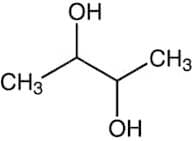
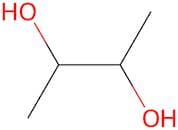
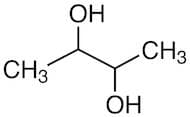
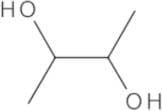
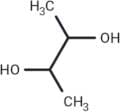
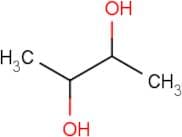
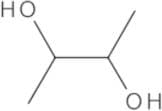
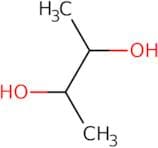
2,3-Butandiol ist eine farblose, viskose Flüssigkeit, die zur Klasse der organischen Verbindungen gehört, die als Diolen oder Glycole bekannt sind, gekennzeichnet durch das Vorhandensein von zwei Hydroxylgruppen (-OH). Seine chemische Formel ist C4H10O2 und es hat ein Molekulargewicht von etwa 90,12 g/mol. Diese Verbindung hat einen süßen Geschmack und ist in Wasser löslich, was sie in verschiedenen Anwendungen nützlich macht, einschließlich als Lösungsmittel und in der Herstellung von Kunststoffen und Pharmazeutika. 2,3-Butandiol kann in drei stereoisomeren Formen existieren, wobei die häufigste die meso-Form ist, die eine symmetrische Struktur aufweist. Es wird durch Fermentationsprozesse von bestimmten Mikroorganismen produziert und kann auch chemisch synthetisiert werden. Die Substanz hat eine relativ niedrige Toxizität, sollte jedoch wie viele organische Verbindungen mit Vorsicht behandelt werden, um Irritationen zu vermeiden. Darüber hinaus kann 2,3-Butandiol als Vorläufer für die Synthese anderer Chemikalien dienen, was seine Bedeutung in der organischen Chemie und in industriellen Anwendungen unterstreicht.
Formel:C4H10O2
InChl:InChI=1S/C4H10O2/c1-3(5)4(2)6/h3-6H,1-2H3
InChI Key:InChIKey=OWBTYPJTUOEWEK-UHFFFAOYSA-N
SMILES:C(C(C)O)(C)O
Synonyme:- 1,2-Dimethyl-1,2-ethanediol
- 2,3-Butandiol
- 2,3-Butylene glycol
- 2,3-Dihydroxybutane
- Butan-2,3-diol
- Butane-2,3-diol
- Butano-2,3-Diol
- Dimethylethylene glycol
- 2,3-Butanediol
- (2R,3S)-butane-2,3-diol
- 2,3-Butanediol, mixture of DL and meso
Sortieren nach
Reinheit (%)
0
100
|
0
|
50
|
90
|
95
|
100
12 Produkte.
(±)-2,3-Butanediol, 98%
CAS:This Thermo Scientific Chemicals brand product was originally part of the Alfa Aesar product portfolio. Some documentation and label information may refer to the legacy brand. The original Alfa Aesar product / item code or SKU reference has not changed as a part of the brand transition to Thermo SciFormel:C4H10O2Reinheit:98%Farbe und Form:Liquid, Clear colorless to pale yellowMolekulargewicht:90.122,3-Butanediol (mixture of stereoisomers)
CAS:Formel:C4H10O2Reinheit:>97.0%(GC)Farbe und Form:Colorless to Light yellow clear liquidMolekulargewicht:90.122,3-Butanediol
CAS:2,3-Butanediol is a butanediol derived from the bioconversion of natural resources which has great potential for diverse industries, including chemical,Formel:C4H10O2Reinheit:98.64%Farbe und Form:Nearly Colorless Crystalline Solid Or Liquid SolidMolekulargewicht:90.122,3-Butanediol
CAS:2,3-ButanediolFormel:C4H10O2Reinheit:95%Farbe und Form: colourless to light yellow liquidMolekulargewicht:90.12g/mol2,3-Butanediol
CAS:Kontrolliertes ProduktApplications 2,3-Butanediol, is occurring naturally in cocoa butter, in the roots of Ruta graveolens, sweet corn, and in rotten mussels. It is used in the resolution of carbonyl compounds in gas chromatography.
References Voloch, M., et al.: Comprehensive Biotech, 2, 933 (1986);Formel:C4H10O2Farbe und Form:Clear ColourlessMolekulargewicht:90.122,3-Butanediol
CAS:2,3-Butanediol is a glycol that is produced by the fermentation of sugars or carbohydrates. It is used in the synthesis of acetoin, which is an important flavor compound in various foods and beverages. The production of 2,3-butanediol from glucose was achieved through the use of a novel asymmetric synthesis reaction with inorganic acid as catalyst. 2,3-Butanediol can also be synthesized from adipic acid using aerobacter aerogenes as catalyst. This process has been shown to be efficient with wild-type strains and provides high yields under mild conditions. 2,3-Butanediol has been shown to have antibiotic activity against tetracycline resistant bacteria and may inhibit bacterial growth by binding to DNA gyrase and topoisomerase IV enzymes. The hydroxyl group on the molecule makes it more reactive than other glycols because it can form hydrogen bonds with water molecules.Formel:C4H10O2Reinheit:Min. 95%Farbe und Form:Colorless Clear LiquidMolekulargewicht:90.12 g/mol2,3-Butanediol (mixture of stereoisomers)
CAS:Formel:C4H10O2Reinheit:97%Farbe und Form:ViscousMolekulargewicht:90.122