CAS 51953-13-0
:2-Pyrimidinol
Beschreibung:
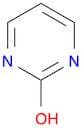
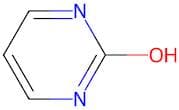
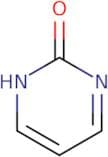
2-Pyrimidinol, mit der CAS-Nummer 51953-13-0, ist eine heterocyclische organische Verbindung, die durch einen Pyrimidinring mit einer Hydroxylgruppe (-OH) an der zweiten Position gekennzeichnet ist. Diese Verbindung ist ein farbloser bis blassgelber Feststoff, der in Wasser und polaren organischen Lösungsmitteln löslich ist, was ihre Fähigkeit widerspiegelt, Wasserstoffbrückenbindungen einzugehen, aufgrund der Anwesenheit der Hydroxylgruppe. 2-Pyrimidinol weist basische Eigenschaften auf, die typisch für stickstoffhaltige Heterocyclen sind, und kann an verschiedenen chemischen Reaktionen teilnehmen, einschließlich nucleophiler Substitutionen und Kondensationsreaktionen. Sie wird häufig in der Synthese von Arzneimitteln und Agrochemikalien verwendet, da sie als Baustein in der Entwicklung biologisch aktiver Verbindungen dient. Darüber hinaus ermöglichen es ihre strukturellen Merkmale, als Ligand in der Koordinationschemie zu wirken. Die Stabilität und Reaktivität der Verbindung können durch die Anwesenheit von Substituenten am Pyrimidinring beeinflusst werden, was sie zu einem vielseitigen Zwischenprodukt in der organischen Synthese macht.
Formel:C4H4N2O
Synonyme:- 2-Pyrimidinol (7CI,9CI)
Sortieren nach
Reinheit (%)
0
100
|
0
|
50
|
90
|
95
|
100
3 Produkte.
2-Hydroxypyrimidine
CAS:2-HydroxypyrimidineFormel:C4H4N2OReinheit:97%Farbe und Form: light yellow crystalline solidMolekulargewicht:96.09g/mol2-Pyrimidinol
CAS:<p>2-Pyrimidinol is a sodium salt that is used as an antimicrobial agent. It has significant cytotoxicity against skin cancer cells and is also used to treat HIV infection. 2-Pyrimidinol inhibits the activity of inhibitor molecules, which are small molecules that inhibit the activity of important enzymes in cells. This inhibition results in increased production of ATP, which leads to cell death. 2-Pyrimidinol also binds to dna duplexes and prevents them from being opened by helicase, thus inhibiting cellular replication. The molecular structure of 2-pyrimidinol was determined using X-ray crystallography and molecular docking analysis. This compound has been shown to have a potential use in treating metabolic disorders due to its ability to inhibit glycolysis, or the breakdown of glucose, through competitive inhibition with phosphofructokinase (PFK).</p>Formel:C4H4N2OReinheit:(%) Min. 98%Farbe und Form:PowderMolekulargewicht:96.09 g/mol