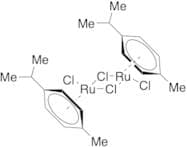
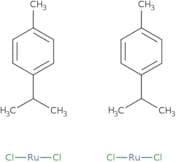
CAS 52462-29-0
:Bis(dichlor(η6-p-cymen)ruthenium)
Beschreibung:
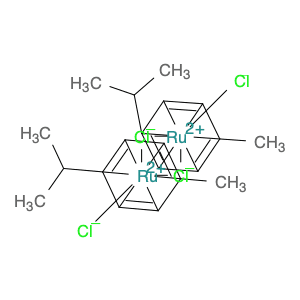
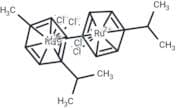
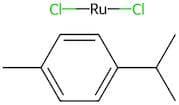
Bis(dichlor(η6-p-cymen)ruthenium) ist eine Koordinationsverbindung, die Ruthenium als zentrales Metallatom aufweist, das an zwei Dichlor(η6-p-Cymen)-Liganden koordiniert ist. Diese Verbindung zeichnet sich durch ihre einzigartige Struktur aus, bei der das p-Cymen-Ligand, ein substituiertes aromatisches Kohlenwasserstoff, auf η6-Weise an das Ruthenium-Zentrum bindet, was darauf hinweist, dass der gesamte aromatische Ring an der Koordination beteiligt ist. Die Dichlor-Gruppen tragen zur allgemeinen Stabilität und Reaktivität des Komplexes bei. Typischerweise zeigen solche Ruthenium-Komplexe interessante katalytische Eigenschaften, insbesondere bei organischen Transformationen und Polymerisationsreaktionen. Sie können auch Potenzial in der medizinischen Chemie zeigen, insbesondere bei der Krebsbehandlung, aufgrund ihrer Fähigkeit, mit biologischen Molekülen zu interagieren. Die Verbindung wird im Allgemeinen mit Vorsicht behandelt, da Chlor vorhanden ist, das toxisch sein kann. Ihre Löslichkeit in organischen Lösungsmitteln und Stabilität unter verschiedenen Bedingungen machen sie zu einem interessanten Thema sowohl in der akademischen als auch in der industriellen Forschung. Insgesamt exemplifiziert Bis(dichlor(η6-p-cymen)ruthenium) die Vielseitigkeit von Übergangsmetallkomplexen in der Koordinationschemie.
Formel:C20H28Cl4Ru2
InChl:InChI=1S/2C10H14.4ClH.2Ru/c2*1-8(2)10-6-4-9(3)5-7-10;;;;;;/h2*4-8H,1-3H3;4*1H;;/q;;;;;;2*+2/p-4
InChI Key:InChIKey=LAXRNWSASWOFOT-UHFFFAOYSA-J
SMILES:[Cl-][Ru+2]123456(C=7(C(C)C)[CH]1=[CH]2C3(C)=[CH]4[CH]57)[Cl-][Ru+2]89%10%11%12([Cl-])([Cl-]6)C=%13(C(C)C)[CH]8=[CH]9C%10(C)=[CH]%11[CH]%12%13
Synonyme:- (Cymene)ruthenium dichloride dimer
- (p-Cymene)ruthenium dichloride dimer
- (p-Cymene)ruthenium(II) chloride dimer
- Benzene, 1-methyl-4-(1-methylethyl)-, ruthenium complex
- Bis(((η6-4-isopropyltoluene)(chloro)(μ-chloro)ruthenium))
- Bis(((η<sup>6</sup>-4-isopropyltoluene)(chloro)(μ-chloro)ruthenium))
- Bis((dichloro(η6-p-isopropyl(methyl)benzene)ruthenium))
- Bis((dichloro(η<sup>6</sup>-p-isopropyl(methyl)benzene)ruthenium))
- Bis((η6-p-cymene)dichlororuthenium)
- Bis((η<sup>6</sup>-p-cymene)dichlororuthenium)
- Bis((μ-chloro)chloro(η6-1-isopropyl-4-methylbenzene)ruthenium)
- Bis((μ-chloro)chloro(η6-4-isopropyltoluene)ruthenium)
- Bis((μ-chloro)chloro(η<sup>6</sup>-1-isopropyl-4-methylbenzene)ruthenium)
- Bis((μ-chloro)chloro(η<sup>6</sup>-4-isopropyltoluene)ruthenium)
- Bis(4-isopropyltoluene)tetrachlorodiruthenium
- Bis(chloro(μ-chloro)(η6-p-cymene)ruthenium)
- Bis(chloro(μ-chloro)(η6-p-isopropyl(methyl)benzene)ruthenium)
- Bis(chloro(μ-chloro)(η6-p-isopropyltoluene)ruthenium)
- Bis(chloro(μ-chloro)(η<sup>6</sup>-p-cymene)ruthenium)
- Bis(chloro(μ-chloro)(η<sup>6</sup>-p-isopropyl(methyl)benzene)ruthenium)
- Bis(chloro(μ-chloro)(η<sup>6</sup>-p-isopropyltoluene)ruthenium)
- Bis(dichloro(p-η6-isopropyltoluene)ruthenium)
- Bis(dichloro(p-η<sup>6</sup>-isopropyltoluene)ruthenium)
- Bis(dichloro(η6-4-isopropyltoluene)ruthenium)
- Bis(dichloro(η6-p-cymene)ruthenium)
- Bis(dichloro(η6-p-isopropyltoluene)ruthenium)
- Bis(dichloro(η<sup>6</sup>-4-isopropyltoluene)ruthenium)
- Bis(dichloro(η<sup>6</sup>-p-cymene)ruthenium)
- Bis(dichloro(η<sup>6</sup>-p-isopropyltoluene)ruthenium)
- Bis(p-cymene)diruthenium(II) tetrachloride
- Bis(η6-p-Cymene)tetrachlorodiruthenium
- Bis(η<sup>6</sup>-p-Cymene)tetrachlorodiruthenium
- Bis(μ-chlorochloro(η6-4-cymene)ruthenium)
- Bis(μ-chlorochloro(η<sup>6</sup>-4-cymene)ruthenium)
- Bis[(η6-p-isopropyltoluene)dichlororuthenium]
- Bis[(η<sup>6</sup>-1-isopropyl-4-methylbenzene)dichlororuthenium]
- Bis[(η<sup>6</sup>-p-isopropyltoluene)dichlororuthenium]
- Bis[dichlorido(cym) ruthenium(II)]
- Bis[dichloro(1-isopropyl-4-methylbenzene)ruthenium]
- Bis[dichloro(p-cymene)ruthenium]
- Bis[dichloro(η6-1-isopropyl-4-methylbenzene)ruthenium]
- Bis[dichloro(η<sup>6</sup>-1-isopropyl-4-methylbenzene)ruthenium]
- Di-chlorobis[(p-cymene)chlororuthenium(II)]
- Di-micron-chlorobis(p-cymene)chlororuthenium(II)
- Di-μ-chlorobis(chloro(η6-4-cymene)ruthenium)
- Di-μ-chlorobis(chloro(η6-4-isopropyltoluene)ruthenium)
- Di-μ-chlorobis(chloro(η6-p-cymene)ruthenium)
- Di-μ-chlorobis(chloro(η<sup>6</sup>-4-cymene)ruthenium)
- Di-μ-chlorobis(chloro(η<sup>6</sup>-4-isopropyltoluene)ruthenium)
- Di-μ-chlorobis(chloro(η<sup>6</sup>-p-cymene)ruthenium)
- Di-μ-chlorobis[(p-cymene)chlororuthenium(II)]
- Di-μ-chlorobis[(p-cymene)chlororuthenium]
- Di-μ-chlorodichlorobis(η<sup>5</sup>-1-isopropyl-4-methylbenzene)diruthenium
- Di-μ-chlorodichlorobis(η<sup>6</sup>-p-cymene)diruthenium
- Di-μ-chlorodichlorobis[(1,2,3,4,5,6-η)-1-methyl-4-(1-methylethyl)benzene]diruhtenium
- Di-μ-chlorodichlorobis[(1,2,3,4,5,6-η)-1-methyl-4-(1-methylethyl)benzene]diruthenium
- Dichloro(p-cymene)ruthenium dimer
- Dichloro(p-cymene)ruthenium(II) dimer
- Dichlorobis(p-cymene)ruthenium(II)-dimer
- DichlorobispcymenechlororutheniumIImin
- Dichlorodi-μ-chlorobis(η6-4-isopropyltoluene)diruthenium
- Dichlorodi-μ-chlorobis(η<sup>6</sup>-4-isopropyltoluene)diruthenium
- Ruthenium 120
- Ruthenium(2+) Chloride-1-Methyl-4-(Propan-2-Yl)Benzene (1:2:1)
- Ruthenium, di-μ-chlorodichlorobis[(1,2,3,4,5,6-η)-1-methyl-4-(1-methylethyl)benzene]di-
- Tetrachlorobis(4-cymene)diruthenium
- Tetrachlorobis(4-cymene)diruthenium(II)
- Tetrachlorobis(4-isopropyltoluene)diruthenium
- Tetrachlorobis(mu-4-cymene)diruthenium(II)
- Tetrachlorobis(p-cymene)diruthenium
- Tetrachlorobis(η6-cymene)diruthenium
- Tetrachlorobis(η6-p-cymene)diruthenium
- Tetrachlorobis(η<sub>6</sub>-cymene)diruthenium
- Tetrachlorobis(η<sup>6</sup>-p-cymene)diruthenium
- [Ru(p-cymene)Cl2]2
- [Ru(p-cymene)Cl<sub>2</sub>]<sub>2</sub>
- Weitere Synonyme anzeigen
Sortieren nach
Reinheit (%)
0
100
|
0
|
50
|
90
|
95
|
100
11 Produkte.
Dichloro(p-cymene)ruthenium(II) Dimer
CAS:Formel:C20H28Cl4Ru2Reinheit:>95.0%(T)Farbe und Form:Light yellow to Brown powder to crystalMolekulargewicht:612.38Dichloro(p-cymene)ruthenium(II) dimer, 98%
CAS:Dichloro(p-cymene)ruthenium(II) dimer is used as hydrosilylation catalyst and also used as a pharmaceutical intermediate. This Thermo Scientific Chemicals brand product was originally part of the Alfa Aesar product portfolio. Some documentation and label information may refer to the legacy brand. ThFormel:C20H28Cl4Ru2Reinheit:98%Farbe und Form:powder, Orange-red to red-brownMolekulargewicht:612.38Di-μ-chlorobis[(p-cymene)chlororuthenium(II)], min. 98%
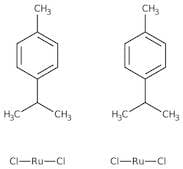
CAS:Di-μ-chlorobis[(p-cymene)chlororuthenium(II)], min. 98%
Formel:RuCl2(C10H14)Reinheit:min. 98%Farbe und Form:brown pwdr.Molekulargewicht:612.39Dichloro(p-cymene)ruthenium(II) dimer
CAS:Formel:C20H28Cl4Ru2Reinheit:97%Farbe und Form:SolidMolekulargewicht:612.3883Dichloro(p-cymene)ruthenium(II) Dimer
CAS:Dichloro(p-cymene)ruthenium(II) Dimer is an organometallic ruthenium complex, a widely used catalyst in various organic reactions
Formel:C20H28Cl4Ru2Farbe und Form:SolidMolekulargewicht:612.39Dichloro(p-cymene)ruthenium(II) dimer
CAS:Dichloro(p-cymene)ruthenium(II) dimerFormel:·2Cl2Ru·2C10H14Reinheit:98%Farbe und Form: red solidMolekulargewicht:612.38832g/molDichloro(p-cymene)ruthenium(II) dimer
CAS:Dichloro(p-cymene)ruthenium(II) dimerFormel:·Cl2Ru·C10H14Reinheit:98%Farbe und Form: red to reddish brown solidMolekulargewicht:306.19g/molDichloro(p-cymene)ruthenium(II)dimer
CAS:Formel:C20H28Cl4Ru2Reinheit:97%Farbe und Form:Crystalline Powder,PowderMolekulargewicht:612.38Dichloro(p-cymene)ruthenium(II) Dimer
CAS:Kontrolliertes ProduktApplications The dichloro(p-cymene)ruthenium(II) dimer is a reagent used in organometallic chemistry, and usually adopts the “three-leg-piano-stool” geometry. The dichloro(p-cymene)ruthenium(II) dimer, when functionalized with di- or tripyridyl aromatic ether ligands, creates di- and three trinuclear organometallic complexes that act as antiparasitic agents.
References Chellan. P., et al.: Organometallics, 32, 4793 (2013); Grguric-Sipka, S., et al.: Eur. J. Med. Chem., 45, 1051 (2010)Formel:C20H28Cl4Ru2Farbe und Form:NeatMolekulargewicht:612.39Dichloro(p-cymene)ruthenium(II) dimer
CAS:Dichloro(p-cymene)ruthenium(II) dimer is an organometallic compound that is used as a catalyst in organic synthesis. It is a square planar molecule with a hydroxyl group at the center. The carbon atoms are bound to two dichloro pyridine ligands and two ruthenium atoms. Dichloro(p-cymene)ruthenium(II) dimer has been shown to be effective for the treatment of trichomonas vaginalis, cancer, and other diseases. This drug also has an amide ligand and a chelate ring that make it chemically stable in acidic environments. Dichloro(p-cymene)ruthenium(II) dimer is activated by amines in the presence of oxygen or hydrogen peroxide, which leads to its decomposition into dichloro pyridine and ruthenium dioxide.Formel:C20H28Cl4Ru2Reinheit:Min. 95%Farbe und Form:Red PowderMolekulargewicht:612.39 g/mol



![Di-μ-chlorobis[(p-cymene)chlororuthenium(II)], min. 98%](/_next/image/?url=https%3A%2Fstatic.cymitquimica.com%2Fproducts%2F08%2Fthumb%2F44-0190.jpg&w=3840&q=75)