CAS 52485-52-6
:D-Tryptophanol
Beschreibung:
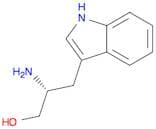
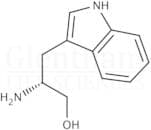
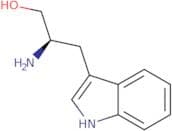
D-Tryptophanol, mit der CAS-Nummer 52485-52-6, ist ein Aminosäurederivat, das strukturell mit Tryptophan, einer essentiellen Aminosäure, verwandt ist. Es ist durch das Vorhandensein eines Indolrings gekennzeichnet, der ein häufiges Merkmal vieler biologisch aktiver Verbindungen ist. D-Tryptophanol ist bekannt für seine potenzielle Rolle in der Biosynthese von Neurotransmittern und seine Beteiligung an verschiedenen physiologischen Prozessen. Es zeigt Eigenschaften, die die Stimmung und die Schlafregulation beeinflussen können, ähnlich wie sein Vorläufer Tryptophan. Die Verbindung liegt typischerweise in kristalliner Form vor und ist in Wasser und organischen Lösungsmitteln löslich, was sie vielseitig für verschiedene Anwendungen in der biochemischen Forschung macht. Darüber hinaus kann D-Tryptophanol auf seine potenziellen therapeutischen Wirkungen untersucht werden, insbesondere in Bezug auf den Serotoninstoffwechsel. Wie bei vielen Aminosäurederivaten ist es wichtig, D-Tryptophanol in Laborumgebungen mit Vorsicht zu behandeln und die Sicherheitsprotokolle einzuhalten, um unerwünschte Reaktionen zu vermeiden.
Formel:C11H14N2O
InChl:InChI=1/C11H14N2O/c12-9(7-14)5-8-6-13-11-4-2-1-3-10(8)11/h1-4,6,9,13-14H,5,7,12H2/t9-/m1/s1
SMILES:c1ccc2c(c1)c(C[C@H](CO)N)c[nH]2
Synonyme:- (2R)-2-Amino-3-(1H-indol-3-yl)propan-1-ol
- 1H-Indole-3-propanol, beta-amino-, (betaR)-
Sortieren nach
Reinheit (%)
0
100
|
0
|
50
|
90
|
95
|
100
4 Produkte.
D-Tryptophanol
CAS:Kontrolliertes Produkt<p>D-Tryptophanol is a synthetic, enantiopure, hydroxymethylated tryptamine. It is a maltobionic molecule and it can be prepared by the hydrolysis of L-tryptophan with sodium hydroxide in water. D-Tryptophanol can also be synthesized from 3,4-diaminopyridine in the presence of a base and catalytic amount of copper(II) chloride. The chemical stability of D-tryptophanol has been studied using HPLC methods. Molecular modeling studies have shown that the compound forms hydrogen bonds with its neighboring molecules and has a high affinity for binding to human liver cells. D-Tryptophanol has been found to inhibit cancer cell growth at nanomolar concentrations, making it an attractive candidate for chemotherapeutic drugs. Calixarenes are used as chiral synthons to produce racemic mixtures of D-tryptophanol that could be</p>Formel:C11H14N2OReinheit:Min. 95%Molekulargewicht:190.24 g/mol