CAS 53306-54-0
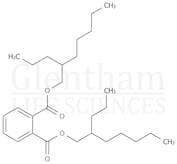
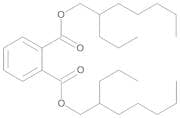
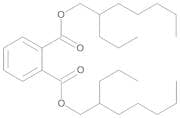
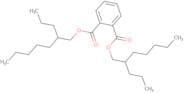
:Di-2-propylheptylphthalat
Beschreibung:
Di-2-propylheptylphthalat (DPHP) ist eine synthetische organische Verbindung, die zur Klasse der Phthalate gehört, die Ester der Phthalsäure sind. Es wird hauptsächlich als Weichmacher verwendet, um die Flexibilität und Haltbarkeit von Kunststoffen, insbesondere von Polyvinylchlorid (PVC), zu verbessern. DPHP zeichnet sich durch sein relativ hohes Molekulargewicht und seine geringe Flüchtigkeit aus, was zu seiner Wirksamkeit in verschiedenen Anwendungen beiträgt, einschließlich der Herstellung von flexiblen Bodenbelägen, Beschichtungen und Klebstoffen. Die Verbindung ist typischerweise farblos und geruchlos, mit einer viskosen Flüssigkeitsform bei Raumtemperatur. DPHP ist bekannt für seine Beständigkeit gegen Wärme und Zersetzung, was es für den langfristigen Einsatz in Verbrauchsgütern geeignet macht. Wie viele Phthalate hat es jedoch Umwelt- und Gesundheitsbedenken aufgeworfen, aufgrund seiner potenziellen endokrinen disruptiven Eigenschaften. Regulierungsbehörden überprüfen zunehmend seine Verwendung, was zu einem Wechsel zu sichereren Alternativen in vielen Anwendungen führt. Insgesamt veranschaulicht DPHP das Gleichgewicht zwischen funktioneller Nützlichkeit in der Materialwissenschaft und der Notwendigkeit von Umwelt- und Gesundheitsaspekten.
Formel:C28H46O4
InChl:InChI=1/C28H46O4/c1-5-9-11-17-23(15-7-3)21-31-27(29)25-19-13-14-20-26(25)28(30)32-22-24(16-8-4)18-12-10-6-2/h13-14,19-20,23-24H,5-12,15-18,21-22H2,1-4H3
InChI Key:InChIKey=MTYUOIVEVPTXFX-UHFFFAOYSA-N
SMILES:C(OCC(CCCCC)CCC)(=O)C1=C(C(OCC(CCCCC)CCC)=O)C=CC=C1
Synonyme:- 1,2-Benzenedicarboxylic acid, 1,2-bis(2-propylheptyl) ester
- 1,2-Benzenedicarboxylic acid, bis(2-propylheptyl) ester
- 10-P
- 10P
- Bis(2-Propylheptyl) Benzene-1,2-Dicarboxylate
- Di-2-propylheptyl phthalate
- Di-2-propylheptyl phthalate(dphp)
- Dipropylheptyl phthalate
- Hexamoll DPHP
- NSC 17071
- Palatinol 10P
- Phthalic acid bis(2-propylheptyl) ester
- Bis(2-propylheptyl) phthalate
- Weitere Synonyme anzeigen
Sortieren nach
Reinheit (%)
0
100
|
0
|
50
|
90
|
95
|
100
6 Produkte.
bis(2-Propylheptyl) phthalate
CAS:Formel:C28H46O4Reinheit:≥ 99.0%Farbe und Form:Clear, colourless to faint yellow oily liquidMolekulargewicht:446.66Phthalic acid, bis-2-propylheptyl ester
CAS:Kontrolliertes ProduktFormel:C28H46O4Farbe und Form:NeatMolekulargewicht:446.66Phthalic acid, bis-2-propylheptyl ester 100 µg/mL in Acetonitrile
CAS:Formel:C28H46O4Farbe und Form:Single SolutionMolekulargewicht:446.66Bis(2-propylheptyl) Phthalate
CAS:Kontrolliertes ProduktApplications One of the main metabolite of phthalates.
References Gray, L., et al.: Toxicol. Sci., 58, 350 (2000), Sharpe, R., et al.: Br. Med. J., 328, 447 (2004), Stroheker, T., et al.: Toxicology, 208, 115 ( 2005),Formel:C28H46O4Farbe und Form:ColourlessMolekulargewicht:446.66Bis(2-propylheptyl) phthalate
CAS:Bis(2-propylheptyl) phthalate is a chemical substance that is found in many household products, such as plastic bottles and food packaging. It has been shown to be toxic to humans, especially in the liver and kidneys. The major route of exposure is through the skin, which may explain its low bioavailability. Bis(2-propylheptyl) phthalate has also been shown to have carcinogenic potential, with animal studies showing an increased incidence of cancerous tumors in rats when exposed to high levels of this chemical.
Formel:C28H46O4Reinheit:Min. 95%Farbe und Form:Clear Liquid PowderMolekulargewicht:446.66 g/mol