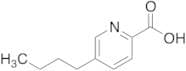
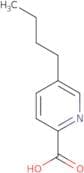
CAS 536-69-6
:Fusarsäure
Beschreibung:
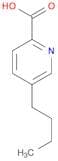
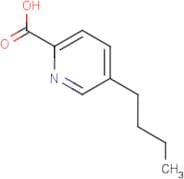
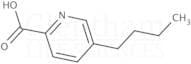
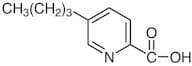
Fusarsäure, mit der CAS-Nummer 536-69-6, ist eine natürlich vorkommende organische Verbindung, die als Carbonsäure klassifiziert wird. Sie wird hauptsächlich von bestimmten Arten von Pilzen produziert, insbesondere von solchen der Gattung Fusarium. Die chemische Struktur von Fusarsäure weist einen Pyridinring auf, der zu seinen einzigartigen Eigenschaften beiträgt. Diese Verbindung ist bekannt für ihre potenziellen biologischen Aktivitäten, einschließlich antifungaler und antibakterieller Eigenschaften, was sie für die landwirtschaftliche und pharmazeutische Forschung von Interesse macht. Fusarsäure wurde hinsichtlich seiner Rolle in der Pflanzenpathologie untersucht, da es das Pflanzenwachstum und die Entwicklung beeinflussen kann und oft als Phytotoxin wirkt. Darüber hinaus wurde es auf seine potenziellen therapeutischen Anwendungen untersucht, insbesondere bei der Behandlung neurologischer Störungen, aufgrund seiner Fähigkeit, Neurotransmittersysteme zu modulieren. In Bezug auf die physikalischen Eigenschaften ist Fusarsäure typischerweise ein Feststoff bei Raumtemperatur und in polaren Lösungsmitteln löslich. Sein Sicherheitsprofil zeigt, dass es mit Vorsicht behandelt werden sollte, wie viele organische Säuren, aufgrund möglicher reizender Wirkungen.
Formel:C10H13NO2
InChl:InChI=1S/C10H13NO2/c1-2-3-4-8-5-6-9(10(12)13)11-7-8/h5-7H,2-4H2,1H3,(H,12,13)
InChI Key:InChIKey=DGMPVYSXXIOGJY-UHFFFAOYSA-N
SMILES:C(O)(=O)C1=CC=C(CCCC)C=N1
Synonyme:- 2-Pyridinecarboxylic acid, 5-butyl-
- 5-Butyl-2-picolinic acid
- 5-Butyl-2-pyridinecarboxylic acid
- 5-Butylpicolinic acid
- 5-Butylpyridine-2-Carboxylate
- 5-Butylpyridine-2-Carboxylic Acid
- 5-n-Butylpyridine-2-carboxylic acid
- Butylpicolinic acid
- Fusaric Acid From Gibberella Fujikuroi
- NSC 135043
- NSC 19870
- Picolinic acid, 5-butyl-
- Weitere Synonyme anzeigen
Sortieren nach
Reinheit (%)
0
100
|
0
|
50
|
90
|
95
|
100
7 Produkte.
5-Butylpyridine-2-carboxylic Acid
CAS:Formel:C10H13NO2Reinheit:>98.0%(GC)Farbe und Form:White to Light yellow powder to crystalMolekulargewicht:179.22Fusaric Acid
CAS:Kontrolliertes ProduktApplications Fusaric Acid is a picolinic acid derivative isolated from the fungus Fusarium. Thought to contribute to the toxicoses developed from ingesting mold-infested feeds.
References Rofiat, A. et al.: Food Addit. Cont. Part A. Chem. Anal. Contr. Exp. Risk Asses., 32, 950 (2015); Crutcher, F. et al.: Microbiol., 161, 875 (2015);Formel:C10H13NO2Farbe und Form:NeatMolekulargewicht:179.22Fusaric acid
CAS:Fusaric acid is a metabolite of the natural product fusarin. It is formed by the enzymatic hydroxylation of dopamine and has been shown to inhibit the production of picolinic acid, which is involved in the synthesis of NAD. Fusaric acid also inhibits tetracycline resistance in colorectal adenocarcinoma cells, leading to cell death. Fusaric acid has also been found to be effective against squamous carcinoma cells and thermal expansion in titration calorimetry experiments. The structural analysis of this compound showed that it has a planar geometry with a number of hydrogen bonding interactions. FUSARIC ACID: Fusaric acid is an inhibitor of dopamine β-hydroxylase (DBH) that was first isolated from fusarin, a natural product produced by some fungi species. It binds reversibly to DBH and blocks its activity, preventing the conversion ofFormel:C10H13NO2Farbe und Form:Off-White PowderMolekulargewicht:179.22 g/mol