CAS 53948-51-9
:Bisnortilidin
Beschreibung:
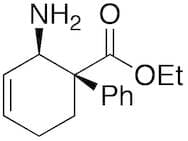
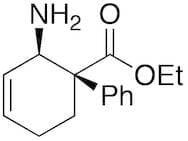
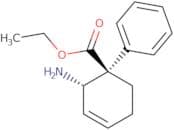
Bisnortilidin, identifiziert durch seine CAS-Nummer 53948-51-9, ist eine chemische Verbindung, die zur Klasse der organischen Verbindungen gehört, die als Amine bekannt sind. Sie ist gekennzeichnet durch die Anwesenheit mehrerer Stickstoffatome, die zu ihrer Basizität und potenziellen Reaktivität beitragen. Die Struktur von Bisnortilidin weist typischerweise eine komplexe Anordnung von Kohlenstoff- und Stickstoffatomen auf, die ihre physikalischen und chemischen Eigenschaften beeinflusst. Diese Verbindung kann in verschiedenen organischen Lösungsmitteln löslich sein, abhängig von ihren spezifischen funktionellen Gruppen und der molekularen Struktur. Bisnortilidin wird oft wegen seiner potenziellen Anwendungen in der Pharmazie und organischen Synthese untersucht, wo seine einzigartigen Eigenschaften für die Entwicklung neuer Materialien oder therapeutischer Mittel genutzt werden können. Wie bei vielen chemischen Substanzen sollten beim Umgang mit Bisnortilidin Sicherheitsvorkehrungen getroffen werden, da sie Gesundheitsrisiken oder Umweltgefahren darstellen kann. Weitere Forschungen sind erforderlich, um ihr Verhalten, ihre Reaktivität und potenzielle Anwendungen in verschiedenen Bereichen der Chemie und Industrie vollständig zu verstehen.
Formel:C15H19NO2
InChl:InChI=1/C15H19NO2/c1-2-18-14(17)15(11-7-6-10-13(15)16)12-8-4-3-5-9-12/h3-6,8-10,13H,2,7,11,16H2,1H3/t13-,15+/s2
InChI Key:InChIKey=BTKAMSWFNMGLGM-UYWMCZCJNA-N
SMILES:C(OCC)(=O)[C@]1([C@H](N)C=CCC1)C2=CC=CC=C2
Synonyme:- 3-Cyclohexene-1-carboxylic acid, 2-amino-1-phenyl-, ethyl ester, (1R,2S)-rel-
- 3-Cyclohexene-1-carboxylic acid, 2-amino-1-phenyl-, ethyl ester, trans-(+-)-
- Bisnortilidine
Sortieren nach
Reinheit (%)
0
100
|
0
|
50
|
90
|
95
|
100
3 Produkte.
Bisnortilidine
CAS:Kontrolliertes ProduktApplications A metabolite of Tilidine (T440300(M)), which is a controlled substance (opiate) and a analgesic. Tilidine is used in clinical trial in comparison with Nefopam. Tilidine is one of the most widely used narcotics in Germany and Belgium.
References Hengy, H., et al.: J. Pharm. Sci., 67, 1765 (1978); Cordonnier, J., et al.: J. Anal. Toxicol., 11, 144 (1987); Hajda, J., et al.: J. Clin. Pharmacol., 42, 1257 (2002); Vollmer, K.-O., et al.: Arzneim.-Forsch., 20, 990 (1970); Abeloos, J., et al.: Acta Anaesthesiol. Belg., 34, 283 (1983); Van Cauwenberge, H., et al.: Int. J. Clin. Pharmacol. Res., 12, 1 (1992)Formel:C15H19NO2Farbe und Form:NeatMolekulargewicht:245.32Bisnortilidine (1 mg/ml in Acetonitrile)
CAS:Kontrolliertes ProduktFormel:C15H19NO2Farbe und Form:ColourlessMolekulargewicht:245.32Bisnortilidine
CAS:Kontrolliertes ProduktBisnortilidine is a prodrug that is hydrolyzed to form nortilidine in vivo. It has been shown to have a matrix effect on the plasma concentration-time curve, which is important for clinical relevance. The rate of formation of bisnortilidine can be determined by measuring the amount of hydrochloric acid present in human liver tissue. Bisnortilidine has a low solubility, and therefore must be dissolved in water before injection into the femoral vein. A chromatographic method has been developed to measure bisnortilidine concentrations in plasma samples. Bisnortilidine can be measured using analytical methods that are based on the concentration-time curve and excretory organs such as urine samples.Formel:C15H19NO2Reinheit:Min. 95%Farbe und Form:Clear LiquidMolekulargewicht:245.32 g/mol